Electric Car Battery Manufacturers in India
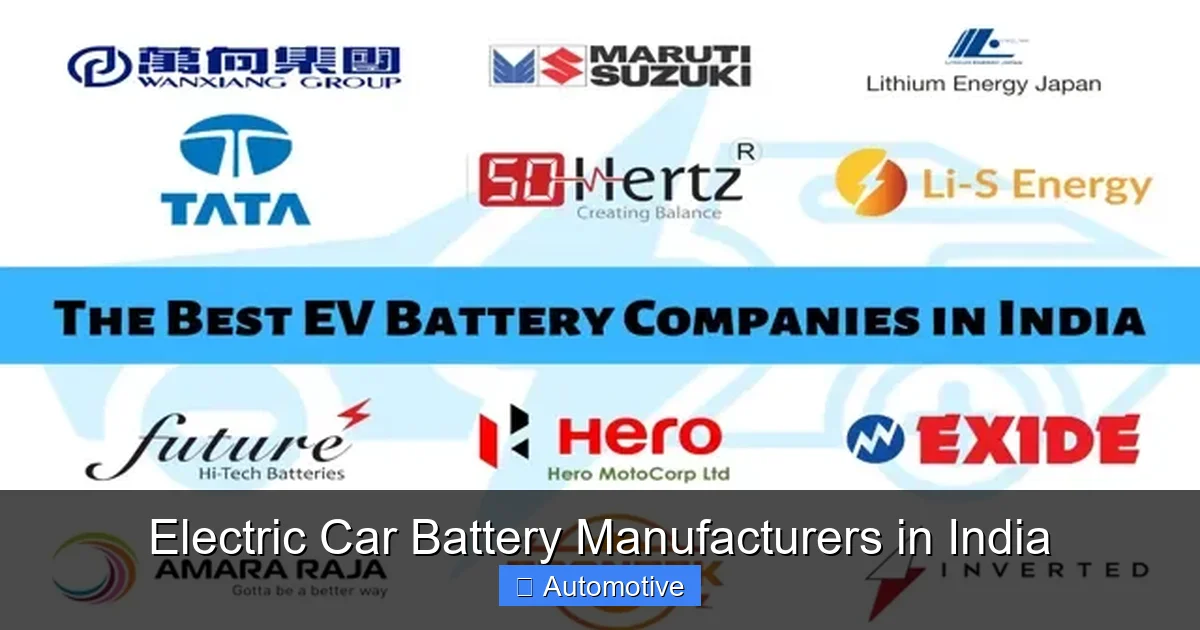
India’s electric car battery sector is growing fast, led by companies like Tata Chemicals, Exide Industries, and Amara Raja. These manufacturers are focusing on high‑energy lithium‑ion cells, faster charging, and recycling to meet the rising demand for EVs. Buyers should consider battery life, warranty, and after‑sale service when choosing a battery.
Key Takeaways
- Point 1: India’s EV battery market is expanding rapidly due to government incentives and rising electric vehicle adoption.
- Point 2: Leading manufacturers include Tata Chemicals, Exide Industries, Amara Raja, GP Batteries, and Lithium Energy India, each offering distinct technologies.
- Point 3: Battery chemistry, range, warranty, and after‑sales support are critical factors for buyers.
- Point 4: Proper charging habits and recycling programs help extend battery life and reduce environmental impact.
- Point 5: Future trends point toward solid‑state cells, smarter battery management, and integration with renewable energy grids.
- Point 6: Staying informed through reliable guides, such as best electric car batteries for performance and longevity, helps consumers make confident choices.
📑 Table of Contents
- Understanding the Indian EV Battery Landscape
- Top Electric Car Battery Manufacturers in India
- How to Choose the Right Battery for Your EV
- Battery Life, Longevity and Maintenance Tips
- Comparing Indian Battery Brands with Global Competitors
- Future Trends Shaping the Indian EV Battery Market
- Conclusion
Understanding the Indian EV Battery Landscape
Electric vehicles are becoming a common sight on Indian roads. The government aims for 30 % of new cars to be electric by 2030. Batteries are the heart of any EV. They store energy, power the motor, and affect range, performance, and cost.
India’s battery ecosystem includes domestic manufacturers, global partners, and research institutes. The country produces lithium‑ion, lead‑acid, and nickel‑metal‑hydride cells. Each chemistry serves different vehicle segments and price points.
Policy support drives growth. The Faster Adoption and Manufacturing of Hybrid and Electric Vehicles (FAME) scheme offers subsidies. State governments also provide additional incentives. These programs lower the upfront cost for buyers and encourage manufacturers to expand capacity.
Why Battery Technology Matters
Battery technology determines how far a car can travel on a single charge. It also influences charging time and overall vehicle weight. Advanced chemistries like lithium‑iron‑phosphate (LFP) and nickel‑cobalt‑manganese (NCM) offer higher energy density.
Energy density means more miles per kilogram. Lighter batteries improve handling and reduce material costs. Safety is another key factor. Modern batteries include thermal management systems to prevent overheating.
Charging infrastructure is expanding. Fast‑charging stations can add 80 % of range in under 30 minutes. Battery designs that support high‑current charging are essential for this network.
Key Players in the Market
Tata Chemicals Limited leads with large‑scale lithium‑ion production. The company supplies batteries for Tata Motors and other OEMs. Its facilities are located in Gujarat and West Bengal.
Exide Industries has a long history in lead‑acid batteries. It now offers lithium‑ion cells for EVs. Exide focuses on durability and cost‑effectiveness.
Amara Raja Batteries is known for nickel‑metal‑hydride technology. It also produces lithium‑ion packs for scooters and cars. The brand emphasizes quality control and after‑sales service.
GP Batteries manufactures a range of automotive batteries. Its lithium‑ion line targets electric two‑wheelers and light commercial vehicles.
Lithium Energy India specializes in high‑performance lithium‑ion modules. The company partners with global cell manufacturers to customize packs.
For a deeper dive into battery performance, check out our article on best electric car batteries for performance and longevity. This guide compares technology, range, and lifespan across leading brands.
Government Initiatives and Future Outlook
The FAME scheme provides upfront subsidies for EV buyers. It also funds research in battery recycling. The Department of Heavy Industries runs pilot projects for second‑life battery applications.
State governments offer additional rebates. Karnataka, Telangana, and Maharashtra have launched EV policy packages. These policies often include tax exemptions and infrastructure grants.
Looking ahead, solid‑state batteries promise higher energy density and safety. Indian labs are collaborating with international researchers on this next generation. Meanwhile, domestic manufacturers are scaling up production to meet projected demand.
The market is also focusing on sustainability. Battery recycling plants are being built across major cities. Companies are developing closed‑loop systems to recover cobalt, nickel, and lithium.
Top Electric Car Battery Manufacturers in India
When you shop for an EV, the battery brand matters. It influences warranty length, resale value, and service availability. Below are the leading manufacturers and what they bring to the table.
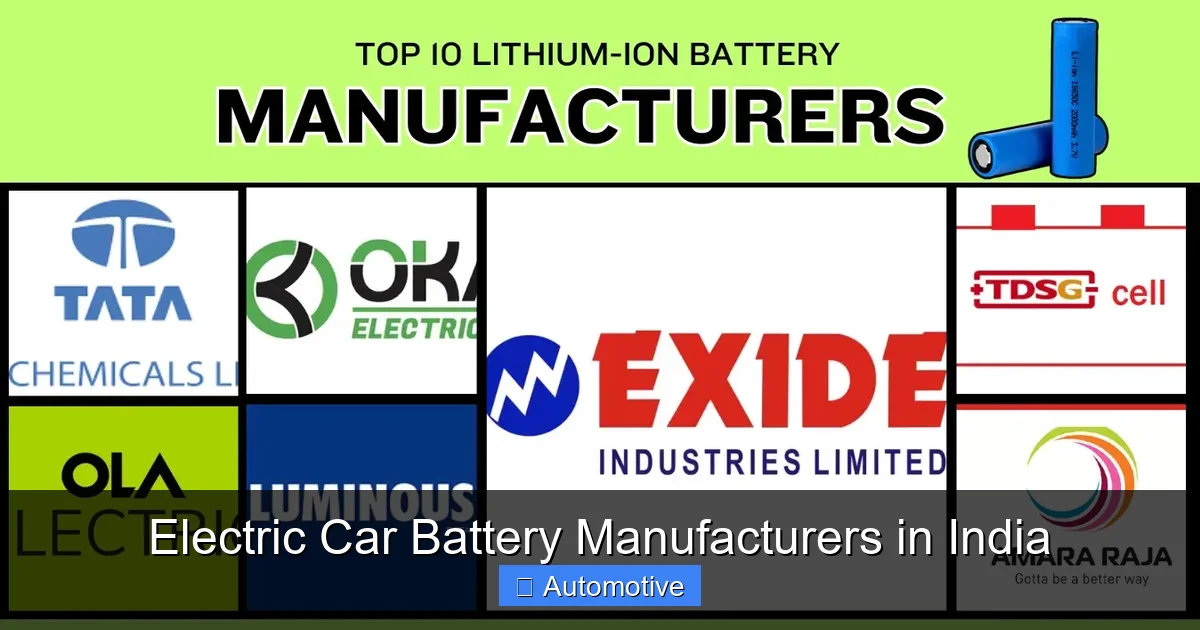
Visual guide about Electric Car Battery Manufacturers in India
Image source: e-vehicleinfo.com
Tata Chemicals Limited
Tata Chemicals produces lithium‑ion cells for passenger cars. Its technology partners include Contemporary Amperex Technology Co. Limited (CATL). The cells are used in Tata Nexon EV and other models.
The company offers a five‑year or 1,00,000 km warranty. Battery management systems are built in‑house. This ensures optimal performance across temperature ranges.
Exide Industries
Exide’s EV batteries are built on proven lead‑acid technology. They are cost‑effective for budget‑conscious buyers. The company also offers lithium‑ion options for premium segments.
Exide provides a three‑year warranty on its lithium‑ion packs. The warranty covers defects in materials and workmanship. Customers receive free battery health checks at authorized service centers.
Amara Raja Batteries
Amara Raja is known for nickel‑metal‑hydride batteries. These are used in hybrid vehicles and early electric models. The brand is expanding into lithium‑ion for newer EVs.
Amara Raja’s warranty varies by model. Most packs come with a four‑year or 80,000 km guarantee. The company emphasizes modular design, making replacements easier.
GP Batteries
GP Batteries focuses on lithium‑ion technology for two‑wheelers and light trucks. Its production lines are located in Tamil Nadu and Gujarat. The company aims for high energy density while keeping costs low.
GP offers a standard three‑year warranty on its EV batteries. The warranty includes roadside assistance for battery-related issues. The brand also provides battery leasing options for some models.
Lithium Energy India
Lithium Energy India partners with global cell makers to create custom battery packs. The company serves niche applications like electric buses and delivery vans. Its technology emphasizes fast charging and long cycle life.
Lithium Energy provides a five‑year warranty on most of its packs. The warranty covers performance degradation beyond 20 % of original capacity. The brand also offers software updates to improve battery management over time.
How to Choose the Right Battery for Your EV
Selecting a battery is not just about price. You need to match the battery to your driving habits, budget, and usage patterns. Here are the key considerations.
Visual guide about Electric Car Battery Manufacturers in India
Image source: servotech.in
Check Battery Chemistry
Lithium‑ion is the most common chemistry for modern EVs. It offers high energy density and relatively long life. Lead‑acid batteries are cheaper but heavier and have shorter lifespans.
Nickel‑metal‑hydride is used in some hybrids. It provides moderate energy density and good cycle life. Solid‑state batteries are emerging but still expensive.
Research the chemistry before you decide. Each type has trade‑offs in performance, weight, and cost.
Assess Range and Performance
Range is measured in kilometers per charge. Look at the rated range and real‑world performance. Urban drivers may need less range than long‑distance travelers.
Performance includes acceleration, top speed, and torque. Battery power output influences these metrics. Higher discharge rates provide better acceleration.
Consider the driving conditions in your area. Hot climates can reduce range. Cold weather may affect charging speed.
Consider Warranty and After‑Sales Support
A solid warranty protects your investment. Compare warranty periods and mileage limits. Longer warranties often indicate confidence in durability.
After‑sales support includes service center availability and response time. Look for brands with a wide network of dealers. Good customer service can save time and money.
Check if the battery is covered under the vehicle’s warranty. Some manufacturers offer separate battery warranties. This can be important for long‑term ownership.
Battery Life, Longevity and Maintenance Tips
Battery life is measured in cycles and calendar years. A typical lithium‑ion battery can deliver 1,000–2,000 full charge cycles. Calendar life is usually 8–10 years.
Visual guide about Electric Car Battery Manufacturers in India
Image source: electriccarwiki.com
Typical Lifespan
Real‑world lifespan depends on usage patterns. Frequent fast charging can reduce overall life. Shallow discharges (charging to 80 % instead of 100 %) help preserve capacity.
Temperature plays a huge role. Extreme heat accelerates degradation. Parking in shaded areas and using air‑conditioning wisely can extend life.
Charging Best Practices
Charge your EV regularly, but avoid keeping the battery at 100 % for long periods. Use slow charging at home when possible. Fast charging is convenient but should be limited.
Maintain a charge level between 20 % and 80 % for daily driving. This reduces stress on the cells. Many EVs have built‑in software that optimizes charging patterns.
Recycling and Sustainable Disposal
Old batteries can be recycled to recover valuable metals. India is building specialized recycling facilities. Look for manufacturers with take‑back programs.
Some companies offer trade‑in discounts for old batteries. This encourages responsible disposal. Recycling also reduces the environmental footprint of EV production.
Comparing Indian Battery Brands with Global Competitors
Indian manufacturers are competing with global players like Tesla, LG, and Panasonic. While global brands have advanced technology, Indian firms offer localized solutions.
Performance Metrics
Energy density is a key metric. Global brands lead in specific energy (Wh/kg). Indian manufacturers are catching up through partnerships and R&D.
Cycle life is another factor. Some Indian batteries claim 2,000 cycles. Global brands often guarantee 1,500–2,000 cycles.
Cost Comparison
Indian batteries are generally cheaper than imported ones. This makes EVs more affordable for the mass market. However, price differences can be offset by warranty and service costs.
Global brands may offer longer warranties and better after‑sales networks. Consider total cost of ownership, not just upfront price.
Technology Adoption
Indian companies are adopting advanced battery management systems. These systems monitor cell health and optimize performance. Integration with smartphone apps is becoming standard.
Some Indian manufacturers are exploring solid‑state technology. Collaborations with foreign research institutes accelerate this progress. The goal is to match global safety and efficiency standards.
Future Trends Shaping the Indian EV Battery Market
The EV battery landscape will evolve rapidly over the next decade. New chemistries, smarter systems, and policy changes will drive growth.
Advancements in Lithium‑Ion Chemistry
Researchers are developing lithium‑metal anodes for higher energy density. These anodes could double the range of current EVs. Safety improvements are also a priority.
Silicon‑based anodes are being tested to increase capacity. They promise faster charging and longer life. Commercialization will depend on cost and reliability.
Rise of Solid‑State Batteries
Solid‑state batteries eliminate liquid electrolytes, reducing fire risk. They can operate at higher voltages, boosting range. Indian startups are partnering with foreign firms to bring this technology to market.
Government funding supports solid‑state research. Pilot projects are testing durability and performance. If successful, solid‑state batteries could become mainstream within five years.
Integration with Smart Grid
Battery systems are becoming part of smart grids. Vehicle‑to‑grid (V2G) technology allows EVs to supply power during peak demand. This creates new revenue streams for owners.
Smart charging algorithms balance load across the grid. They consider electricity prices, renewable generation, and battery health. Indian utilities are piloting V2G pilots in major cities.
Conclusion
Choosing the right electric car battery in India involves understanding the market, technology, and after‑sales support. Leading manufacturers like Tata Chemicals, Exide Industries, Amara Raja, GP Batteries, and Lithium Energy India offer diverse options.
Buyers should evaluate chemistry, range, warranty, and maintenance requirements. Proper charging habits and recycling programs extend battery life and reduce environmental impact.
The future looks promising. Advancements in lithium‑ion chemistry, solid‑state batteries, and smart grid integration will shape the next generation of EVs. Staying informed through reliable guides, such as how much for an electric car, helps consumers make confident choices.
India’s electric vehicle ecosystem is growing. With the right battery, drivers can enjoy cleaner, quieter, and more efficient transportation. The journey toward a greener future is well underway, and the batteries powering it are leading the charge.
Frequently Asked Questions
What are the leading electric car battery manufacturers in India?
Leading manufacturers include Tata Chemicals Limited, Exide Industries, Amara Raja Batteries, GP Batteries, and Lithium Energy India. Each offers different chemistries and warranty terms.
How long does an electric car battery typically last?
A typical lithium‑ion battery lasts 8–10 years or 1,000–2,000 charge cycles. Real‑world lifespan depends on usage, temperature, and charging habits.
What factors should I consider when choosing an EV battery?
Consider battery chemistry, rated range, warranty length, after‑sales support, and total cost of ownership. Matching the battery to your driving habits is essential.
Are there government incentives for buying electric vehicles in India?
Yes, the FAME scheme provides subsidies for EV buyers. State governments also offer additional rebates and tax benefits.
How does battery recycling work in India?
Recycling facilities recover cobalt, nickel, and lithium from old batteries. Many manufacturers have take‑back programs to ensure responsible disposal.
What are the future trends in EV battery technology?
Future trends include solid‑state batteries, higher‑energy lithium‑ion chemistries, and integration with smart grids for vehicle‑to‑grid applications.