In a Car Lift Compressed Air Exerts a Force
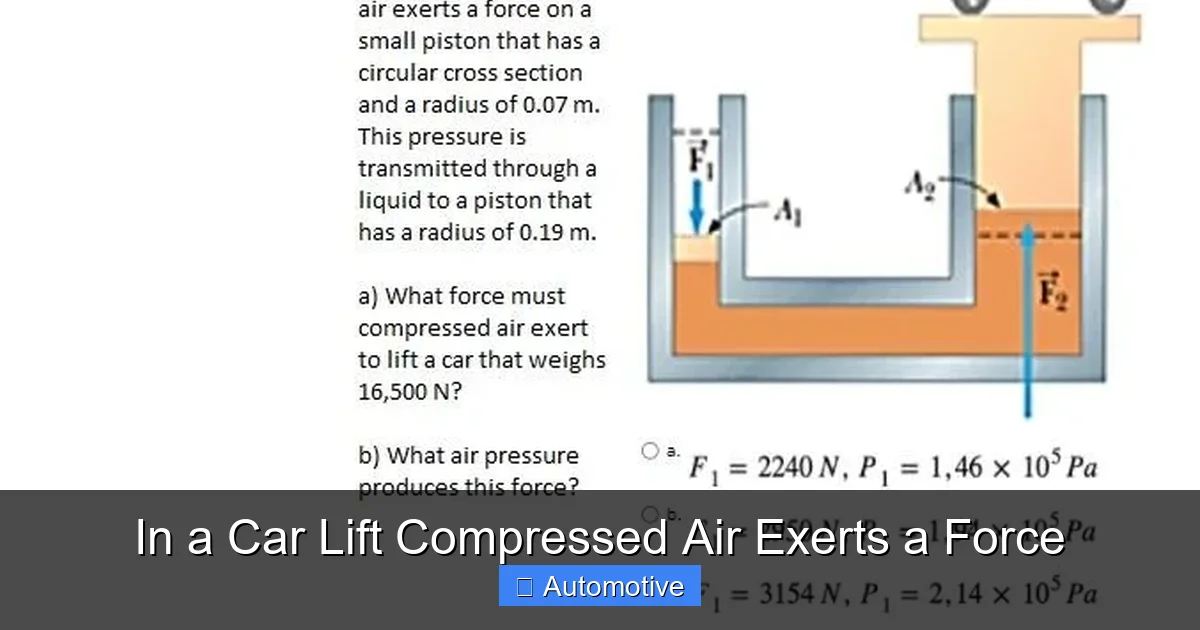
In a car lift, compressed air creates a powerful upward force that safely raises vehicles, making maintenance easier. Understanding this principle helps you work more efficiently and avoid damage.
Key Takeaways
- Compressed air generates a consistent, controllable force that can lift heavy loads safely. It relies on pressure and piston area to produce the needed lift.
- The force is calculated using pressure multiplied by area (F = P × A) to ensure proper load capacity. Knowing the math prevents overloads.
- Proper maintenance of the air system prevents leaks and ensures reliable lifting. Regular checks keep the lift operating smoothly.
- Using the right air compressor size matches the lift’s requirements for optimal performance. A mismatched unit can cause inefficiency or damage.
- Safety protocols, like checking pressure gauges, are essential when using air‑powered lifts. Always verify settings before raising a vehicle.
- Knowing how air force works helps you choose the best lift kit and avoid warranty issues. For details, see our guide on lift kits and Toyota warranty.
📑 Table of Contents
What Is Compressed Air and How It Works in a Car Lift?
Compressed air is simply air that has been forced into a smaller volume. When you pump air into a cylinder, the pressure rises. That pressure pushes on a piston. The piston moves upward, raising the platform of a car lift. The result is a clean, powerful lifting system that can handle many vehicle types.
The Basics of Air Pressure
Air pressure is measured in pounds per square inch (PSI). The higher the PSI, the more force the air can exert. In a lift, the cylinder is sealed, so the pressure stays constant while the piston moves. This steady force is what lifts the car. A typical lift cylinder might operate at 100–150 PSI, which is enough for most passenger cars.
How a Hydraulic‑Like System Uses Air
Unlike a traditional hydraulic system that uses oil, an air‑powered lift uses a compressor to create the pressure. The compressor draws in ambient air, squeezes it, and sends it through hoses to the lift cylinder. The result is a clean, quiet, and easy‑to‑maintain lifting solution. Because there is no fluid to leak, the system stays tidy and safe.
The Physics Behind the Force: Pressure × Area
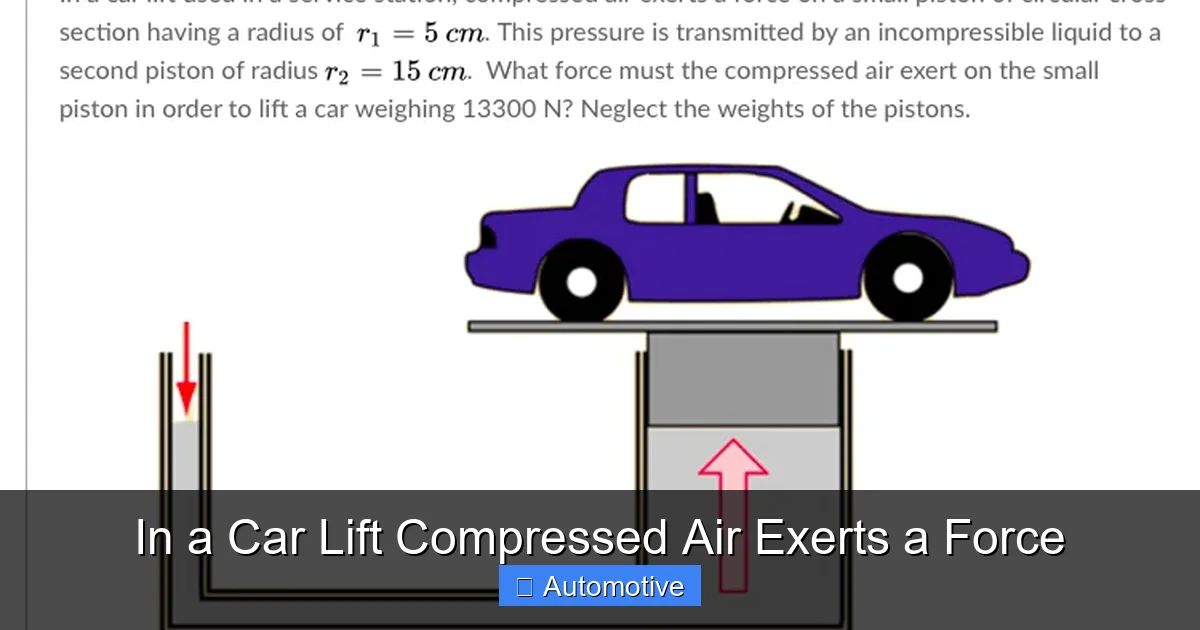
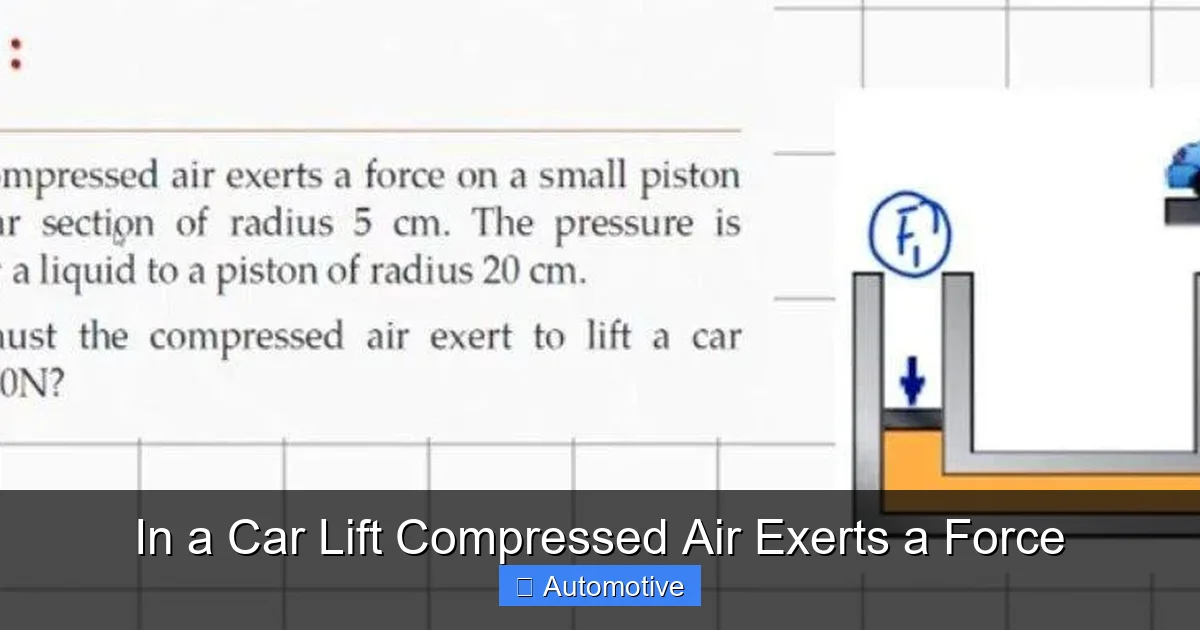
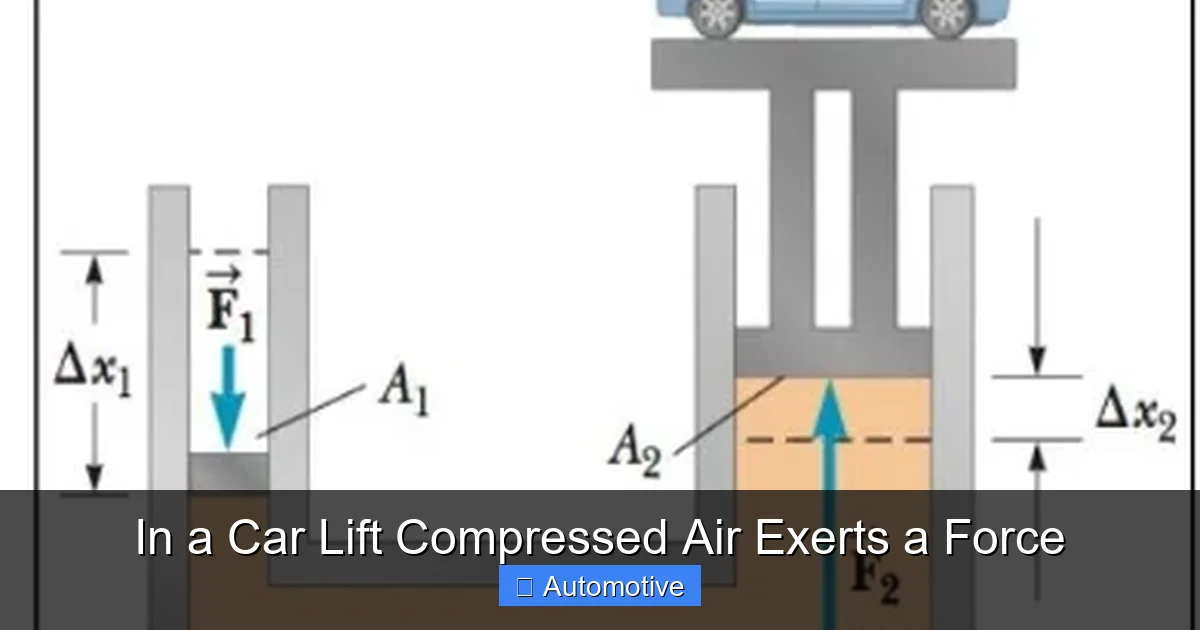
Understanding the simple formula helps you grasp why a lift works. Force equals pressure multiplied by the area of the piston. If you double the area, you double the force without changing the pressure. This relationship lets manufacturers design lifts that can raise anything from a compact sedan to a heavy SUV.
Visual guide about In a Car Lift Compressed Air Exerts a Force
Image source: media.cheggcdn.com
Calculating Force
For example, a cylinder with a 4‑inch diameter has an area of about 12.6 square inches. At 100 PSI, the force is 100 × 12.6 = 1,260 pounds. That’s enough to raise most passenger cars. A larger 8‑inch cylinder at the same pressure produces roughly 2,500 pounds, showing how size scales force.
Real‑World Examples
Large truck lifts often use bigger pistons. A 10‑inch cylinder at 150 PSI can generate over 11,000 pounds of force. This shows how compressing air can produce massive lifting power, making it ideal for heavy‑duty applications.
Types of Car Lifts That Use Compressed Air
Scissor Lifts
Scissor lifts use a criss‑cross set of metal plates. When air pushes the central ram, the plates expand, raising the platform. They are compact and great for tight garages where space is limited.
Visual guide about In a Car Lift Compressed Air Exerts a Force
Image source: media.cheggcdn.com
Post‑Type Lifts
Post‑type lifts have a single vertical post. The air cylinder is attached to the post and pushes a lift arm. This design is sturdy and common in professional shops because it offers strong support for larger vehicles.
Two‑Post and Four‑Post Air Lifts
Two‑post lifts have two vertical posts and a horizontal arm. Four‑post lifts add two extra posts for extra stability. Both types rely on compressed air to move the arms up and down, allowing quick and safe vehicle positioning.
Benefits of Using Compressed Air for Lifting
Speed and Efficiency
Air lifts can raise a vehicle in seconds. The compressor can be set to the right pressure, and the lift responds instantly. This speeds up repairs, oil changes, and tire rotations. If you ever get a small dent, you can fix it yourself – check our guide on how to fix a dent without professional help. A reliable lift saves you time and money.
Visual guide about In a Car Lift Compressed Air Exerts a Force
Image source: d2vlcm61l7u1fs.cloudfront.net
Clean and Quiet Operation
No oil spills, no noisy pumps. Compressed air systems are much quieter than hydraulic ones. The clean environment keeps your garage tidy and reduces the risk of slips or contamination.
Reduced Maintenance Compared to Hydraulic Systems
Hydraulic fluid can leak, degrade, or become contaminated. Air systems have fewer moving parts and no fluid to change. This means lower long‑term costs and less downtime for maintenance.
Safety Considerations and Best Practices
Checking Pressure Levels
Always verify the pressure gauge before lifting. Too low pressure won’t raise the car. Too high pressure can damage the cylinder or cause a burst. Aim for the manufacturer’s recommended PSI, usually between 100 and 150 PSI for most lifts.
Regular Inspection of Hoses and Seals
Cracks in hoses or worn seals cause leaks. Inspect them weekly. Replace any damaged parts immediately to avoid loss of pressure and potential injury. A well‑maintained system keeps the lift reliable.
Proper Training and Use
Only trained personnel should operate the lift. Know the controls, the emergency stop, and the weight limits. Misuse can lead to accidents and may void warranties. For more on warranty concerns, see does a lift kit void Toyota warranty.
Choosing the Right Air Compressor for Your Lift
Matching PSI and CFM Requirements
The lift’s cylinder size determines the required PSI. The compressor must deliver at least that pressure continuously. Also, check the CFM (cubic feet per minute) rating. A higher CFM means the compressor can refill the cylinder faster, reducing downtime.
Portable vs. Stationary Units
Portable compressors are useful for home garages. They are easy to move but may have lower CFM. Stationary units are larger, more powerful, and ideal for busy shops that need constant air supply.
Recommended Models
Look for a compressor with at least 150 PSI and 10 CFM for most car lifts. The best air compressors for car detailing list includes models that meet these specs and are reliable for lifting tasks. Choosing the right unit ensures consistent performance and longevity.
Wrap‑Up
Compressed air in a car lift exerts a strong, controllable force that makes lifting vehicles safe and efficient. By understanding the physics, selecting the proper equipment, and following safety steps, you can keep your lift in top shape. This knowledge also helps you avoid damage, reduce maintenance, and protect your warranty. Whether you’re a DIY enthusiast or a professional mechanic, the principles outlined here will improve your workflow and keep your car raised safely every time.
Frequently Asked Questions
Question?
Answer: Compressed air creates a force that pushes the lift’s piston upward, raising the vehicle. The amount of force depends on pressure and piston area.
Question?
Answer: Yes, you can use a compressed air lift for most passenger cars. Just ensure the lift’s weight rating matches your vehicle’s weight.
Question?
Answer: Regularly check for air leaks, replace worn hoses, and keep the compressor filtered. These simple steps extend the life of your lift.
Question?
Answer: If a lift fails to raise the car, the issue is often low pressure or a faulty valve. Verify the gauge and inspect the cylinder for damage.
Question?
Answer: Using the correct PSI prevents over‑pressurizing the system. Always follow the manufacturer’s recommended pressure range.
Question?
Answer: Many air‑powered lifts are designed for easy maintenance. Access panels let you replace seals without disassembling the whole unit.