Car Price Prediction Using Machine Learning
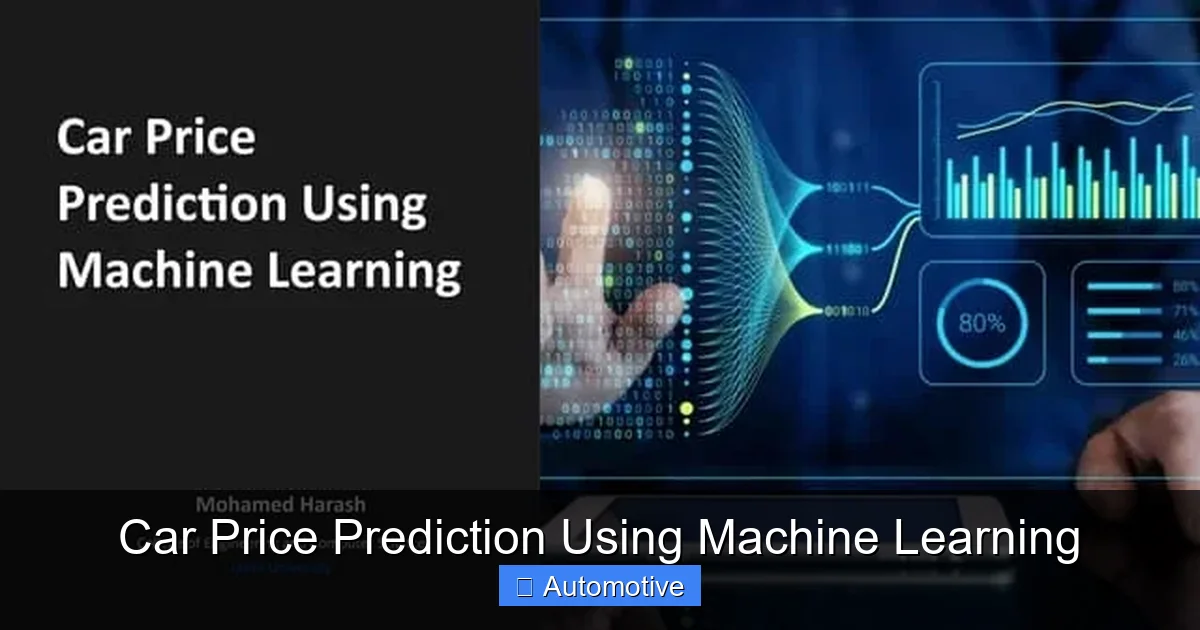
Discover how machine learning can accurately forecast car prices, giving buyers and sellers a powerful edge in the automotive market. This guide breaks down data sources, models, and practical steps to build your own predictive tool.
Key Takeaways
- Accurate forecasts: Machine learning models can predict car values within a few hundred dollars.
- Data driven: Quality data and relevant features are the foundation of reliable predictions.
- Model variety: Different algorithms suit different data sizes and complexity.
- Pipeline matters: Clean data, proper training, and regular updates ensure success.
- Evaluate wisely: Use the right metrics to judge model performance.
- Practical tips: Choose features carefully and watch for data quality issues.
- Real world use: Apply predictions to negotiate better deals and set competitive prices.
Why Car Price Prediction Matters
Car price prediction using machine learning is becoming a must‑have tool for anyone involved in the automotive market. Whether you are a first‑time buyer, a seasoned dealer, or a car enthusiast, knowing the likely price of a vehicle helps you make smarter decisions.
In this article we will explore the reasons behind price fluctuations, the data you need, the machine learning methods that work best, and how to build a reliable prediction pipeline. By the end you’ll have a clear roadmap to apply car price prediction using machine learning in your own projects.
Understanding Market Dynamics
Car values do not stay constant. New model releases, seasonal demand, fuel price changes, and economic shifts all push prices up or down. When you understand these dynamics, you can anticipate price moves and avoid overpaying. Car price prediction using machine learning captures these trends by learning from historical data.
Seasonal demand, such as higher interest in convertibles during spring, also influences price trends. Car price prediction using machine learning is essential for staying ahead of market shifts.
Benefits for Buyers and Sellers
For buyers, accurate forecasts mean better budgeting and confidence in the offer you make. Sellers can set competitive listings that attract serious interest without pricing themselves out of the market. Car price prediction using machine learning helps you negotiate better deals. If you’re concerned about comfort while evaluating price, check out our guide on the best car seat cushions for back pain relief. In both cases, the result is a smoother transaction and often a better deal.
Data Sources and Feature Engineering
Historical Sales Data
Historical sales records from dealerships, auctions, and private sellers form the core of any model. These records include the final transaction price, date of sale, and sometimes the location. The richer the dataset, the more patterns the algorithm can discover. Car price prediction using machine learning benefits from the depth of historical records.
Vehicle Specifications
Details such as make, model, year, mileage, engine size, and trim level are critical features. A 2018 Honda Civic with 30,000 miles will generally command a different price than the same model with 80,000 miles. Including these specs helps the model capture the true value. Car price prediction using machine learning takes into account engine type and transmission.
External Factors
Regional economic health, seasonal demand, and even weather can affect price. For example, SUVs may see higher prices in winter regions where snow is common. Incorporating external data improves accuracy. Car price prediction using machine learning incorporates regional demand patterns.
Machine Learning Models Used
Linear Regression Basics
Linear regression assumes a straight‑line relationship between input features like mileage and the target price. It works well when the data shows a clear linear trend and is easy to interpret. Car price prediction using machine learning often starts with a simple linear model.
Decision Trees and Random Forests
Decision trees split data based on feature values, creating a flowchart of decisions. Random forests build many trees and average their predictions, which reduces overfitting and handles non‑linear relationships. These models are popular in car price prediction using machine learning because they manage mixed data types with ease. Car price prediction using machine learning leverages decision trees to handle categorical variables.
Neural Networks and Deep Learning
Neural networks, especially deep learning models, excel when you have large datasets and complex interactions. They can automatically learn feature representations, making them powerful for car price prediction using machine learning. However, they require more data and computational resources. Car price prediction using machine learning can benefit from deep learning when data is abundant.
Building Your Prediction Pipeline
Data Collection and Cleaning
Start by gathering data from reliable sources such as dealership inventories, online marketplaces, and public records. Clean the data by removing duplicates, handling missing values, and correcting obvious errors like negative mileage. Car price prediction using machine learning starts with accurate data collection from multiple sources. A small mistake can skew the whole model, so thorough cleaning is essential.
Model Training and Validation
Split your dataset into training and testing sets. Train the model on the training portion and evaluate its performance on the testing set using metrics like RMSE and MAE. Cross‑validation helps ensure the model generalizes well to new cars. Car price prediction using machine learning validation ensures the model works on unseen vehicles.
Deploying the Model
Once you are satisfied with performance, you can deploy the model as a web app, a spreadsheet add‑on, or a command‑line tool. Many developers use Python libraries such as scikit‑learn or TensorFlow to build and serve the model. Car price prediction using machine learning can be integrated into dealer management systems. Keep the model updated with fresh sales data to maintain accuracy.
Evaluating Model Performance and Practical Tips
Metrics That Matter
Choosing the right metric is crucial. RMSE penalizes large errors heavily, which is useful when a big price miss could cost a buyer a lot. MAE gives a clearer picture of average error without exaggerating outliers. R‑squared shows how much variance the model explains. Car price prediction using machine learning metrics must align with buyer expectations.
Avoiding Overfitting and Data Quality Issues
Overfitting occurs when a model learns the training data too well, capturing noise instead of true patterns. Techniques like limiting tree depth, adding regularization, or using early stopping can keep the model robust. Car price prediction using machine learning must avoid overfitting to preserve reliability. Also, garbage in, garbage out applies: missing prices, inconsistent mileage units, or typoed model names can distort results. Spend time cleaning and standardizing data before you train. Car price prediction using machine learning thrives on high‑quality data.
Feature Selection and Real‑World Example
Not every feature contributes meaningfully. Start with a broad set, then use correlation analysis or feature importance scores to drop weak variables. This reduces noise and speeds up training. Car price prediction using machine learning can now guide trade‑ins, negotiations, and dynamic pricing for dealerships. A real‑world example: after cleaning a dataset of 10,000 used sedans, a random forest model achieved an MAE of $1,200, meaning predictions are within $1,200 of the true price on average.
Conclusion
Car price prediction using machine learning turns raw data into actionable insight. By understanding market forces, selecting the right features, and applying the appropriate models, you can make smarter buying and selling decisions. Start small, iterate often, and let data guide your next car move. Continuous learning and model refinement are key to staying competitive in car price prediction using machine learning. Car price prediction using machine learning helps you avoid overpaying and maximize value.
This is a comprehensive guide about car price prediction using machine learning.
Key Takeaways
- Understanding car price prediction using machine learning: Provides essential knowledge
Frequently Asked Questions
What is car price prediction using machine learning?
car price prediction using machine learning is an important topic with many practical applications.