How to Change Car Registration from One State to Another
Moving to a new state means transferring your vehicle registration within 30-90 days. This guide walks you through every step — from gathering documents and passing inspections to visiting the DMV and paying fees — so you can drive legally in your new home state.
Moving to a new state brings a long to-do list. Finding a new home, switching utilities, updating your address — it all adds up. One task that catches many people off guard is figuring out how to change car registration from one state to another. It’s not just a formality. Driving with out-of-state plates after you’ve established residency can lead to tickets, fines, and even insurance complications.
The good news? The process is straightforward once you know the steps. Every state has its own DMV (or equivalent agency) with slightly different rules, but the core requirements are remarkably similar. You’ll need to prove you live there, show the car is yours, pass any required inspections, and pay the fees. This guide breaks down everything you need to know so you can handle the transfer smoothly and get back to enjoying your new surroundings.
Key Takeaways
- Deadlines vary by state: Most states require registration transfer within 30 to 90 days of establishing residency.
- Proof of residency is mandatory: You’ll need documents like a lease agreement, utility bill, or mortgage statement.
- Insurance must be updated first: Your new state’s minimum coverage requirements apply before you can register.
- Vehicle inspections are common: Many states require safety, emissions, or VIN verification before issuing new plates.
- Fees differ widely: Expect to pay registration fees, title transfer fees, and possibly sales tax on your vehicle’s value.
- Special rules exist for military and students: Active-duty service members and out-of-state students often qualify for exemptions.
- Don’t forget to cancel old registration: Surrender your old plates to avoid fines or liability issues.
📑 Table of Contents
Understanding the Basics of Interstate Registration Transfer
Why You Need to Transfer Registration
Vehicle registration ties your car to a specific state’s laws, tax system, and insurance requirements. When you move, you become a resident of a new jurisdiction. That means you’re subject to its vehicle codes, tax rates, and safety standards. Most states define residency based on actions like signing a lease, buying a home, registering to vote, or enrolling children in local schools. Once you hit that threshold, the clock starts ticking.
Driving with expired out-of-state registration isn’t just a minor oversight. Police can ticket you for failure to register. Your insurance company might deny a claim if they discover you’ve been living elsewhere without updating your policy. And if you’re in an accident, the other party’s attorney could use your non-compliance against you. It’s simply not worth the risk.
Typical Timeframes and Deadlines
Every state sets its own deadline, but most fall between 30 and 90 days after establishing residency. For example, California gives you 20 days. Texas allows 30 days. Florida gives you 30 days to register but 10 days to get a Florida driver’s license. New York is stricter — just 30 days for both. Some states like South Dakota are more lenient with 90 days.
Mark your calendar the day you sign a lease or close on a house. That’s usually your “residency established” date. Don’t wait until the last week. DMV appointments can book up fast, especially in populous areas. If you’re moving during peak season — summer months or end-of-month — schedule your visit as early as possible.
Preparing Your Documents Before the Move
Essential Paperwork Checklist
Showing up at the DMV without the right documents is the number one reason people make multiple trips. Start gathering these items before you even pack the moving truck:

Visual guide about How to Change Car Registration from One State to Another
Image source: i.ytimg.com
- Current out-of-state title — If you own the vehicle outright, you need the original title. If there’s a lien, see the next section.
- Current registration certificate — The one from your previous state.
- Proof of identity — A valid driver’s license or passport. Your new state’s license is ideal but not always required for the registration itself.
- Proof of new residency — Two documents are usually required. Acceptable options include a signed lease or mortgage statement, utility bill (electric, water, gas) dated within 60 days, bank statement, voter registration card, or pay stub with your new address.
- Proof of insurance — Must meet your new state’s minimum liability requirements. The policy must show your new address.
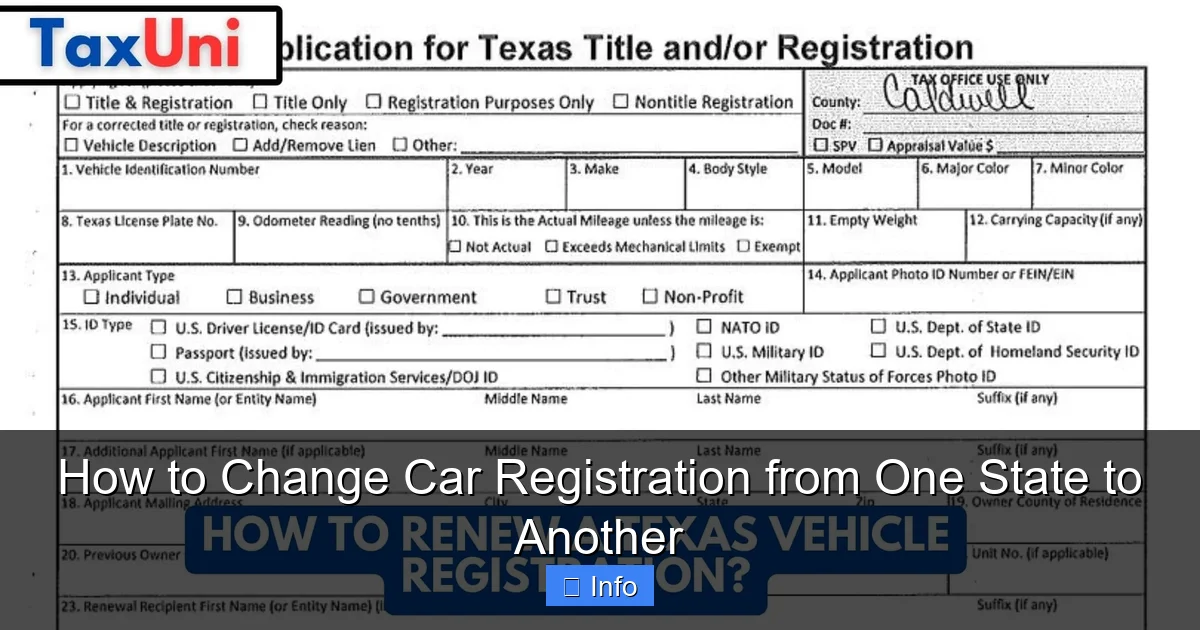
- Completed application form — Many states let you download and fill this out online beforehand.
- Odometer disclosure statement — Required for vehicles under 10 years old in most states.
- Emissions or safety inspection certificate — If your new state requires it (more on this below).
Pro tip: Make copies of everything. Keep the originals in a folder you carry yourself — not in the moving truck. DMV offices won’t accept photos on your phone for most documents.
Handling Liens and Loans
If you’re still paying off your car, the lienholder (bank or credit union) holds the title. You can’t just walk in and transfer registration without their involvement. Contact your lender at least 4-6 weeks before your move. They’ll need to send the title to your new state’s DMV or a designated agent. Some lenders require you to refinance with a local branch. Others will mail the title directly to the DMV once you provide the new address and DMV contact info.
Ask your lender for a “lien release” or “title release” letter stating they authorize the transfer. Bring this to the DMV along with your loan account number and the lender’s contact information. The DMV will then issue a new title with the lien noted, sent to your lender. You’ll get the registration and plates same-day in most cases.
Step-by-Step Process to Change Car Registration
Step 1: Establish Residency Officially
Before you can register your car, you need to prove you actually live in the new state. This isn’t just about sleeping there. Most DMVs want to see two proofs of address from different categories. A lease agreement plus a utility bill works perfectly. If you’re staying with family temporarily, you may need a notarized letter from the homeowner plus their utility bill and a piece of mail addressed to you at that address.
Visual guide about How to Change Car Registration from One State to Another
Image source: content.infopay.net
Some states also require you to get a new driver’s license before registering a vehicle. Check your new state’s DMV website for the exact order. In many cases, you can do both in one visit if you bring all documents for both transactions.
Step 2: Get Insurance in Your New State
You cannot register a vehicle without valid insurance that meets the new state’s minimums. Call your current insurer — they likely operate in your new state and can transfer your policy. If not, shop around. Minimum liability limits vary. For instance, California requires 15/30/5 ($15k bodily injury per person, $30k per accident, $5k property damage). Maine requires 50/100/25. Your premiums will change based on local risk factors like traffic density, theft rates, and weather.
Make sure your new policy shows your new address and effective date. Ask for a digital ID card you can print immediately, plus a declarations page for the DMV. Some states verify insurance electronically, but bring paper proof anyway.
Step 3: Complete Required Inspections
This step trips up a lot of people. Many states require one or more inspections before they’ll issue registration:
- Safety inspection — Checks brakes, lights, tires, steering, windshield, mirrors, horn, and more. Required in states like Pennsylvania, New York, Texas, and Virginia.
- Emissions test — Measures pollutants from your exhaust. Common in urban areas and states like California, Colorado, Arizona, and the DC metro area. Some states only require it in certain counties.
- VIN verification — A physical check that the vehicle identification number on the car matches the title. Often done by a DMV employee, law enforcement officer, or licensed verifier. Required in Florida, California, and several other states for out-of-state transfers.
Schedule inspections early. Some stations book out weeks. Keep the certificates — they’re usually valid for 30-90 days. If you’re moving to California, note that they have the strictest emissions standards in the country. Vehicles not originally sold in California may need modifications to pass. Research this before you move if possible.
Step 4: Visit the DMV
Now for the main event. Book an appointment online if your state offers it. Walk-ins can mean hours of waiting. Bring every document on your checklist, plus payment. Most DMVs accept cash, check, debit, and credit cards (sometimes with a fee).
At the counter, you’ll submit your application, surrender your out-of-state plates (in most states), and pay fees. The agent will verify your documents, process the title transfer, and issue your new registration and plates. Some states print plates on the spot. Others mail them within 2-4 weeks and give you a temporary paper plate for the interim.
If you’re transferring a personalized plate, ask about the process. Some states let you keep your custom plate number; others require you to surrender it and apply for a new one.
Special Situations and Exceptions
Military Personnel
Active-duty service members often get significant breaks. Under the Servicemembers Civil Relief Act (SCRA), you can generally keep your home-of-record registration regardless of where you’re stationed. You’re not required to transfer registration just because you’re assigned to a base in another state. However, if you choose to register in your duty state, you may qualify for tax exemptions or reduced fees. Check with your installation’s legal office or the state DMV’s military liaison.
Visual guide about How to Change Car Registration from One State to Another
Image source: trafficconnect.com.au
Spouses of service members may also qualify for exemptions under the Military Spouses Residency Relief Act (MSRRA). Rules vary by state, so verify your specific situation.
Students
Full-time students attending college out of state typically don’t need to transfer registration. Most states consider you a resident of your home state if you’re there temporarily for education. You’ll need to carry proof of enrollment (student ID, tuition bill) in case you’re stopped. However, if you take a job off-campus or sign a year-round lease, you may lose this exemption. When in doubt, check the DMV website for “student exemption” rules.
Leased Vehicles
Leasing adds a layer of complexity. The leasing company owns the car, so they hold the title. You’ll need a “power of attorney” or authorization letter from them to register the vehicle in a new state. Contact the leasing company 6-8 weeks before your move. They may require you to update your garaging address with them first, which can affect your lease terms or insurance. Some leases restrict moving to certain states. Read your contract carefully.
Inherited or Gifted Vehicles
If you’re registering a car you inherited or received as a gift during your move, you’ll need additional paperwork: a death certificate and will (or court order) for inherited vehicles, or a notarized bill of sale/gift affidavit for gifted ones. Some states waive sales tax on gifts between immediate family members — ask about this when you apply.
Costs and Fees to Expect
Registration Fees by State
Registration costs vary wildly. Some states charge a flat fee. Others base it on vehicle weight, age, value, or even fuel type. Here’s a rough range for standard passenger vehicles:
- Low end ($20-$60): Arizona, Indiana, Mississippi, Nebraska
- Mid range ($60-$150): Texas, Florida, Ohio, Georgia, North Carolina
- High end ($150-$300+): California, Washington, Oregon, Maryland, New Jersey
Many states also charge a title transfer fee ($15-$100) and a plate fee ($5-$25). Electric and hybrid vehicles often face additional annual fees ($50-$200) to offset lost gas tax revenue. Check your new state’s DMV fee calculator online for an exact estimate.
Tax Implications
This is where it gets expensive. Most states charge sales tax or “use tax” when you register a vehicle purchased out of state. If you bought the car recently and paid sales tax in your old state, you may get a credit — but only if that state has a reciprocal agreement with your new one. If you’ve owned the car for years, many states tax the current market value (per NADA or Kelley Blue Book) rather than the original purchase price.
Some states like Oregon, Montana, Delaware, and New Hampshire have no sales tax on vehicles. But if you move from one of those states to a tax state, you’ll owe the full amount. Conversely, moving from a high-tax state to a no-tax state doesn’t get you a refund. Plan for this expense — it can run into thousands of dollars for newer vehicles.
Other Potential Costs
- Inspection fees: $20-$100 depending on type
- VIN verification: $10-$50 if not done at DMV
- Expedited title: $15-$50 if you need it fast
- Temporary permit: $5-$20 if plates are mailed
- Convenience fees: 2-3% for credit card payments
Common Mistakes to Avoid
After helping countless friends and family members through this process, I’ve seen the same errors pop up again and again. Here’s how to dodge them:
- Waiting too long. Procrastination leads to expired temp tags, tickets, and stress. Start the process the week you move in.
- Assuming your old insurance works. It doesn’t. You need a policy written for your new state with the new address.
- Forgetting the lienholder. If you have a loan, the title isn’t in your glove box. Coordinate with the bank early.
- Skipping the inspection. Some people try to register without it, hoping the DMV won’t check. They will. You’ll be turned away.
- Not surrendering old plates. Many states require you to turn in your old plates. If you don’t, you could be liable for parking tickets or toll violations racked up by someone else using them.
- Ignoring use tax. Budget for it. The DMV won’t process your registration without payment.
- Bringing incomplete residency proof. One utility bill isn’t enough. Bring two documents from different sources.
If you’re also dealing with other car issues during your move — like figuring out how to avoid state referee inspections for modified vehicles — handle those separately. The registration transfer is complicated enough on its own.
After You Register: Next Steps
You’ve got your new plates and registration certificate. You’re done, right? Almost. Take care of these final items:
- Install your new plates immediately. Remove the old ones. Put the registration sticker on the rear plate (or windshield, depending on state).
- Keep the registration certificate in the car. Most states require you to carry it while driving. A photo on your phone may not suffice during a traffic stop.
- Update your address with your insurance. Even if you already did this for the registration, confirm your policy reflects the new garaging address.
- Notify your old state’s DMV. Some states require you to formally cancel your old registration. Others do it automatically when you surrender plates. Check to be sure.
- Update toll accounts. If you use E-ZPass, SunPass, FasTrak, or similar, add your new plate and remove the old one.
- Check for property tax. Some states (like Virginia, North Carolina, and Arkansas) charge annual personal property tax on vehicles. You’ll get a bill months later. Budget for it.
Conclusion
Learning how to change car registration from one state to another might feel overwhelming at first, but it’s really just a series of logical steps. Prove you live there. Prove the car is yours. Prove it’s safe and insured. Pay the fees. The key is preparation. Gather your documents early. Schedule inspections and DMV appointments ahead of time. Budget for the taxes and fees. And don’t be afraid to call the DMV with questions — their websites don’t always cover every scenario.
Once you drive away with those new plates, you’ll feel a real sense of accomplishment. You’ve officially planted roots. Your car is legal, your paperwork is current, and you can focus on the fun parts of settling in — finding the best coffee shop, exploring local parks, and making your new house feel like home. Safe travels, and welcome to the neighborhood.
Frequently Asked Questions
How long do I have to change my car registration after moving to a new state?
Most states require you to transfer registration within 30 to 90 days of establishing residency. Check your new state’s DMV website for the exact deadline, as penalties for late registration can include fines and tickets.
Can I register my car in a new state without the title?
If you own the vehicle outright, you must have the title. If there’s a loan, your lienholder holds the title and must send it to the new state’s DMV or authorize the transfer. Contact your lender 4-6 weeks before moving to start this process.
Do I need a new driver’s license before registering my car in another state?
Many states require you to obtain a new driver’s license first, but some allow you to do both in the same visit. Check your new state’s requirements. Either way, bring all documents needed for both transactions to save a second trip.
Will I have to pay sales tax again when registering my car in a new state?
Most states charge a use tax based on the vehicle’s current value when you register an out-of-state car. You may get credit for sales tax paid in your previous state if there’s a reciprocal agreement. If you’ve owned the car for years, tax is usually based on current market value.
What if I’m active-duty military — do I have to change my registration?
Active-duty service members can typically keep their home-of-record registration under the Servicemembers Civil Relief Act. You’re not required to transfer registration due to military orders, though you may choose to for tax benefits. Spouses may also qualify for exemptions under MSRRA.
Do I need to surrender my old license plates when I register in a new state?
Yes, most states require you to surrender your old plates to the DMV when you register in a new state. This prevents fraud and liability issues. Some states let you mail them back; others require in-person surrender. Check both your old and new state’s policies.