How Many Passengers Allowed in Private Car in Delhi Today
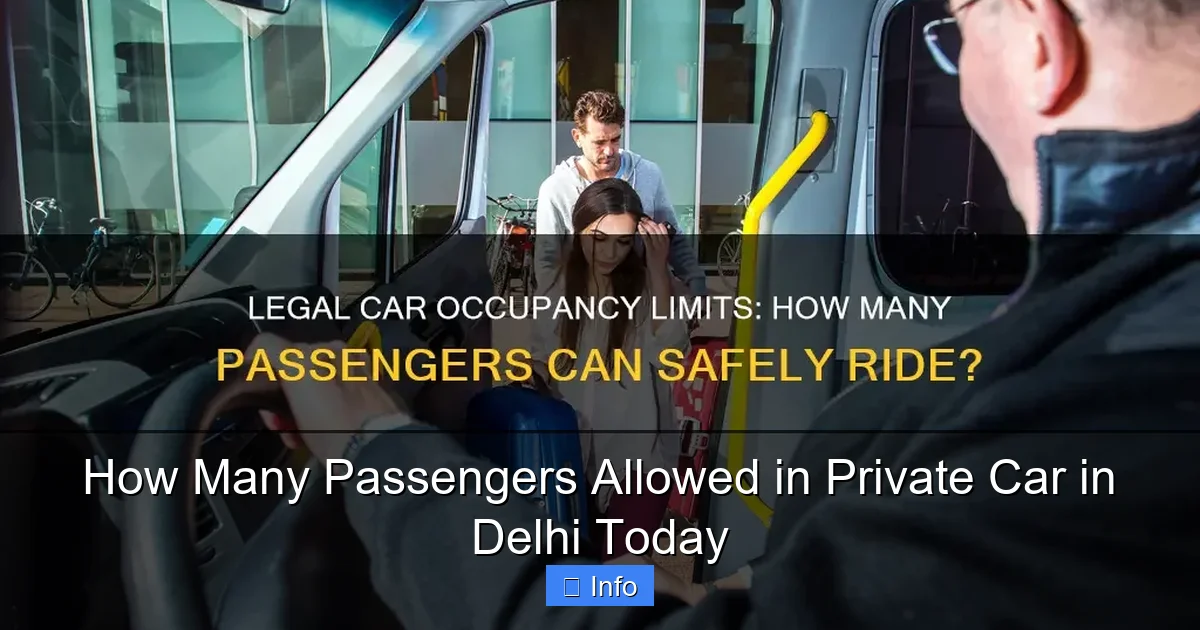
Private cars in Delhi can generally carry passengers up to their registered seating capacity, typically five for sedans and seven for SUVs. There is no special passenger limit rule beyond seat belt requirements and vehicle registration limits. Always check your car’s RC to confirm the exact number of passengers allowed.
Every day, millions of cars hit the roads of Delhi. Drivers often ask how many passengers allowed in private car in Delhi today. The answer is simpler than you think. Delhi does not impose a special passenger limit on private cars beyond the vehicle’s seating capacity. You can carry as many passengers as there are seat belts. But there are rules you must follow. Safety, legality, and comfort all matter. In this guide, we break down everything you need to know. We cover seating limits, seat belt laws, child safety, odd-even rules, and pollution alerts. We also discuss practical tips for daily commuting. By the end, you will drive with confidence. You will know exactly how many people can ride with you legally and safely. You will avoid fines. You will protect your family. Let us dive into the details.
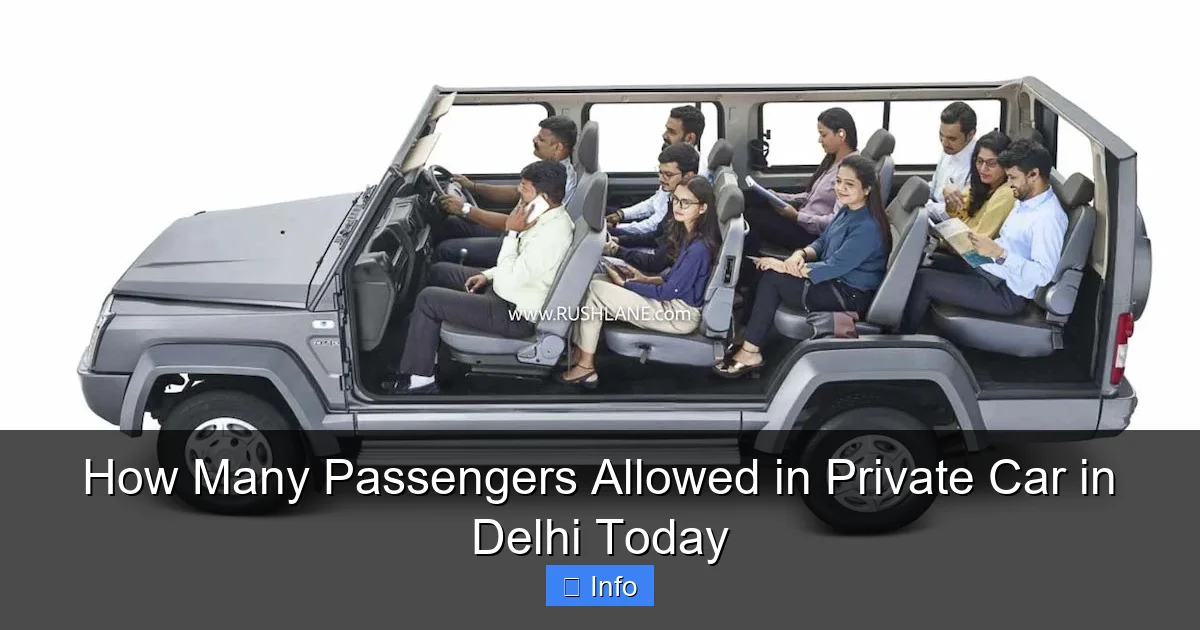
Delhi traffic rules follow the Motor Vehicles Act. This act sets the baseline for all vehicles on Indian roads. For private cars, the rule is clear. You can carry passengers up to the seating capacity mentioned in your Registration Certificate. Most sedans have five seats. That means five people total, including the driver. SUVs and larger vehicles often have seven seats. That means seven people total. There is no separate rule that says “private cars can only carry X passengers in Delhi.” The limit comes from your car’s design and registration. Always check your RC document. It lists the number of passengers your car can legally carry. If you overload beyond this, you risk a fine. More importantly, you risk safety. Overloading affects braking and handling. In Delhi traffic, this is dangerous. The roads are busy. The lanes are narrow. Extra weight makes stopping harder.
Key Takeaways
- Seating capacity rules: Private cars can carry passengers equal to the number of seat belts installed.
- No odd-even passenger limits: The odd-even scheme restricts cars by registration number, not by passenger count.
- Seat belt mandatory: Every passenger must wear a seat belt, including those in the rear.
- Child safety: Children require appropriate car seats based on age and weight.
- Check your RC: The Registration Certificate lists the authorized seating capacity of your vehicle.
- Pollution alerts: GRAP phases may restrict vehicle usage but do not change passenger limits for private cars.
📑 Table of Contents
- Understanding Delhi’s Current Passenger Rules for Private Cars
- Seat Belts, Safety Gear, and Legal Obligations
- Odd-Even Scheme and Pollution Emergency Rules
- Electric Vehicles and Passenger Rules
- Practical Tips for Commuting with Passengers in Delhi Traffic
- Fines, Penalties, and Insurance Implications
- Common Myths and Misconceptions
- Conclusion
Understanding Delhi’s Current Passenger Rules for Private Cars
What the Rules Say Today
The current rules do not change based on the day. Whether it is Monday or Friday, the passenger limit stays the same. Some people confuse this with the odd-even scheme. The odd-even rule restricts which cars can drive on which days. It does not limit how many passengers ride in the allowed cars. So if your car is allowed on a particular day, you can carry up to your seating capacity. Police do not stop cars to count passengers unless there is a visible overload. Even then, they check against the RC capacity. If you have five seat belts and five people, you are fine. If you have five seat belts and six people, you are violating the law. The fine for overloading can be steep. It can also add points to your license. In severe cases, the vehicle may be impounded. The Supreme Court of India has also issued guidelines about seat belt use. These guidelines apply to all states including Delhi.
How Seating Capacity Is Determined
Seating capacity depends on the manufacturer. It is printed on the RC. It also appears on the vehicle’s chassis plate. Do not guess the number. Do not assume a five-seater can fit six people comfortably. The fifth seat belt is for the driver. The back seat usually has three belts in a sedan. That gives you four passengers plus the driver. In an SUV, the third row adds two more seats. That makes seven total. Always verify before you load up. If you recently installed a seat, get the RC updated. Driving with unregistered modifications can lead to penalties. Also, check if the extra seat has a belt. A seat without a belt does not count. Every passenger needs a proper belt or child restraint. Commercial vehicles like autos and taxis have different rules. They display the passenger limit outside. Private cars do not display this. You must know your vehicle.
Seat Belts, Safety Gear, and Legal Obligations
Seat belts are non-negotiable in Delhi. The law requires every passenger to buckle up. This includes the rear seat. Many people think only front passengers need belts. This is wrong. Rear passengers without belts are illegal. They are also at high risk during sudden stops. In Delhi traffic, sudden stops happen often. A rear passenger without a belt can injure the driver or themselves. Fines apply for each unbuckled passenger. The driver is responsible for ensuring everyone wears a belt. This is a serious responsibility. You are carrying lives.
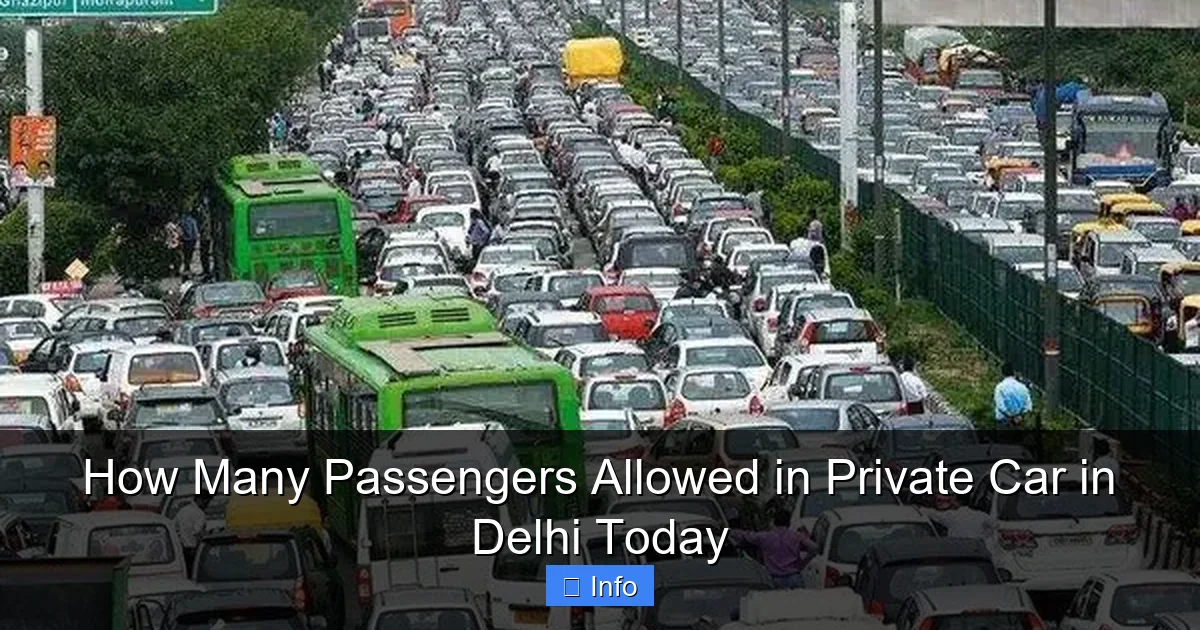
Visual guide about How Many Passengers Allowed in Private Car in Delhi Today
Image source: images.livemint.com
Why Seat Belts Matter
Seat belts save lives. They keep passengers inside the car during crashes. They spread crash forces across strong body parts. In a Delhi traffic jam at 60 km/h, a sudden collision throws unrestrained passengers forward. They can hit the seat in front or the windshield. The impact can be fatal. Seat belts also prevent ejections. Ejections from vehicles have a very high death rate. In Delhi’s dense traffic, cars can spin or roll. Belts keep you in your seat. They work with airbags to provide protection. Airbags alone are not enough. They need belted occupants to work properly. Without a belt, a deploying airbag can cause serious injury.
Child Safety and Car Seats
Children under a certain height need car seats. The law mandates child restraints for kids below specific age and weight limits. If you carry children, choose the right seat. Our guide on the Best 4 In 1 Car Seats For Safety And Comfort helps you pick the perfect fit. These seats grow with your child. They fit most private cars. They ensure your little ones ride safely and legally. Never hold a child on your lap while driving. In a crash, your arms cannot hold them. The force is too great. A child on your lap can be crushed. Use rear-facing seats for infants. Use booster seats for older kids. Make sure the seat is installed correctly. Loose seats are dangerous. Check the ISI mark on the seat. Fake seats do not protect.
Odd-Even Scheme and Pollution Emergency Rules
Delhi runs the odd-even scheme during severe pollution or trial periods. Many drivers worry this affects passengers. It does not. The odd-even rule is about registration numbers. Odd plates drive on odd dates. Even plates drive on even dates. Private cars follow this rule. But the number of passengers inside does not matter. A car with one person or four people follows the same odd-even rule. Both are allowed or banned based on their plate number. Some people think carpooling with many passengers gives you an exemption. This is not true for private cars. Only registered CNG buses, emergency vehicles, and specific exempt categories get passes. Private cars do not get passenger-based exemptions.

Visual guide about How Many Passengers Allowed in Private Car in Delhi Today
Image source: theskystars.com
Does Odd-Even Limit Passengers?
No. Odd-even does not limit passengers. It limits vehicles. If your car is banned on a Tuesday, you cannot drive it regardless of passengers. If your car is allowed, you can drive with up to your seating capacity. Police check registration numbers at checkpoints. They do not count passengers. If your plate is odd and today is odd, you are fine. If your plate is even and today is odd, you are banned. The passenger count is irrelevant. Do not believe anyone who says otherwise. This is a common scam. People sell fake odd-even passes. Avoid them. The Delhi government does not sell passenger exemptions.
GRAP and Vehicle Restrictions
GRAP stands for Graded Response Action Plan. It activates during severe air quality. Different phases bring different rules. Phase 1 might ban diesel vehicles above a certain age. Phase 2 might restrict construction. Phase 3 could limit private cars further. But even in GRAP, private car passenger limits do not change. The focus is on emission standards and vehicle age, not passenger count. However, staying off the road helps Delhi’s air. Consider carpooling voluntarily. It reduces traffic and pollution. You can carry up to your seating capacity and still help the environment. More people per car means fewer cars on the road.
Electric Vehicles and Passenger Rules
Electric vehicles are becoming popular in Delhi. They follow the same passenger rules as petrol or diesel cars. An EV with five seats carries five people max. The motor does not change the capacity. Check the RC for the exact number. Some EVs have extra features like fold-flat seats. Do not use these to add unauthorized seats. The RC must match the actual setup. Tesla Model 3 has five seats. Hyundai Kona Electric has five seats. MG ZS EV has five seats. All follow the same seating capacity rules. The battery size does not affect passenger limits.
Visual guide about How Many Passengers Allowed in Private Car in Delhi Today
Image source: motorbiscuit.com
Practical Tips for Commuting with Passengers in Delhi Traffic
Avoiding Overcrowding
Overcrowding is dangerous. It blocks exit routes. It makes evacuation hard during emergencies. Check your car before every trip. Count the seat belts. Count the passengers. If you have five belts, carry five people max. If you need to carry more, take multiple trips or use a larger vehicle. Do not squeeze people into the boot. This is illegal and deadly. The boot is for luggage only. People in the boot have no protection. In a crash, they suffer fatal injuries. Never do this. Also, do not let passengers ride on the roof. This is also illegal. It is common in some rural areas but not in Delhi.
Comfort and Legal Compliance
Comfort matters for passenger safety. Overcrowded cars make passengers uncomfortable. They distract the driver. In Delhi heat, AC works harder with more people. If you drive a Toyota Rav4, you might wonder about fuel range. Knowing how many gallons does a Toyota Rav4 Hold helps you plan trips without stopping frequently. Keep water bottles for passengers. Carry tissues and hand sanitizer. A comfortable ride is a safe ride. Passengers should not hang limbs out of windows. They should not stand up. They should stay seated with belts on. If a passenger is sick, pull over safely. Do not let them sit in the footwell.
Vehicle Maintenance with Passengers
Extra passengers mean extra weight. This strains your brakes and suspension. Know how to check brake pads in your car before long trips with family. Worn brakes fail under heavy loads. Replace them timely. Check tire pressure too. Overloaded tires overheat. This causes blowouts. Regular maintenance keeps everyone safe. Also, check your AC. Delhi summers are brutal. A working AC keeps passengers calm and comfortable. Clean filters regularly. Check coolant levels. Overheating engines are dangerous.
Fines, Penalties, and Insurance Implications
Overloading your private car in Delhi comes with financial risks. The traffic police issue fines for exceeding seating capacity. The amount varies based on the vehicle type and overload level. For a private car, overloading by even one person can attract a fine. The fine might be around Rs 1000 to Rs 2000. Your driving license may also get points. Repeated offenses can lead to license suspension. Insurance companies look at overload claims differently. If you crash while overloaded, the insurer may deny the claim. They argue that overloading is a violation of policy terms. This means you pay for repairs yourself. Always stay within limits to protect your wallet.
How Police Enforce Passenger Limits
Delhi Traffic Police use checkpoints and patrols. They check RC documents at these stops. They verify the number of seats against passengers. In some areas, cameras monitor vehicle capacity. Overloaded vehicles are flagged. The police may tow the vehicle if it is severely overloaded. This causes huge inconvenience. You need a lawyer or bail to get the vehicle back. Avoid this situation. Know your car’s capacity before you drive.
Insurance and Overloading
Your car insurance policy assumes normal usage. Overloading voids certain coverage aspects. If a passenger gets injured in an overload accident, your insurance may not cover medical costs. The third-party liability might still apply. But own-damage claims get complicated. Insurers investigate the cause of the accident. Overloading is a red flag. They may reject the claim. This leaves you with massive hospital bills. Always drive within limits.
Common Myths and Misconceptions
Myth Busting
Myth one: Private cars can carry unlimited passengers if everyone pays fuel. False. Passenger limits come from seating capacity, not payment. Myth two: Rear seat passengers do not need seat belts. False. Everyone needs a belt. Myth three: Odd-even allows more passengers in carpools. False. Odd-even bans cars by plate number, not passenger count. Myth four: Seven-seaters can always carry seven people. False. Check the RC. Some seven-seaters have only five belts in the rear. Myth five: Police do not check rear seat belts. False. Enforcement is increasing. Cameras and patrols catch violators. Myth six: You can carry passengers in the trunk. False. This is illegal and extremely dangerous.
Conclusion
Understanding how many passengers allowed in private car in Delhi today keeps you legal and safe. The rule is simple. Match passengers to seat belts. Check your RC. Use child seats for kids. Wear belts always. Ignore myths about odd-even exemptions. Maintain your car for extra passengers. Delhi roads are busy. Safety is your responsibility. Share this guide with fellow drivers. Spread the word about passenger rules. Drive smart. Drive safe.
Frequently Asked Questions
Can I carry more passengers than seat belts in my private car in Delhi?
No. You cannot carry more passengers than there are seat belts. The Registration Certificate lists your car’s seating capacity. Overloading is illegal and dangerous.
Does the odd-even scheme limit passengers in private cars?
No. The odd-even scheme restricts cars by registration number, not by passenger count. If your car is allowed on a day, you can carry up to your seating capacity.
Are rear seat passengers required to wear seat belts in Delhi?
Yes. All passengers must wear seat belts, including those in the rear. The driver is responsible for ensuring everyone buckles up.
What happens if I overload my private car in Delhi?
You can face fines for overloading. More importantly, overloaded vehicles handle poorly and increase accident risk. Always match passengers to seat belts.
Do child passengers need special seats in Delhi?
Yes. Children need appropriate child restraints based on age and weight. Refer to safety guides for the best car seats for your vehicle.
Can pollution alerts change passenger limits for private cars?
No. Pollution alerts like GRAP restrict vehicle types and ages, not passenger numbers. Private cars follow seating capacity rules regardless of air quality alerts.