Can You Put a 4×4 Transmission in a 2wd
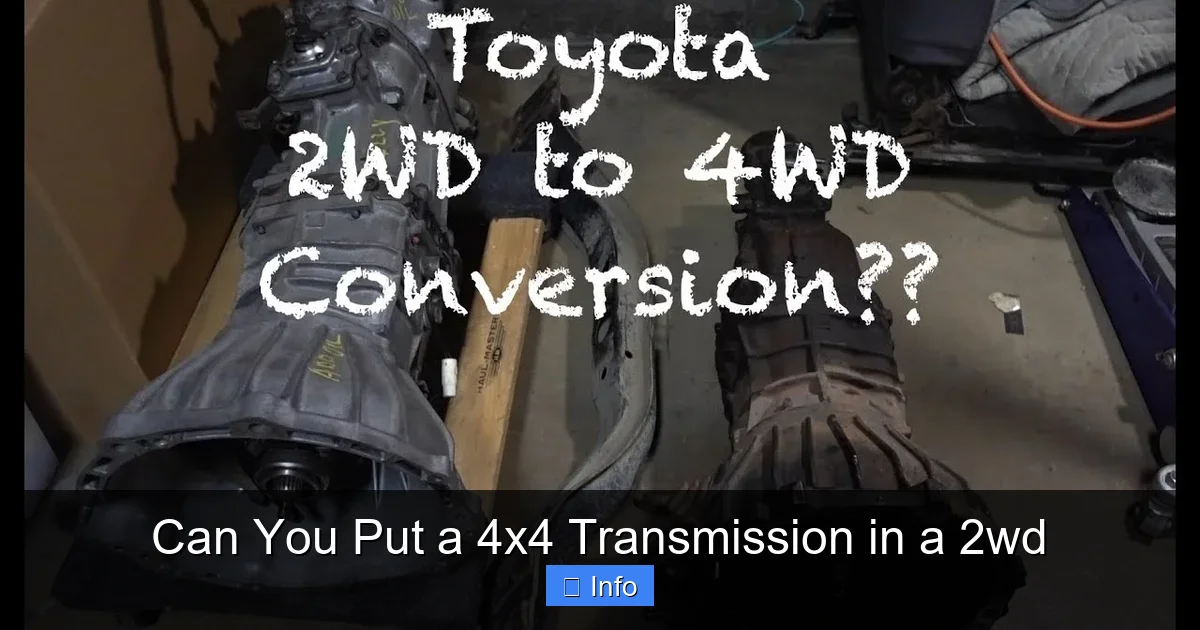
If you’re wondering whether a 4×4 transmission can be installed in a 2WD vehicle, the short answer is “yes, but with caveats.” The physical bolt pattern often matches, yet drivetrain components, gear ratios, and electronic controls may need serious modifications. Professional installation and thorough research are essential to avoid costly problems.
Key Takeaways
- Physical fit: Many 4×4 and 2WD models share the same transmission mount and bolt pattern, making the swap possible.
- Gear ratio mismatch: 4×4 transmissions are tuned for higher torque; using them in a 2WD can strain the drivetrain.
- Electronic integration: Modern transmissions rely on ECU mapping; mismatched software can cause shifting issues.
- Modification cost: Expect to spend on custom driveshafts, differential adjustments, and reprogramming.
- Performance trade‑offs: You may gain better towing capacity but lose fuel economy and everyday drivability.
- When it makes sense: Off‑road builds, budget restorations, or when a 2WD is being converted to all‑wheel drive.
- Professional vs DIY: Complex swaps are best left to experienced shops that can validate control module compatibility.
📑 Table of Contents
Is It Even Possible?
When you first hear the idea of putting a 4×4 transmission in a 2WD car, it sounds like a bold experiment. In many cases the physical dimensions are identical. The transmission mount, bolt pattern, and overall length often match between a front‑wheel‑drive (FWD) and a four‑wheel‑drive (4WD) version of the same platform. This similarity is why the question pops up in forums and YouTube comments.
But “possible” does not equal “plug‑and‑play.” The drivetrain layout, differential ratios, and electronic control units (ECUs) are designed for a specific purpose. A 4×4 transmission is built to handle higher torque loads because it also drives the rear axle. Dropping it into a 2WD car changes the balance of power delivery, steering response, and fuel consumption. Understanding these factors is the first step before you even think about removing the old unit.
Understanding 4×4 and 2WD Systems
A 2WD vehicle typically uses a transaxle that combines the transmission and differential into one compact unit. This design is optimized for efficiency and low weight. In contrast, a 4×4 system adds a separate rear differential and often a larger, more robust transmission that can send power to both axles.
Because the 4×4 transmission is built to handle the extra load, its internal gear ratios are often taller. This can be a benefit if you want more pulling power, but it can also make the engine work harder at everyday speeds, hurting fuel economy. The electronic brain of the car also expects certain sensor inputs from the rear driveshaft and rear differential—inputs that simply won’t exist in a 2WD car.
Bolt Pattern and Physical Compatibility
Many manufacturers use the same transmission housing for both FWD and 4WD versions of a model. For example, a Toyota Camry 2.5‑liter platform may share the same bell‑housing bolt pattern with a RAV4 4WD unit. This similarity means the transmission can physically bolt into the engine compartment without major machining.
However, the driveshaft length will differ. A 4×4 transmission usually has a longer output shaft to reach the rear differential. In a 2WD car, that extra length must be trimmed, and a new driveshaft must be fabricated. The mounting points for the transmission (the torque converter, mount brackets, and accessory pulleys) also need verification. A quick check with a service manual or an online parts catalog can save you hours of trial and error.
Mechanical Differences You Can’t Ignore
Even if the bolts line up, the gear ratios and torque characteristics will be mismatched. A 4×4 transmission is tuned for higher torque output because it must propel two axles. When you install it in a 2WD car, the rear differential is absent, so the excess torque is absorbed only by the front wheels. This can lead to premature wear on the drivetrain components.
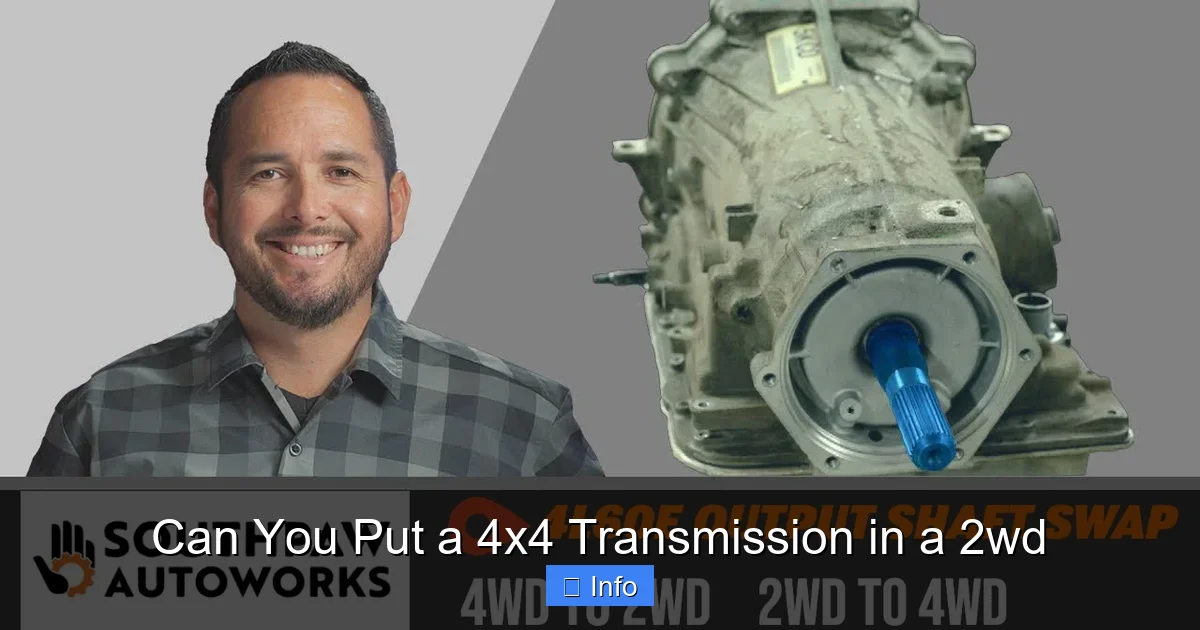
Visual guide about Can You Put a 4×4 Transmission in a 2wd
Image source: i.ytimg.com
Gear Ratios and Torque Characteristics
The gear ratios in a 4×4 transmission are often closer together, providing stronger low‑end pull. This is great for towing or off‑road rock crawling. In a 2WD application, the engine may be forced to rev higher for normal city driving, which reduces fuel efficiency and can cause the transmission to overheat.
Consider the example of a Toyota RAV4 2.0L 4WD transmission swapped into a 2020 Camry. The Camry’s ECU expects a certain throttle position and vehicle speed feedback. The RAV4’s transmission may shift at different RPMs, leading to harsh upshifts or delayed responses. To fix this, you usually need a custom tune or reprogramming of the ECU. For fluid change intervals, see our guide on how often you should change transmission fluid in a Toyota Highlander.
Electronic Control Units and Sensing Systems
Modern transmissions are essentially computers. They read inputs from the throttle body, wheel speed sensors, and even the steering angle. A 4×4 transmission expects signals from a rear driveshaft position sensor and a rear differential lock sensor—signals that simply don’t exist in a 2WD car.
If you ignore these missing inputs, the ECU may default to “limp mode,” which limits power and causes warning lights on the dash. Many enthusiasts have to install dummy sensors or reprogram the ECU to make the system think it’s still a 4WD vehicle. This step is crucial for reliability and safety.
The Installation Challenge
Installing a 4×4 transmission is a marathon, not a sprint. Even when the physical fit is good, you’ll encounter several hurdles that require specialized tools and knowledge.
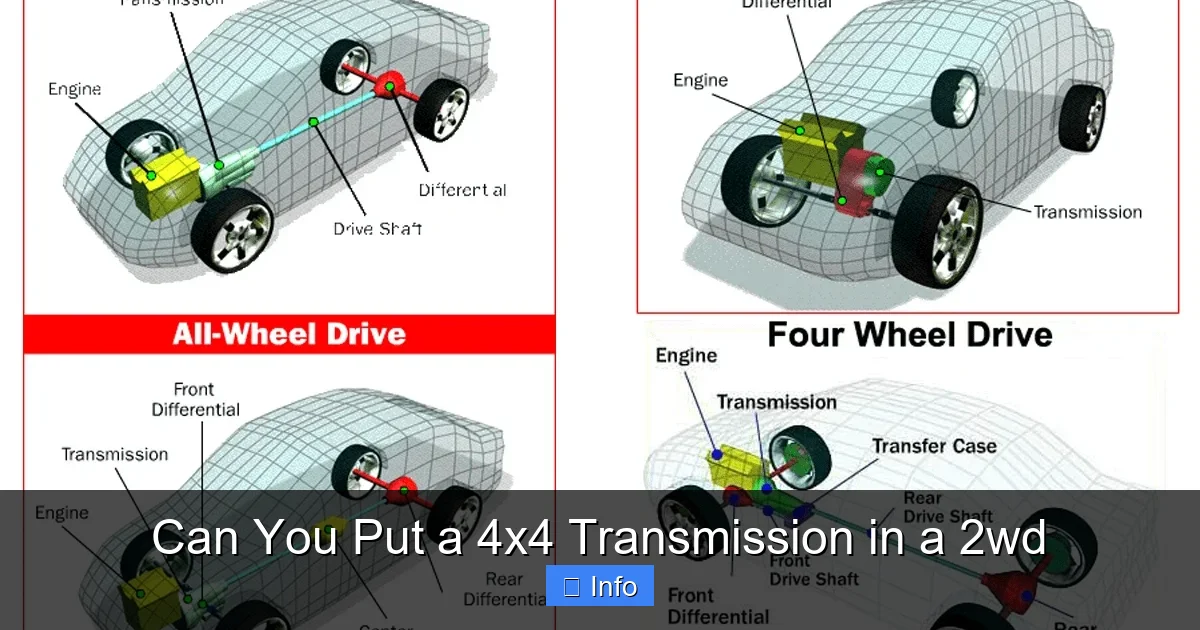
Visual guide about Can You Put a 4×4 Transmission in a 2wd
Image source: tadvantagewebsites-com.cdn-convertus.com
Drivetrain Modifications Needed
First, you must adapt the driveshaft. The 4×4 transmission’s output shaft is longer than what a 2WD car needs. You’ll need to cut the shaft to the correct length and then mount a new U-joint that matches the angles of the existing drivetrain. This process often involves a custom fabrication shop.
Next, the differential must be removed or disabled. In many cases, the rear differential is bolted directly to the transmission output. If you keep it, you’ll have to lock it or fill it with a special gear oil that can handle the higher torque. Some builds simply weld the differential closed and seal it off, but this adds weight and complexity.
Suspension geometry can also be affected. The added torque and weight may push the front suspension out of alignment, causing uneven tire wear. You may need to adjust camber and toe settings after the swap is complete.
Suspension and Differential Considerations
Because a 4×4 transmission is heavier, the suspension components may need upgrading. Stronger control arms, thicker sway bars, and reinforced mounts are common upgrades. If you plan to tow heavy loads, consider the towing capacity of your vehicle, as discussed in our article on Toyota RAV4 towing capacity. Overloading the suspension can lead to catastrophic failure.
Finally, the cooling system may need enhancement. The extra heat generated by the larger transmission can overwhelm the stock radiator. Adding an auxiliary cooler or upgrading the existing one is a smart move, especially if you intend to use the vehicle for off‑road or towing duties.
Pros and Cons of the Swap
Before you commit to a major drivetrain change, weigh the advantages against the drawbacks. The decision often hinges on your budget, skill level, and intended use.
Visual guide about Can You Put a 4×4 Transmission in a 2wd
Image source: i.ytimg.com
Benefits: More Capability and Flexibility
A 4×4 transmission can provide stronger torque delivery, which is handy for serious off‑road work or heavy towing. It also opens the door to future all‑wheel‑drive conversions, as many components are already in place. For enthusiasts who love customizing their ride, the swap offers a unique mechanical puzzle.
Modern 4×4 transmissions often include sport mode, which can be engaging for daily driving. The feel of a more aggressive shift map can be appealing, especially if you enjoy a bit of extra punch. This is similar to using sport mode in a Toyota Camry, where the transmission holds gears longer for a sportier feel.
Drawbacks: Complexity, Cost, and Reliability
The biggest downside is the cost. A 4×4 transmission is more expensive than a comparable 2WD unit. You also need to purchase or fabricate custom driveshafts, upgrade suspension parts, and possibly reprogram the ECU. Labor costs can quickly add up if you hire a shop.
Reliability can suffer if the swap isn’t done correctly. Mismatched gear ratios can cause premature wear on the clutch, bearings, and gears. If the ECU isn’t properly tuned, you may experience erratic shifting, reduced fuel economy, and even engine damage.
When Does This Swap Make Sense?
There are a few scenarios where swapping a 4×4 transmission into a 2WD car is a logical choice.
Off‑Road Enthusiasts
If you’re building a rock‑crawling rig, the extra torque and lower gear range of a 4×4 transmission are invaluable. You can pair it with a locking differential and robust suspension to create a truly capable off‑road machine.
Salvage and Budget Builds
Sometimes a 2WD donor car is all you have, but you need the power of a 4×4 transmission for a project. By using a used 4×4 transmission from a salvage yard, you can keep costs down while still getting a robust drivetrain. This approach works well for budget restorations where the goal is functionality over originality.
Expert Tips and Best Practices
Whether you’re a seasoned mechanic or a DIY enthusiast, following best practices will help you avoid common pitfalls.
Choosing the Right Transmission
Start with a reliable donor. Research the VIN and transmission code to ensure you’re getting a unit that matches your engine and year. Look for transmissions that have already been rebuilt or have low mileage. Checking online forums can give you real‑world feedback on specific part numbers.
Professional Installation vs DIY
Complex swaps often require a professional shop. A qualified technician can handle ECU reprogramming, custom driveshaft fabrication, and suspension geometry adjustments. If you’re comfortable with advanced automotive work, a DIY approach can save money, but be prepared for trial and error.
After the installation, take the vehicle for a series of short test drives. Listen for unusual noises, watch for warning lights, and note any changes in acceleration or fuel consumption. Regular maintenance, such as checking transmission fluid levels using the guide on how often you should change transmission fluid in a Toyota Highlander, will keep the system healthy.
Conclusion
Putting a 4×4 transmission into a 2WD car is technically possible, but it’s far from simple. The physical fit may be there, but the drivetrain dynamics, electronic controls, and suspension geometry often require extensive modifications. The reward can be a more capable vehicle for off‑road adventures or heavy towing, but the cost, complexity, and potential reliability issues must be carefully weighed.
If you’re prepared to invest time, money, and expertise, the swap can be a rewarding project. However, for most everyday drivers, the modest gains don’t justify the hassle. Always start with thorough research, consult professional mechanics, and never rush a drivetrain change. With the right approach, you can create a unique setup that meets your specific needs while keeping safety and reliability at the forefront.
Frequently Asked Questions
Can any 4×4 transmission fit into a 2WD car?
Not all 4×4 transmissions are interchangeable. While many share the same bolt pattern, differences in driveshaft length, gear ratios, and ECU mapping mean you must verify compatibility for each specific make and model before attempting a swap.
What are the most common modifications needed?
Typical modifications include custom driveshaft fabrication, rear differential removal or locking, suspension upgrades, and ECU reprogramming. Cooling system enhancements are also common to handle the extra heat generated by the larger transmission.
Will this swap affect fuel economy?
Yes, it often reduces fuel efficiency. The higher torque output and heavier transmission cause the engine to work harder, especially during normal driving conditions. Proper tuning can mitigate some of the loss, but expect a noticeable drop.
Is it legal to drive a 2WD car with a 4×4 transmission?
Legality depends on your local vehicle inspection standards. Many jurisdictions require the drivetrain to match the original specification. Check with your local DMV or a certified inspector to ensure the modified vehicle passes emissions and safety inspections.
Do I need a professional to install the transmission?
While a skilled DIYer can handle the mechanical aspects, ECU reprogramming and precise driveshaft work often require professional tools and calibration. Hiring a reputable shop can help avoid costly mistakes and ensure the vehicle is safe to drive.