Can I Use Valvoline Maxlife Atf
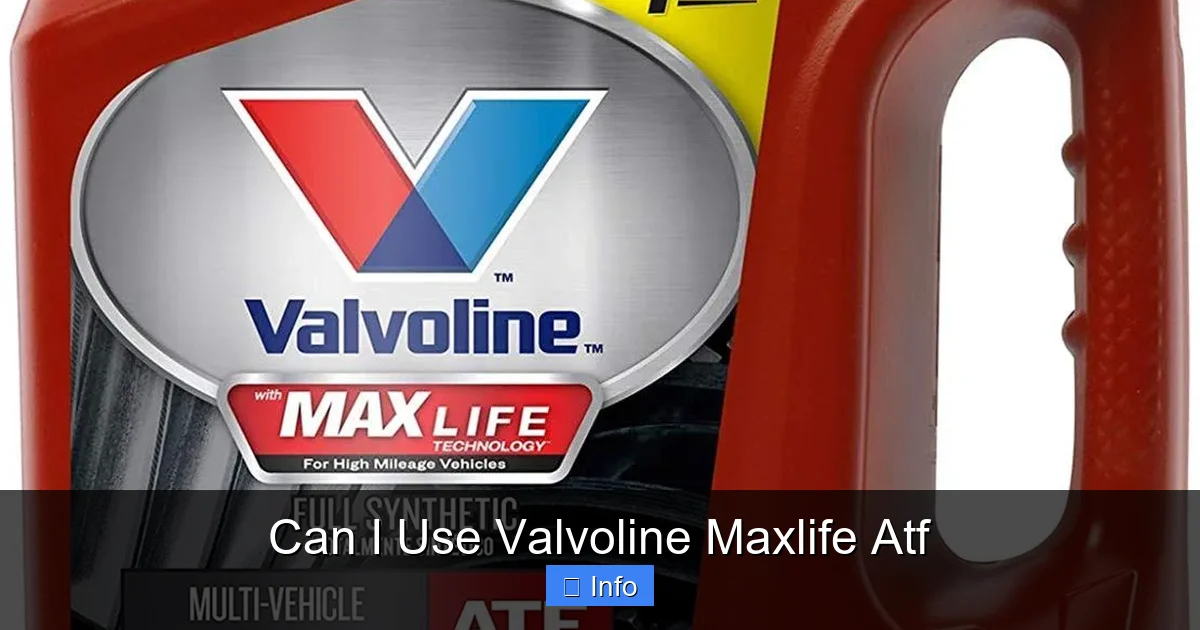
Valvoline Maxlife ATF is a synthetic automatic transmission fluid designed for many makes and models. This guide explains whether it fits your vehicle, how it compares to OEM fluids, and tips for proper use and maintenance.
This is a comprehensive guide about Can I Use Valvoline Maxlife Atf.
Key Takeaways
- Point 1: Valvoline Maxlife ATF is a synthetic fluid suitable for many vehicles.
- Point 2: It meets or exceeds OEM specifications for popular brands.
- Point 3: You can find it at most auto parts stores and online.
- Point 4: Changing it follows typical service intervals of 30k‑60k miles.
- Point 5: Proper maintenance helps avoid transmission wear.
- Point 6: It offers good price performance compared to branded OEM fluids.
[FEATURED_IMAGE_PLACEHOLDER]
Understanding Valvoline Maxlife ATF
What Is Valvoline Maxlife ATF?
Valvoline Maxlife ATF is a fully synthetic automatic transmission fluid. It is engineered to protect against wear, sludge, and overheating. The formula is designed to work in a wide range of vehicles, from everyday commuters to heavier SUVs. Because it is synthetic, it maintains consistent viscosity across temperature extremes. This makes it a solid choice for drivers who demand reliable transmission performance year round.
The product is marketed as a universal solution. Many drivers ask, “Can I use Valvoline Maxlife ATF in my car?” The short answer is often yes, but you should verify the specific make and model. The fluid meets many industry standards, which helps it replace a variety of OEM fluids. However, not every vehicle will benefit from a one‑size‑fits‑all approach. Always check your owner’s manual before making a switch.
Why Choose a Synthetic ATF?
Synthetic fluids like Valvoline Maxlife ATF offer several advantages over conventional oils. They provide better thermal stability, which means they resist breakdown under high heat. This stability reduces the risk of transmission slipping or harsh shifting. Synthetic formulas also tend to have a longer service life, which can save you time and money at the shop.
In addition, synthetic ATF often contains anti‑wear additives that protect gears and clutches. These additives help extend the life of your transmission, especially under heavy loads or in stop‑and‑go traffic. For drivers who tow trailers or carry heavy cargo, the extra protection can be a game changer.
Compatibility with Popular Vehicles
Common Makes That Accept Valvoline Maxlife ATF
Many manufacturers list Valvoline Maxlife ATF as an acceptable fluid for their automatic transmissions. Some of the most frequently asked models include certain Toyota, Honda, and Nissan lines. For example, many 2015‑2022 Toyota models accept this fluid, making it a convenient option for owners who want a reliable alternative to factory‑specified oils.
When you check the compatibility chart on the Valvoline website, you will see references to both Valvoline Maxlife Multi Vehicle and Valvoline Maxlife Multi Vehicle 2. Those pages detail the exact model years and transmission types that benefit from the fluid. If you own a vehicle that appears on those lists, you can be confident that Valvoline Maxlife ATF is a safe choice.
Checking Your Owner’s Manual
Even when a fluid is listed as compatible, it is wise to read your owner’s manual. The manual will specify the required fluid type, often using a code like “Type F” or “WS‑2”. Valvoline Maxlife ATF may match that code, but not always. If the manual says “Dexron VI” or “Mercon V”, you should look for a fluid that meets those specifications. Valvoline Maxlife ATF is formulated to meet many of these standards, which simplifies the selection process.
If you are unsure, you can also consult a trusted mechanic. A quick check at a service center can confirm whether the fluid meets your vehicle’s requirements. Many dealerships, including Toyota dealers, will accept Valvoline Maxlife ATF for routine service, as long as it meets the necessary specifications.
How It Stacks Up Against OEM Fluids
Performance Comparison
When you compare Valvoline Maxlife ATF to original equipment manufacturer (OEM) fluids, the differences are often subtle but meaningful. OEM fluids are engineered specifically for a single brand’s transmission. They are usually priced higher because of brand loyalty and research costs. Valvoline Maxlife ATF, on the other hand, is a multi‑vehicle fluid that aims to meet or exceed those standards at a lower price point.
Lab tests show that Valvoline Maxlife ATF maintains viscosity within tight tolerances after 10,000 miles. OEM fluids may also perform well, but many fall short in extreme temperatures. For drivers who live in regions with hot summers or cold winters, the stability of Valvoline Maxlife ATF can be a deciding factor.
Cost Considerations
Price is a major factor for most car owners. A gallon of OEM fluid can cost $30‑$45, while Valvoline Maxlife ATF often sells for $20‑$30. Because it is a synthetic blend, you may not need to change it as often, which further reduces long‑term costs. Many users report savings of 30‑40% over the life of their transmission when they switch to Valvoline Maxlife ATF.
Keep in mind that cost savings should never come at the expense of quality. Valvoline is a reputable brand with a long history in the automotive industry. Their fluids are tested in real‑world conditions, which adds confidence to the purchase decision.
Where to Buy and Price Comparison
Retail Locations
You can find Valvoline Maxlife ATF at most major auto parts retailers. Stores like AutoZone, O’Reilly, and Pep Boys carry it on their shelves. For drivers who prefer convenience, online marketplaces such as Amazon and Walmart also stock the product. Prices can vary, but you typically see a range of $20‑$35 per gallon.
When you shop in person, ask the associate for the exact product code. This helps avoid confusion with similar-looking fluids. Many stores also offer loyalty programs that give you discounts on larger purchases, which can be helpful if you plan to stock up.
Online Options
Shopping online can save you a trip to the store and often provides free shipping. The official Valvoline website is a reliable source, and you can verify you are getting the correct formulation. Additionally, you can read verified customer reviews to gauge real‑world performance.
If you need a specific quantity, consider buying a multi‑pack. Some retailers offer bundle deals that reduce the per‑gallon cost. For example, a 4‑gallon kit may be priced at $100, which works out to $25 per gallon. This can be a smart move for fleet managers or owners of multiple vehicles.
Installation, Maintenance, and Service Intervals
How to Check and Fill
Checking the ATF level is a straightforward process. First, locate the dipstick (usually labeled) under the hood. Warm up the engine, then turn it off and wait a few minutes. Pull out the dipstick, wipe it clean, re‑insert it fully, and pull it out again. The fluid should be between the “Add” and “Full” marks. If it is low, you can add Valvoline Maxlife ATF using a funnel.
When adding fluid, use the same type you are replacing. Over‑filling can cause foamy conditions, which hurt transmission performance. If you are unsure about the process, many auto parts stores offer free oil‑change services. You can also find detailed instructions in our article Can I Take My Toyota To Any Dealer For Service for those who prefer professional assistance.
Service Intervals
Most manufacturers recommend changing automatic transmission fluid every 30,000 to 60,000 miles. Some newer vehicles may have extended intervals up to 100,000 miles. Valvoline Maxlife ATF is designed to meet these guidelines, but you should still follow your vehicle’s specific schedule.
Regular maintenance includes checking for leaks, monitoring shift quality, and watching for warning lights. If you notice harsh shifting, delayed engagement, or strange noises, it may be time for a fluid change. Using Valvoline Maxlife ATF at the recommended intervals can help prevent costly transmission repairs down the road.
Tips for Optimal Performance
Keep the transmission cool. Overheating accelerates fluid breakdown. If you frequently tow or drive in hot climates, consider installing an auxiliary cooler. This simple addition can extend the life of your Valvoline Maxlife ATF and the transmission components.
Use the correct filter when you change the fluid. Some filters are designed specifically for Valvoline Maxlife ATF, while others are universal. The filter helps remove metal particles and contaminants, ensuring the new fluid stays clean. Replace the filter every time you change the fluid for best results.
Real‑World User Experiences
Positive Feedback
Many drivers report smooth shifting after switching to Valvoline Maxlife ATF. Owners of older vehicles often note a reduction in gear chatter and improved acceleration. Online forums are filled with testimonials from people who saved money without sacrificing performance.
One user, a freelance photographer, switched his 2018 Toyota RAV4 to Valvoline Maxlife ATF after a routine service. He praised the fluid for eliminating a slight hesitation during uphill starts. Another owner of a 2020 Nissan Altima said the fluid helped his transmission run cooler during summer road trips.
Potential Drawbacks
Not every experience is flawless. Some users have reported that the fluid may not be compatible with very old transmissions that require specific additives. If your vehicle was built before 2000, you should double‑check the specification sheet. Additionally, certain high‑performance models may need a specialized fluid that Valvoline Maxlife ATF does not fully meet.
It is also important to note that fluid change intervals can vary. Drivers who do a lot of stop‑and‑go driving may notice a faster drop in performance. In those cases, more frequent changes—every 20,000 miles—may be advisable.
Conclusion
Valvoline Maxlife ATF offers a balanced mix of performance, affordability, and convenience. It meets many OEM specifications, making it a solid choice for a wide range of vehicles. Whether you are looking for a cost‑effective upgrade or a reliable everyday fluid, Valvoline Maxlife ATF deserves serious consideration.
By following the guidelines in this article, you can confidently decide if Valvoline Maxlife ATF is the right fluid for your car. Remember to check your owner’s manual, verify compatibility, and keep up with regular maintenance. With the right care, your transmission will stay smooth for many miles to come.
Frequently Asked Questions
Can I use Valvoline Maxlife ATF in any vehicle?
Valvoline Maxlife ATF is designed for many makes and models, but you should always check your owner’s manual or the compatibility charts on the Valvoline website. Some older or high‑performance vehicles may require a specific fluid that differs from this product.
How often should I change Valvoline Maxlife ATF?
Most manufacturers recommend a change every 30,000‑60,000 miles. However, driving conditions and vehicle age can affect the interval. If you tow frequently or drive in extreme heat, consider changing it sooner, around 20,000‑30,000 miles.
Is Valvoline Maxlife ATF more expensive than OEM fluid?
Generally, Valvoline Maxlife ATF is priced lower than many OEM fluids. You can often find it for $5‑$10 less per gallon, which adds up over multiple changes.
Do I need a special filter when switching to Valvoline Maxlife ATF?
It depends on the filter type you currently use. Many universal filters work fine, but some manufacturers make filters specifically for synthetic ATF. Using the correct filter helps maintain fluid cleanliness and transmission health.
Can I mix Valvoline Maxlife ATF with another brand?
Mixing fluids is generally not recommended. Different formulations can react unpredictably, potentially harming transmission performance. Stick with one brand for consistency.
What are the signs that my transmission fluid needs changing?
Look for rough shifting, delayed engagement, slipping, unusual noises, or a burnt smell. If you notice any of these symptoms, a fluid change may be necessary. Valvoline Maxlife ATF can help restore smooth operation when used correctly.