How to Bleed Slave Cylinder Without Bleeder Screw
You can often bleed a slave cylinder that has no bleeder by venting fluid at its hydraulic line connection, using low pressure at the master, or pulling fluid through with a vacuum tool. The job is not universal: some sealed or concentric units must be bench bled or replaced, so check the service manual before loosening any fitting or drilling anything.
How to Bleed Slave Cylinder Without Bleeder Screw
A soft clutch pedal can make every shift feel uncertain. You may press it near the floor, yet the gears still grind. The clutch may also engage close to the floor or refuse to release. Air in the hydraulic line can cause all of these signs.
A slave cylinder with no bleeder screw needs a different approach. Instead of using a dedicated valve, you vent the system at another approved point. In many cases, that point is the hydraulic line connection at the slave. Some sealed units, though, are meant to be bench bled or replaced.
This guide explains the safe methods and their limits. It also shows how to spot a failed part. That matters because bleeding will not fix worn seals or an active leak.
Key Takeaways
- Find the cause first: A soft pedal can come from air, low fluid, a leak, or worn seals.
- Never drill the cylinder: A home-made bleeder can leak, shed metal, or fail under pressure.
- Use an approved vent point: The slave line fitting, a service adapter, or the master side may provide a safe route.
- Keep the reservoir full: An empty master will add more air and make the job take longer.
- Close the fitting first: Seal the open connection before the pedal returns to prevent air from being pulled back in.
- Know the limits: Some sealed or concentric slave cylinders require bench bleeding or replacement.
- Test for leaks: A firm pedal is not enough if fluid returns around the line, boot, or master.
📑 Table of Contents
1. Confirm That Air Is the Problem
Look for more than a soft pedal
Fluid does not compress, but air does. That is why an air pocket can make the pedal soft. Other signs include a pedal that sinks slowly, a low clutch bite, erratic shifts, or bubbles in the catch bottle.
Check the slave body, rubber boot, line, hose, and master cylinder for wet fluid. Also check near the clutch pedal inside the car. Dark, grainy, or water-contaminated fluid calls for a full system flush, not only a quick bleed.
Understand what “no bleeder” means
A bleeder screw is a small valve made for controlled venting. A no-bleeder design simply lacks that valve. It may still have a line fitting, quick-connect port, or service adapter that can release trapped air.
The key is to follow the vehicle service manual. An external slave is often serviceable at its inlet fitting. A concentric slave inside the bell housing may be a sealed, self-bleeding unit. On some models, the maker says to replace it rather than bleed it in the car.
Never drill a hole in the slave cylinder body. The housing may be too thin, and metal bits can enter the hydraulic system. A home-made valve can also leak or fail under pressure.
2. Gather the Right Tools and Work Safely
Use clean tools and fresh fluid. Dirt can damage the small seals inside the master and slave. Before starting, collect the items that match your vehicle and chosen method.
Visual guide about How to Bleed Slave Cylinder Without Bleeder Screw
Image source: compass-autoparts.com
- Fluid specified on the reservoir cap or in the service manual
- A clean catch bottle and clear hose
- The correct line wrench or quick-connect release tool
- A low-pressure bleeder or hand vacuum pump, if needed
- Gloves, eye protection, rags, and a drip pan
- A flashlight and mirror for tight work areas
- Wheel chocks and safe access to the clutch parts
Basic safety rules
Most clutch systems use brake fluid, but the correct type still matters. Do not mix DOT 5 silicone fluid with DOT 3 or DOT 4 unless the maker expressly allows it. Use fresh fluid in a sealed container, since old fluid may hold water.
Brake fluid can strip paint and harm some plastics. Wash spills at once with plenty of water. Wear gloves and eye protection, and work in a well-ventilated space. Never use your mouth to move or draw fluid through a line.
Do not connect shop air straight to the master reservoir. A pressure tool must control and limit its output. Also, do not press the clutch pedal when the slave is removed or unsupported, as the piston may pop out.
3. Find the Correct Bleeding Route
External slave cylinders
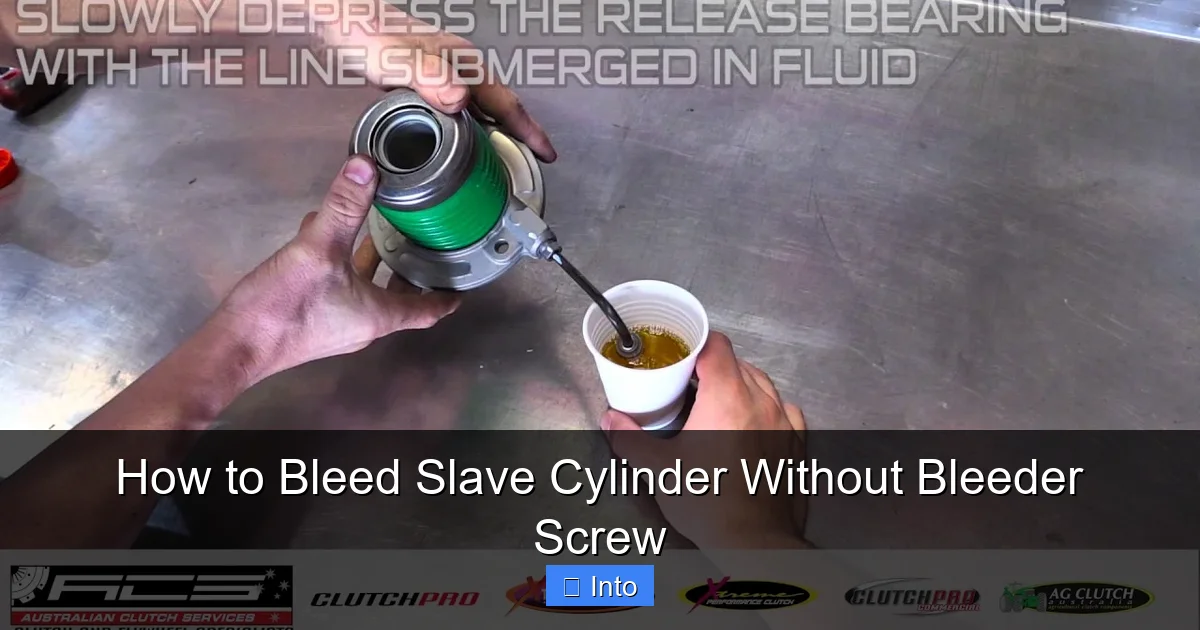
An external slave with a threaded inlet is usually the easiest type to service. The practical route is the fitting where the hydraulic line meets the slave. Fluid moves from the master, through the line, and out through that open joint.
Visual guide about How to Bleed Slave Cylinder Without Bleeder Screw
Image source: i.ytimg.com
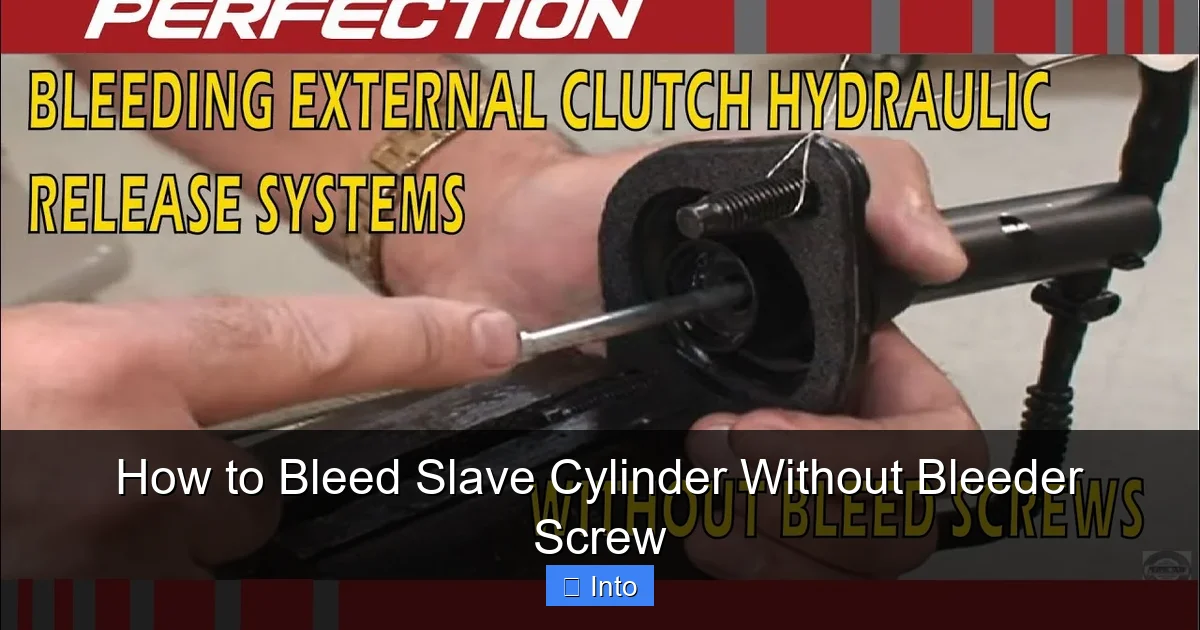
For example, an external unit with a flare nut can often be cracked open while a helper presses the pedal. A clear hose may fit with the right adapter. If it will not seal, aim the disconnected line into a clean bottle instead of wrapping it in a rag.
Concentric slave cylinders
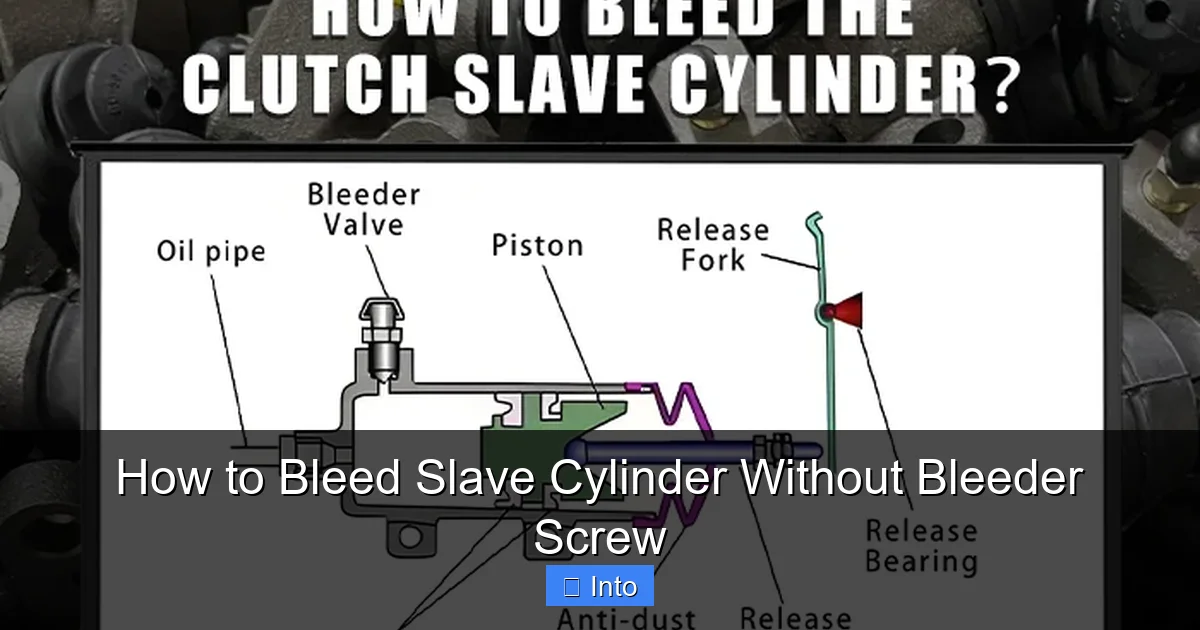
A concentric slave sits inside the bell housing and often works with the clutch release bearing. Many designs are self-bleeding when installed and connected correctly. Others trap air in a high point and need special prep before installation.
Read the maker’s instructions before starting. Some units must be filled and stroked on the bench. If the seal or release bearing has failed, bleeding a worn concentric slave is only a short-term fix.
Quick-connect lines and shared reservoirs
Do not pry apart a quick-connect fitting. Use its release tool and inspect the seal before reconnecting it. A poor seal can pull in air each time the pedal returns.
Some cars share a reservoir between the clutch, brakes, and ABS unit. If that level fell very low, air may have entered the ABS hydraulic unit too. Fix the leak and bleed the system first. If a warning remains after the hydraulic fault is repaired, this guide to how to reset an ABS light without a scan tool may help.
4. Use the Two-Person Manual Bleeding Method
Set up the work area
Park on level ground and give the helper a clear command, such as “press,” “hold,” and “release.” Clean dirt from the slave and fitting before opening it. Fill the master reservoir to the proper mark, then place a catch bottle below the slave.
Fit a clear hose to the slave port or line only if the correct adapter seals. Otherwise, point the line into the bottle. Make sure the pedal can move slowly through its normal range without hitting a tool or loose part.
Follow this sequence
- Inspect the system: Find the source of the air and repair any visible leak before bleeding.
- Fill the reservoir: Use the specified fluid and keep the level above the minimum mark throughout the job.
- Open the fitting: With the pedal fully released, loosen the slave connection by a small amount. Do not remove it.
- Press slowly: Ask the helper to push the pedal smoothly to the floor. Fast pumping can break the fluid stream into tiny bubbles.
- Watch the flow: Fluid and air should move into the catch bottle. If nothing comes out, stop and check the route.
- Close while held: Tighten the fitting while the helper still holds the pedal down. This keeps air from flowing backward.
- Release the pedal: Tell the helper to let the pedal return only after the fitting is closed.
- Repeat: Run several slow cycles, then top up the reservoir. Continue until the stream has no visible bubbles.
Finish the manual bleed
Check the fluid level every few cycles. A low master will draw air and undo your work. When the stream stays clear, tighten the fitting to the vehicle’s torque value. Do not force an aluminum housing or twist the hydraulic hose.
Wipe away every drop of fluid. Recheck the joint after the first pedal tests. If bubbles return or the pedal becomes soft again, look for a leak or a failing seal rather than adding endless fluid.
5. Try Pressure, Vacuum, or Bench Bleeding
Low-pressure bleeding from the master
A pressure bleeder attaches to the master reservoir and pushes fluid toward the slave. This can make a one-person job easier. Fit the correct cap adapter, add the specified pressure, and crack the slave connection just enough to create a steady stream.
Follow both the tool and vehicle limits. Never use unregulated shop air. Close the slave fitting before releasing pressure, then check every joint for leaks.
Vacuum bleeding at the slave port
A hand vacuum pump can pull fluid through the system from the slave side. The port needs a sealed adapter, or the pump will draw air around the tool. Keep the master reservoir filled and use slow, steady suction.
Vacuum tools can also pull air past old threads. Wrap or seal only where the service procedure permits. Small bubbles near the pump may come from its hose rather than the clutch system.
Bench bleed before installation
If the slave was replaced or opened, bench bleeding may remove most of the air before it enters the car. Fit the maker’s adapters, fill the ports with clean fluid, and stroke the piston slowly. Stop when the returning fluid runs clear.
The exact method depends on the part. This guide to how to bench bleed a slave cylinder explains the basic process in more detail.
Use caution with an inline bleeder
An inline bleeder adapter can provide a valve between the line and slave, but only when it has the correct thread, seal, and pressure rating. Do not install a generic valve that was not made for a hydraulic clutch or brake system. If no safe adapter exists, use another approved route or replace the part.
6. Test the Clutch and Know When to Replace the Part
Run a simple static test
Restore the reservoir to the proper level and reinstall every cover or clip. Press the clutch several times with the engine off. The pedal should rise smoothly and feel firm. Hold it down for 30 to 60 seconds; it should not slowly sink toward the floor.
Start the engine and check the pedal again. A small change in feel can be normal, but it should not drop to the floor. Shift through the gears with the engine off, then start the engine and test release in a safe, flat area.
Read the warning signs
If no fluid comes out, the hose may be blocked, the master may not be moving fluid, or the wrong fitting may be open. If bubbles never stop, the reservoir may be low or a joint may be pulling in air.
A wet slave boot or fluid inside the bell housing usually means the slave has failed. A wet master pushrod boot can point to bad master seals. On a Corolla, this guide to how to replace the clutch master cylinder on a Toyota Corolla covers that related repair.
If the fluid is dark or contaminated, bleed every part specified by the service manual. Reusing drained fluid can put dirt and water back into the system.
Conclusion
Learning how to bleed slave cylinder without bleeder screw starts with finding an approved vent route. For an external unit, the line fitting at the slave often works well with a slow two-person method. Low pressure or vacuum can also move the air, while a sealed or concentric unit may need bench bleeding or replacement.
Work slowly, keep the reservoir full, and never drill the cylinder. Most important, fix the leak that let air in. A clean fluid stream and a firm pedal are good signs, but a leak-free system is what keeps the clutch working.
Frequently Asked Questions
Can you bleed a slave cylinder with no bleeder screw?
Often, yes, if the design has a serviceable line fitting or adapter. Some sealed or concentric units must be bench bled or replaced instead.
Where do you open the system when there is no bleeder?
The usual point is the hydraulic connection at the slave cylinder. On some vehicles, a pressure adapter at the master or a service valve in the line is the approved route.
Can I drill a hole in the slave cylinder to add a bleeder?
No. Drilling can send metal into the hydraulic system and weaken the housing. Use a rated service adapter or replace the part with one designed for bleeding.
What should I do if no fluid comes out?
Stop and check the reservoir, pedal action, fitting, and line for a blockage. The master may also have failed or the wrong connection may be open.
What fluid goes in a clutch slave cylinder?
Use only the fluid listed in the owner’s manual or on the reservoir cap. Many systems use DOT 3 or DOT 4, but you should confirm the exact type before filling it.
How do I know the slave cylinder is fully bled?
The pedal should feel firm, hold steady, and release the clutch fully. There should be no bubbles in the flow and no wet fluid around the slave, line, or master.