What Makes Toyota So Reliable?

Toyota’s reputation for reliability isn’t accidental — it’s built on decades of engineering focus, strict quality checks, and a culture of continuous improvement. Discover the key reasons that keep drivers coming back for more.
When you ask what makes Toyota so reliable, the answer isn’t a single trick. It’s a blend of history, philosophy, and constant refinement. Toyota has been building cars for over eighty years. Over that time, the company learned what drivers truly need: safety, endurance, and peace of mind. In this article we’ll explore each of those pillars in plain language. You’ll see how engineering choices, quality systems, and owner care all work together. By the end, the mystery behind Toyota’s lasting reputation will be clear.
Key Takeaways
- Point 1: Toyota uses precise engineering to create cars that last.
- Point 2: The company follows a strict quality control system called the Toyota Production System.
- Point 3: Every vehicle undergoes extensive testing before it hits the road.
- Point 4: Regular maintenance and genuine parts keep Toyotas running smoothly.
- Point 5: Strong resale value shows how much owners trust the brand.
- Point 6: Customer loyalty fuels ongoing research and improvement.
- Point 7: Simple, durable designs reduce the chance of breakdowns.
📑 Table of Contents
Engineering Excellence That Stands the Test of Time
Toyota engineers start with a simple goal: build a car that can handle everyday stress without failing. They use computer simulations to predict how parts will behave under heat, vibration, and impact. This helps them spot weak points before a prototype is even built. The result is a design that can survive rough roads, extreme temperatures, and heavy loads.
Precision Manufacturing
Every component is crafted to tight tolerances. Even a millimeter of deviation can cause wear over time. Toyota’s factories employ robotic arms that repeat the same motions with millimeter‑level accuracy. This consistency means each engine, transmission, and chassis is virtually identical to the next.
Robust Engine Design
Toyota engines are known for their simplicity and strength. Rather than chasing high horsepower at the cost of durability, they focus on torque, efficiency, and longevity. The use of cast‑iron blocks, forged pistons, and proven valve trains contributes to an engine that can easily reach three hundred thousand miles with proper care.
Rigorous Quality Control Processes
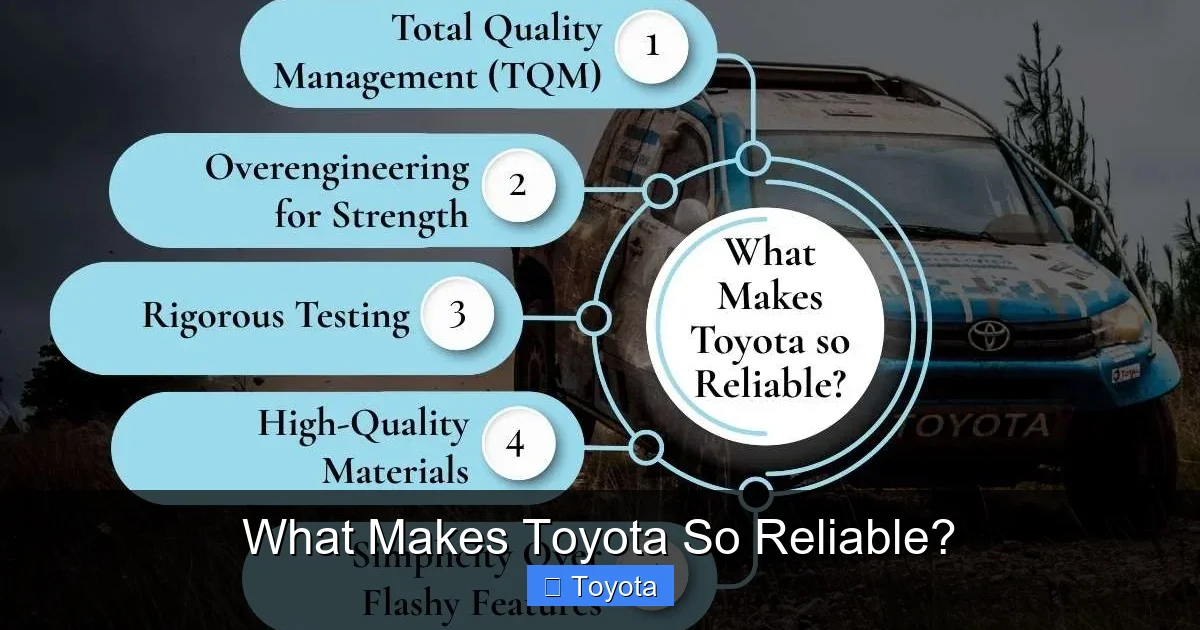
Quality isn’t an afterthought; it’s built into every step. Toyota’s famous Toyota Production System (TPS) blends lean manufacturing with continuous improvement. Workers are trained to stop the line if they spot a defect. This culture of accountability ensures that problems are caught early, not later on the road.
Visual guide about What Makes Toyota So Reliable?
Image source: theenterpriseworld.com
The Toyota Production System
TPS emphasizes “kaizen,” a Japanese word for change that means continuous improvement. Small, incremental upgrades are made daily. Over years, these tiny gains add up to a huge leap in reliability. The system also uses “jidoka,” or automation with a human touch, to detect abnormalities automatically.
Continuous Improvement (Kaizen)
Every employee, from the assembly line to the design studio, is encouraged to suggest improvements. Ideas are tested, measured, and adopted if they reduce defects or waste. This never‑ending pursuit of better quality is a core answer to what makes Toyota so reliable.
Long‑Term Durability and Real‑World Performance
Numbers speak louder than slogans. Independent studies show that Toyota vehicles consistently outperform many competitors in high‑mileage surveys. Owners often report that their cars still feel smooth after two hundred thousand miles. This real‑world durability reinforces the brand’s reputation.
Visual guide about What Makes Toyota So Reliable?
Image source: toyotaautodealer.com
High Mileage Benchmarks
Many Toyota owners share stories of cars that have clocked over three hundred thousand miles without major issues. In some cases, the original engine and transmission are still operating. Such milestones are a testament to the engineering choices discussed earlier.
Owner Testimonials and Case Studies
Take the example of a 2015 Corolla that reached four hundred thousand miles on its first engine. The owner followed the recommended service schedule and used only genuine parts. This case illustrates how proper ownership can unlock the full potential of a Toyota’s design.
Comprehensive Maintenance Culture
Even the most robust car needs regular care. Toyota’s maintenance philosophy is straightforward: follow the service schedule, use authentic components, and address issues promptly. This approach keeps the car in peak condition and prevents small problems from turning into expensive repairs.

Visual guide about What Makes Toyota So Reliable?
Image source: theenterpriseworld.com
Scheduled Service Intervals
Toyota recommends oil changes every five thousand miles, fluid checks every ten thousand miles, and comprehensive inspections annually. These intervals are based on extensive testing of wear patterns. Sticking to them helps preserve the car’s reliability over the long term.
Dealer Network and Genuine Parts
When a part needs replacement, Toyota owners have access to a worldwide network of authorized dealers. Genuine parts are engineered to match the original specifications, ensuring a perfect fit and function. Using aftermarket alternatives can sometimes compromise the vehicle’s reliability.
Customer Trust and Brand Loyalty
Reliability builds trust, and trust fuels loyalty. Toyota owners often keep their cars for many years, passing them down to family members. The brand’s reputation for dependable performance creates a virtuous cycle: satisfied owners recommend Toyota to friends, which in turn reinforces the brand’s reliability image.
Resale Value Retention
One of the clearest signs of reliability is how well a car holds its value. Toyota models consistently rank among the highest resale values in their segments. A strong resale price signals to buyers that the vehicle is expected to remain dependable, which encourages them to choose Toyota again.
Community and Word‑of‑Mouth Marketing
Online forums, local clubs, and social media groups are filled with Toyota owners sharing tips and experiences. This community support helps new owners maintain their vehicles properly. The collective knowledge base reinforces the brand’s reputation for durability.
Putting It All Together: What Makes Toyota So Reliable?
So, what makes Toyota so reliable? It’s the combination of precise engineering, relentless quality control, durable design, and a culture that values long‑term ownership. Each of these elements reinforces the others, creating a system that consistently delivers dependable vehicles. When you pair that system with regular maintenance and genuine parts, the result is a car that can serve you faithfully for decades.
If you’re considering a Toyota, think about the broader picture. Look at the engineering details, the maintenance history, and the community support around the model you choose. Doing so will help you appreciate the full scope of reliability that the brand offers.
For those interested in specific components that keep a Toyota running smoothly, consider exploring related topics such as top-rated tires for the 2014 Prius C, the best tire brands for reliable performance, and the break‑in process for a new Toyota. Understanding these supporting factors can deepen your appreciation of Toyota’s overall reliability.
In summary, Toyota’s reliability isn’t a coincidence. It’s the result of decades of disciplined engineering, strict quality standards, and a customer‑centric approach. By focusing on these core principles, Toyota continues to set the benchmark for dependable automobiles.
Frequently Asked Questions
Why do Toyota cars hold their value so well?
Toyota’s reputation for durability and low maintenance costs makes buyers willing to pay more for used models, which helps resale values stay high.
How often should I service my Toyota to keep it reliable?
Follow the manufacturer’s schedule, typically every 5,000 miles for oil changes and every 10,000 miles for fluid checks, to maintain optimal performance.
Are Toyota parts expensive compared to other brands?
Genuine Toyota parts can cost more than generic alternatives, but they are designed to fit precisely and last longer, supporting overall reliability.
Can I use aftermarket accessories without voiding my warranty?
Most aftermarket accessories won’t void the warranty, but using non‑approved parts for critical systems could affect reliability and warranty coverage.
Does Toyota offer any extended warranty options?
Yes, Toyota provides factory‑backed extended warranty plans that can cover major components for an additional period.
What role does the Toyota Production System play in reliability?
The Toyota Production System emphasizes continuous improvement and early defect detection, which reduces flaws that could compromise long‑term durability.