When Will Toyota Redesign the Rav4?
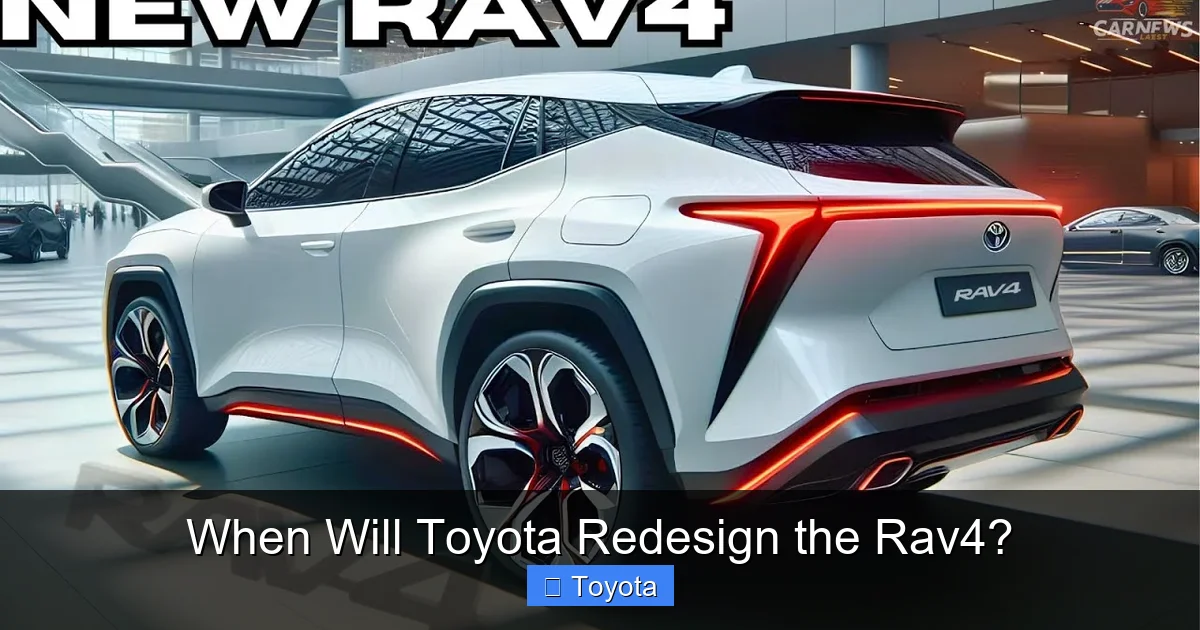
The Toyota RAV4 is due for a full redesign soon, likely arriving as a 2026 model. Based on Toyota’s typical six-year product cycle and recent spy photos, the sixth generation should debut in late 2025. Expect a bold new look, more hybrid power, and advanced tech inside.
If you are shopping for a compact SUV right now, the Toyota RAV4 has almost certainly crossed your radar. It has been the best-selling SUV in America for years, and for good reason. It offers a fantastic blend of reliability, fuel economy, and practicality. But the current generation has been around since the 2019 model year. In the fast-moving world of automotive tech and styling, that is an eternity. So the big question on everyone’s mind is simple: when will Toyota redesign the RAV4?
The short answer is that we are very close to the finish line. Industry insiders, spy photographers, and Toyota’s own historical patterns all point to a massive overhaul arriving very soon. We are talking about a ground-up redesign, not just a mid-cycle refresh with new headlights. This next generation will set the tone for the segment for the next half-decade. Whether you are a current owner looking to trade up or a first-time buyer trying to time your purchase, knowing the timeline is crucial. Let’s dive deep into everything we know, everything we suspect, and what it means for your wallet.
Key Takeaways
- Expected Debut: The next-gen RAV4 will likely be revealed in late 2025 as a 2026 model.
- Product Cycle: Toyota typically redesigns the RAV4 every six years; the current generation launched in 2019.
- Platform Shift: It will ride on an updated TNGA-K platform for better rigidity and electrification.
- Powertrain Focus: Heavy emphasis on hybrid and plug-in hybrid variants; a pure EV version is possible.
- Design Evolution: Spy shots suggest a boxier, more rugged exterior inspired by the bZ Compact SUV concept.
- Interior Tech: Expect a larger touchscreen, digital gauge cluster, and Toyota’s latest Safety Sense suite.
- Buying Advice: If you need a car now, the current model is still excellent; if you can wait, the redesign brings major upgrades.
📑 Table of Contents
- The Current Generation Context
- Decoding Toyota’s Product Cycle
- What the Spy Shots Tell Us
- Platform and Powertrain: The TNGA-K Evolution
- Interior and Technology Leap
- Trim Strategy and Pricing Predictions
- Competitor Comparison: The 2026 Landscape
- Should You Buy Now or Wait?
- How to Prepare If You Decide to Wait
- Conclusion
The Current Generation Context
To understand where we are going, we have to appreciate where we are. The fifth-generation RAV4 launched for the 2019 model year. It was a radical departure from the soft, curvy fourth generation. Toyota gave it a rugged, chiseled look with pronounced wheel arches and a higher beltline. They also moved it onto the TNGA-K (Toyota New Global Architecture) platform. This architecture brought a stiffer chassis, a lower center of gravity, and the ability to support hybrid batteries without eating into cargo space.
Why the Fifth Gen Was a Game Changer
That platform shift was the real story. It allowed Toyota to launch the RAV4 Hybrid immediately alongside the gas model, and later the RAV4 Prime plug-in hybrid. This multi-powertrain strategy is a huge reason the RAV4 dominates sales charts. It doesn’t force you into one box. You want a cheap gas commuter? There is an LE trim. You want 40 MPG? Get the Hybrid. You want 302 horsepower and 42 miles of EV range? The Prime exists. That flexibility is the benchmark the next generation must beat.
The Mid-Cycle Refresh
For the 2023 model year, Toyota gave the RAV4 a light refresh. They updated the front fascia with new headlights and a larger grille, tweaked the taillights, and—most importantly—added a much-needed larger touchscreen infotainment system with the new Toyota Audio Multimedia interface. It supports wireless Apple CarPlay and Android Auto finally. They also added a Woodland Edition trim for slightly more off-road cred. It was a solid update, but it didn’t change the underlying bones. The clock kept ticking toward a full redesign.
Decoding Toyota’s Product Cycle
Automakers run on surprisingly predictable schedules. Toyota is arguably the most disciplined in the industry. They rarely rush a product to market just to hit a marketing deadline. If you look at the RAV4’s history, a clear six-year cadence emerges.
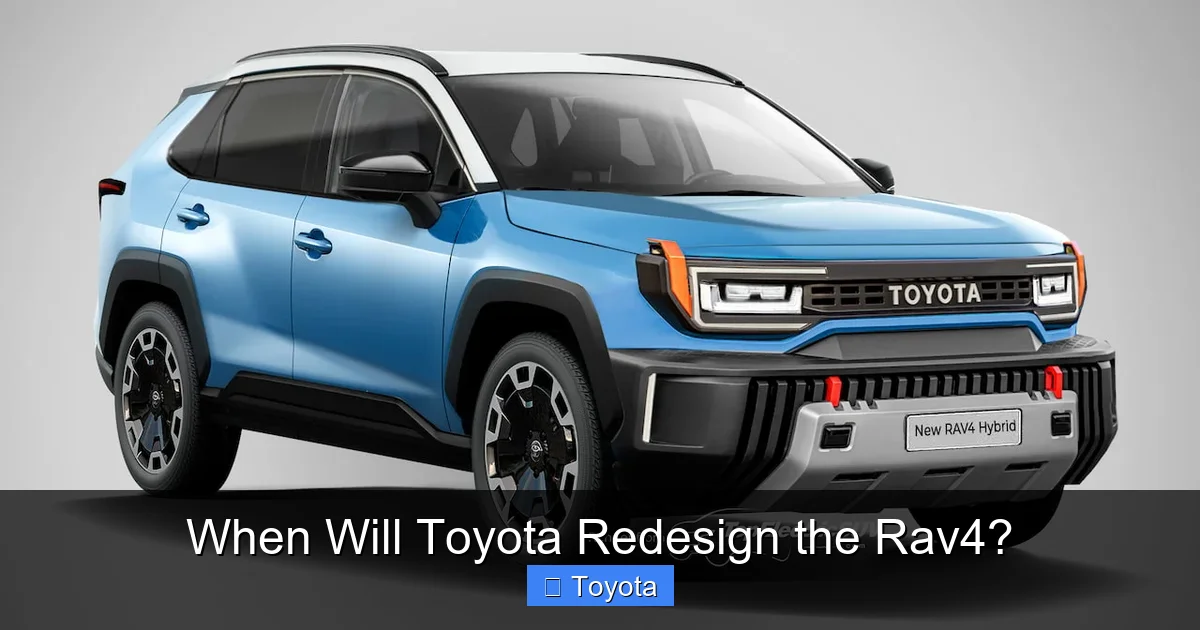
Visual guide about When Will Toyota Redesign the Rav4?
Image source: topelectricsuv.com
The Six-Year Rhythm
- Gen 1 (1996–2000): 5 years
- Gen 2 (2001–2005): 5 years
- Gen 3 (2006–2012): 6 years
- Gen 4 (2013–2018): 6 years
- Gen 5 (2019–Present): Projected 6-7 years
If we stick to the six-year rule, the 2019 launch puts the replacement squarely in the 2025 calendar year as a 2026 model. Sometimes Toyota stretches a hot seller to seven years to maximize factory tooling ROI. Given the RAV4’s massive sales volume—often over 400,000 units a year in the US alone—they have every financial incentive to stretch it. However, the competitive pressure from the Honda CR-V (redesigned for 2023), Hyundai Tucson (2022), and Kia Sportage (2023) makes a seven-year run risky. The segment has leapfrogged the RAV4 in interior quality and tech. A 2026 model year launch (debut late 2025) is the sweet spot.
Fiscal Year Clues
Toyota’s fiscal year ends March 31. They often target major launches for the spring or early summer to kick off the new fiscal year strong. A reveal at a major auto show—like the Los Angeles Auto Show in November or Detroit in September—followed by a spring 2025 on-sale date for the 2026 model year fits their corporate rhythm perfectly.
What the Spy Shots Tell Us
Photographers have caught heavily camouflaged prototypes testing in Michigan, Colorado, and even the Arctic Circle for over a year now. The camouflage is the thick, swirly vinyl wrap kind that hides body lines but reveals proportions. Here is what we can deduce.
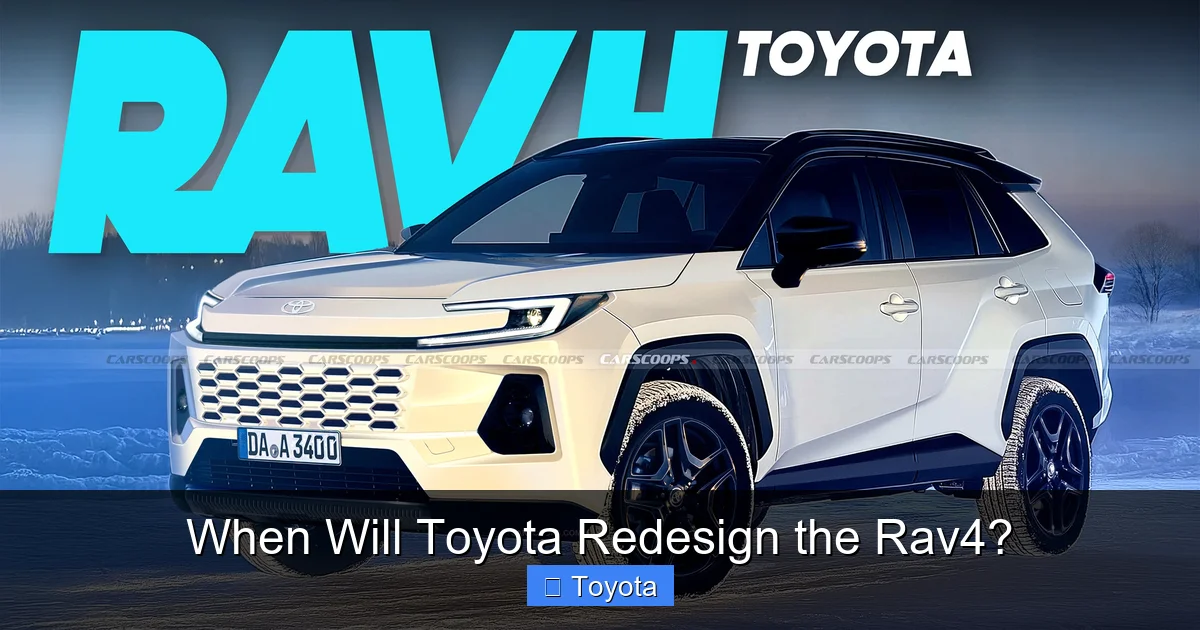
Visual guide about When Will Toyota Redesign the Rav4?
Image source: carscoops.com
Boxier, More Upright Stance
The silhouette is distinctly more upright. The roofline appears flatter and extends further back. This suggests two things: more rear headroom and more cargo volume. The current RAV4 has a sloping “coupe-like” roofline that looks sporty but cuts into third-row space (in the old three-row version) and rear passenger clearance. The new shape looks more like the Land Cruiser or 4Runner shrunk down. This aligns with the “rugged” design language Toyota is pushing across its SUV lineup.
Lighting Signature
Even under camo, the headlight shape is visible. They are thinner, more horizontal, and sit higher on the front fascia. The daytime running lights (DRLs) appear to be a distinct C-shape or L-shape, similar to the new Tacoma and Tundra. The grille is massive—almost the entire front face—but the lower intake seems functional, likely for cooling the hybrid battery and inverter.
Hidden Door Handles?
Some spy shots show flush door handles. This is an aerodynamic trick usually reserved for EVs (like the bZ4X) to reduce drag. It strongly hints that a dedicated Battery Electric Vehicle (BEV) variant is being engineered alongside the gas and hybrid models. If true, this would be the first RAV4 EV since the compliance-car RAV4 EV of 2012-2014.
Platform and Powertrain: The TNGA-K Evolution
The new RAV4 will almost certainly stay on the TNGA-K platform, but a heavily evolved version—often called TNGA-K2 internally. This isn’t a new architecture; it’s a major software and hardware update to the existing bones.
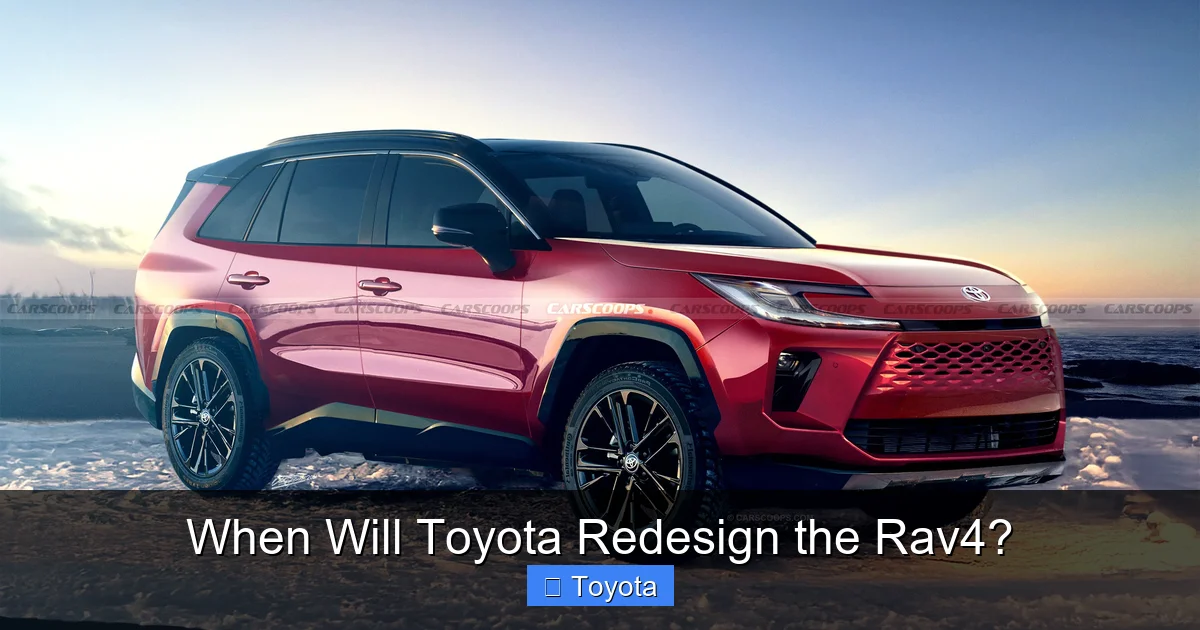
Visual guide about When Will Toyota Redesign the Rav4?
Image source: carscoops.com
Why Not a New Platform?
Developing a ground-up platform costs billions. TNGA-K is incredibly flexible. It spans the Camry, Highlander, Sienna, Lexus RX, and NX. Updating it allows Toyota to amortize costs across millions of units. The updates focus on three things: higher torsional rigidity (for better ride/handling), standardized battery packaging (for hybrid, PHEV, and BEV), and electrical architecture capable of Over-The-Air (OTA) updates for the whole vehicle, not just the map data.
The Engine Lineup: Hybrid First
Do not expect a new naturally aspirated gas engine. The 2.5-liter Dynamic Force four-cylinder is thermally efficient (41% thermal efficiency) and cheap to build. It will carry over, likely with minor tweaks for emissions. The story is the hybrid system. Toyota’s fifth-generation hybrid system (debuted on the 2023 Prius and 2024 Camry) is smaller, lighter, and more powerful. It uses a more compact transaxle and a higher-output rear electric motor for the AWD-i system. This means the next RAV4 Hybrid could see combined output jump from 219 hp to around 230-240 hp with better fuel economy.
The RAV4 Prime Successor
The plug-in hybrid Prime is a halo car. The next one will likely use a larger battery pack (maybe 20+ kWh usable) for 50+ miles of EV range. Charging speed should improve to 6.6 kW or even 11 kW Level 2. Crucially, the rear motor will be significantly more powerful, reducing the 0-60 mph time from 5.7 seconds to potentially the low 5-second range. It will remain the quickest RAV4 in the lineup.
Will There Be a RAV4 EV?
This is the billion-dollar question. The bZ4X exists, but it’s a dedicated EV platform (e-TNGA) and sales have been slow. A RAV4 EV on TNGA-K would share the showroom floor with the hybrid. It makes immense sense for production flexibility. If the demand for EVs accelerates, Toyota can build more RAV4 EVs on the same line. If demand stalls, they build more hybrids. The flush door handles on prototypes are the strongest evidence yet that a BEV variant is coming, likely a year after the gas/hybrid launch.
Interior and Technology Leap
The current RAV4 interior is functional but feels utilitarian compared to a Honda CR-V or Hyundai Tucson. Hard plastics dominate the lower doors and center console. The next generation must fix this to stay competitive.
The “Digital Island” Dashboard
Spy shots of the interior (caught through windows) show a completely new dashboard architecture. It adopts the “island” layout seen in the new Tacoma, Tundra, and Grand Highlander. A large, free-standing curved display combines the digital instrument cluster (likely 12.3 inches) and the central infotainment screen (12.3 or 14 inches) under a single piece of glass. This runs the latest Toyota software stack with faster processors, natural voice recognition, and wireless everything.
Material Quality and Ergonomics
Expect soft-touch materials on the upper doors and dashboard top. The center console will be redesigned with a wireless charging pad (finally standardized across trims), more cupholder flexibility, and a proper storage bin under the armrest. Physical buttons for climate and volume will remain—Toyota listens to customers who hate touch-sliders for temperature. The gear selector will likely be the new electronic stub shifter (like the Prius/Tacoma) or a traditional lever, freeing up console space.
Toyota Safety Sense 4.0
The new RAV4 will debut the next generation of Toyota Safety Sense (TSS). TSS 3.0 is current; 4.0 adds improved intersection support (detecting crossing traffic when turning left), better lane centering on highways (hands-free capability on mapped roads, likely branded “Toyota Teammate” or similar), and enhanced pedestrian/cyclist detection at night. The sensor suite adds higher-resolution radar and possibly LiDAR on top trims for the hands-free highway feature.
Trim Strategy and Pricing Predictions
Toyota loves a complex trim ladder. The current model has LE, XLE, XLE Premium, Adventure, Limited, TRD Off-Road, Woodland, and multiple Hybrid/Prime specific trims. Expect simplification.
Core Trims
- LE / XLE: Volume sellers. Gas and Hybrid. Cloth or SofTex seats.
- SE / XSE: Sport-tuned suspension, unique fascia, 19-inch wheels. Hybrid only likely.
- Trail / Trail Hunter: Replacing Adventure/TRD/Woodland. Real off-road gear: all-terrain tires, higher ground clearance, locking rear diff (maybe), unique gearing.
- Limited / Platinum: Luxury focus. Leather, ventilated seats, panoramic roof, premium audio (JBL).
Price Increases Are Inevitable
A full redesign with standard hybrid tech on higher trims, bigger screens, and better materials will push MSRP up. A safe guess is a $1,500–$2,500 increase per comparable trim. The base LE Hybrid might start around $31,000. A loaded Prime could crest $50,000. If you are budgeting, check current pricing on the outgoing model to see the baseline; you can see current RAV4 pricing here to get a feel for the market floor.
Competitor Comparison: The 2026 Landscape
The RAV4 doesn’t exist in a vacuum. By late 2025, the competitive set will look different.
Honda CR-V (Gen 6, 2023+)
The current benchmark for interior space and ride comfort. Honda’s hybrid system is excellent but only FWD-based (AWD uses a small rear motor). The RAV4’s mechanical AWD on hybrids is a hardware advantage Toyota will keep pushing. The CR-V looks conservative; the RAV4 will look rugged.
Hyundai Tucson / Kia Sportage (Gen 4, 2022+)
These twins win on style, warranty, and standard features. Their hybrid and PHEV systems are good but less refined than Toyota’s. The RAV4’s reputation for reliability and resale value is its moat here. The redesign must close the interior quality gap.
Mazda CX-50 / CX-5
Mazda offers driving dynamics and premium feel but lacks a hybrid (until the new CX-50 Hybrid arrives) and third-row space. Different buyer.
Ford Escape / Maverick
Escape is aging out. Maverick is a unibody truck, stealing some compact SUV sales. The RAV4 Woodland/Trail trims are Toyota’s direct answer to the “outdoorsy” vibe of the Maverick.
Should You Buy Now or Wait?
This is the practical dilemma. There is no wrong answer, only the right answer for your situation.
The Case for Buying Now (Late 2024 / Early 2025)
- Inventory is real. Dealer lots are full. You can negotiate. You might get 0% financing or cash back on a 2024/2025 model.
- Known quantity. The fifth gen has proven reliability. No first-year gremlins.
- Depreciation hit is past. The biggest depreciation happened years ago. Buying a 2025 model used in two years is a smart financial move.
- You need a car yesterday. Don’t let perfect be the enemy of good.
The Case for Waiting (Late 2025 / 2026)
- Modern platform. Better rigidity, better crash structure, better EV architecture.
- Tech parity. Finally, a modern infotainment system with a big screen and good UI.
- Better Hybrid/PHEV. More power, more EV range, better MPG.
- Rugged looks. If you like the Tacoma/4Runner aesthetic, the new design language is for you.
- EV Option. If you want a RAV4 EV, you physically cannot buy one today.
The “First Model Year” Risk
Toyota has incredible launch quality, but complex new hybrid systems and software stacks can have bugs. The 2023 Prius had a recall for software. The 2024 Tacoma had a stop-sale for weld issues. If you are risk-averse, wait for the 2027 model year (second year of production). By then, the kinks are ironed out, and incentives usually appear.
How to Prepare If You Decide to Wait
Waiting doesn’t mean doing nothing. Use the time to strengthen your position.
Track Your Trade-In Value
Used car prices fluctuate. Get an appraisal now (CarMax, Carvana, dealer) and repeat every 3 months. The RAV4 holds value incredibly well. If you have a current RAV4, you are in a strong equity position. If you have a different vehicle, know your number.
Save for the Down Payment
Interest rates are higher than 2019. A larger down payment reduces your loan-to-value ratio, getting you a better rate. Even $2,000 extra down saves significant interest over 60 months.
Research Financing Early
Check your credit union. They often beat captive finance (Toyota Financial Services) rates. Get pre-approved so you walk into the dealer as a “cash buyer.” You can negotiate the car price separately from the financing.
Learn the Break-In Procedure
If you do end up with a brand-new 2026 model, the engine and hybrid system benefit from a proper break-in. Varying RPMs, avoiding full-throttle launches, and not using cruise control constantly for the first 600-1,000 miles helps seat the piston rings. It’s a small effort for long-term longevity. You can read our guide on how to break in a new Toyota properly so you are ready on day one.
Understand Total Ownership Cost
Look beyond the monthly payment. Insurance, registration, and maintenance add up. Hybrid brakes last longer (regen), but tires wear faster due to battery weight. Factor in the total cost of Toyota ownership including the famous reliability dividend—fewer unexpected repair bills over years 5-10.
Conclusion
The wait is almost over. All signs—historical cycles, supplier chatter, spy photos, and competitive pressure—point to a late 2025 reveal for the 2026 Toyota RAV4. It promises to be the most significant overhaul in the nameplate’s history: a boxier, more rugged design; a thoroughly modern interior with the tech buyers demand; a hybrid-first powertrain strategy with a next-gen Prime; and quite possibly a long-awaited EV variant.
If your current vehicle is on its last legs, the 2024 or 2025 RAV4 on the lot today is a phenomenal vehicle that will serve you flawlessly for a decade. There is zero shame in buying the “old” model. But if you have the luxury of time—say, your lease ends in early 2026 or your daily driver has another year of life—patience will be rewarded. The sixth generation looks poised to reset the benchmark for what a compact SUV should be. Keep an eye on the LA Auto Show in November 2025; that is the most likely stage for the curtain to rise. Until then, drive safe, and enjoy the anticipation.
Frequently Asked Questions
When exactly will the 2026 Toyota RAV4 be revealed?
Toyota has not announced an official date. However, based on historical patterns and the current model’s age, an autumn 2025 reveal (likely at the LA Auto Show in November) for a spring 2026 on-sale date is the strongest prediction.
Will the new RAV4 be bigger than the current model?
Spy shots suggest the overall length and width will remain similar to fit the compact SUV class, but the boxier roofline will increase interior volume, specifically rear headroom and cargo capacity behind the second row.
Is Toyota discontinuing the gas-only RAV4?
No. A base 2.5-liter four-cylinder gas model will remain the entry-level offering for price-sensitive buyers. However, the hybrid mix will likely grow to 60-70% of sales, and the gas engine may become a fleet-only special in some regions eventually.
Will the RAV4 Prime get more electric range?
Yes. The next-generation Prime is expected to feature a larger battery pack (roughly 20+ kWh usable) targeting 50+ miles of EPA-estimated EV range, up from the current 42 miles.
Should I wait for the redesign if I need a car in early 2025?
If you need reliable transportation in early 2025, buy the current model. The redesign won’t hit dealerships until spring 2026 at the earliest. Waiting 12+ months without a car costs more in rideshares/rentals than any potential improvement on the new model.
Will the new RAV4 have a third row?
Almost certainly not. The current RAV4 is a two-row vehicle. The three-row slot in Toyota’s lineup is filled by the Grand Highlander and the Highlander. Adding a cramped third row to the RAV4 would compromise the cargo space that defines the segment.