What Is the Bolt Pattern on a Toyota 4runner?
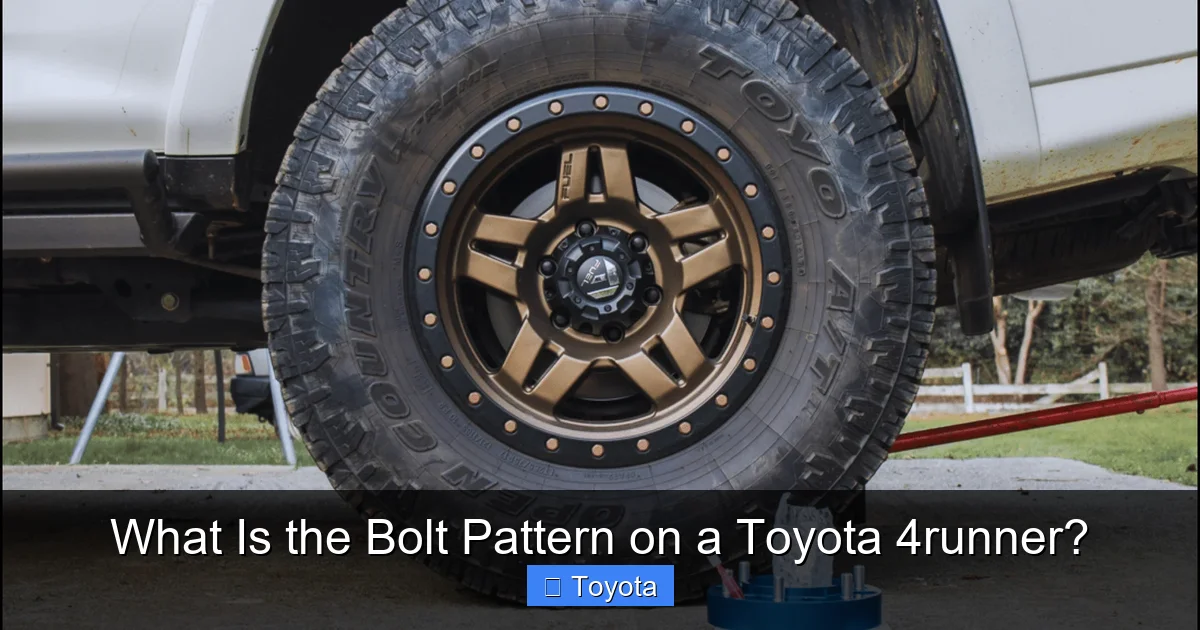
The Toyota 4Runner bolt pattern typically measures 6×139.7mm (6×5.5 inches) for most model years, though variations exist across different generations. Understanding this specification is crucial when selecting new wheels or tires for your vehicle. This guide covers everything you need to know about 4Runner wheel fitment, including how to measure your specific bolt pattern and avoid costly mistakes when upgrading your wheels.
Key Takeaways
- Bolt Pattern Specification: Most Toyota 4Runner models use a 6×139.7mm (6×5.5″) bolt pattern, but verify your specific year before purchasing wheels.
- Year Variations Exist: Different model years may have slight variations, so always check your owner’s manual or measure directly.
- Measurement Method: Count the lug nuts and measure center-to-center distance between bolt holes for accurate bolt pattern determination.
- Aftermarket Compatibility: Knowing your exact bolt pattern prevents expensive returns and ensures proper wheel fitment.
- Hub Bore Consideration: The bolt pattern works with the hub bore size, both critical for wheel installation safety.
- Professional Verification: When in doubt, consult a tire professional or use online fitment guides for confirmation.
- Wheel Upgrade Benefits: Proper bolt pattern knowledge enables safe aftermarket wheel upgrades for improved performance and style.
📑 Table of Contents
Understanding Your Toyota 4Runner’s Bolt Pattern
If you’re reading this, you probably want to upgrade your Toyota 4Runner’s wheels. Maybe you’re looking for something more aggressive for off-road adventures. Or perhaps you just want to freshen up the look of your SUV. Whatever your reason, understanding the bolt pattern on a Toyota 4Runner is absolutely essential.
The bolt pattern might sound like technical jargon, but it’s actually pretty simple once you get the hang of it. It’s basically the blueprint that tells you whether a wheel will fit your vehicle properly. Get it wrong, and you could be dealing with wobbly wheels, vibrations, or worse – wheels that don’t fit at all.
Think of the bolt pattern as the handshake between your wheel and your vehicle. Just like a handshake needs to match up correctly, your wheel needs to line up perfectly with the bolts on your 4Runner’s hub. This connection keeps everything secure and safe on the road.
Why Bolt Pattern Matters for Safety
Your vehicle’s safety depends on proper wheel fitment. The bolt pattern ensures that your wheel sits flush against the hub. This creates the strong connection needed to handle driving forces. Without the right bolt pattern, your wheel could come loose while driving.
This isn’t just about convenience – it’s about keeping you and your passengers safe. When wheels are properly secured, they can handle the stresses of acceleration, braking, and cornering without issue. But mismatched bolt patterns create weak points that could lead to dangerous situations.
The Standard Bolt Pattern for Toyota 4Runner
Visual guide about What Is the Bolt Pattern on a Toyota 4runner?
Image source: claspauto.com
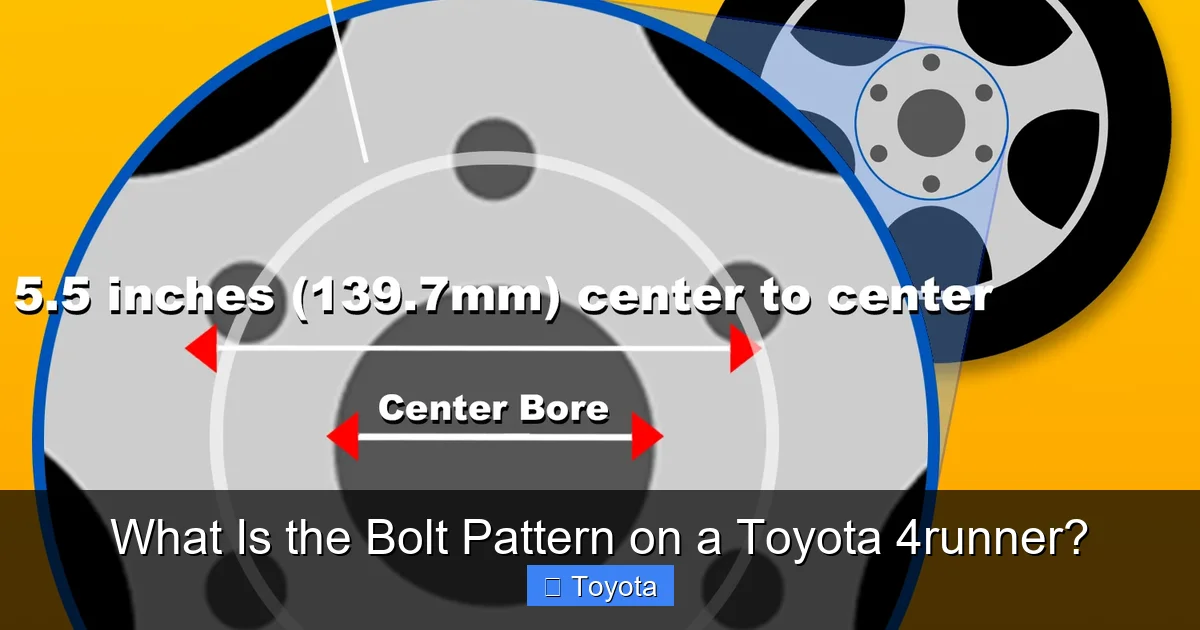
Most Toyota 4Runner models built from 2010 onward share the same bolt pattern: 6×139.7mm or 6×5.5 inches. This means there are six lug nuts arranged in a circle with a diameter of 139.7mm.
However, if you’re driving an older 4Runner, you might find some differences. The second generation (1990-1995) and third generation (1996-2002) models may have slightly different specifications. This is why it’s always smart to double-check rather than assume.
The 6×139.7mm pattern has become quite common among SUVs and trucks. Many aftermarket wheel manufacturers make wheels specifically for this pattern. This gives you plenty of options when shopping for replacements or upgrades.
Model Year Specific Details
Let me break down the specifics by generation:
The first generation (1984-1989) 4Runners had a different setup entirely. These early models were more car-like and didn’t follow the truck/SUV pattern we see today.
Second and third generation models (1990-2002) transitioned to what we now recognize as the standard 4Runner pattern. However, there were some variations during this period that make exact specifications tricky.
Fourth generation (2003-2009) solidified the 6×139.7mm pattern as the standard. This generation also introduced some refinements that carried over to newer models.
Fifth generation (2010-present) continues with the 6×139.7mm pattern. These modern 4Runners offer the most consistent specifications, making wheel shopping easier.
How to Measure Your 4Runner’s Bolt Pattern
Visual guide about What Is the Bolt Pattern on a Toyota 4runner?
Image source: boostatv.com
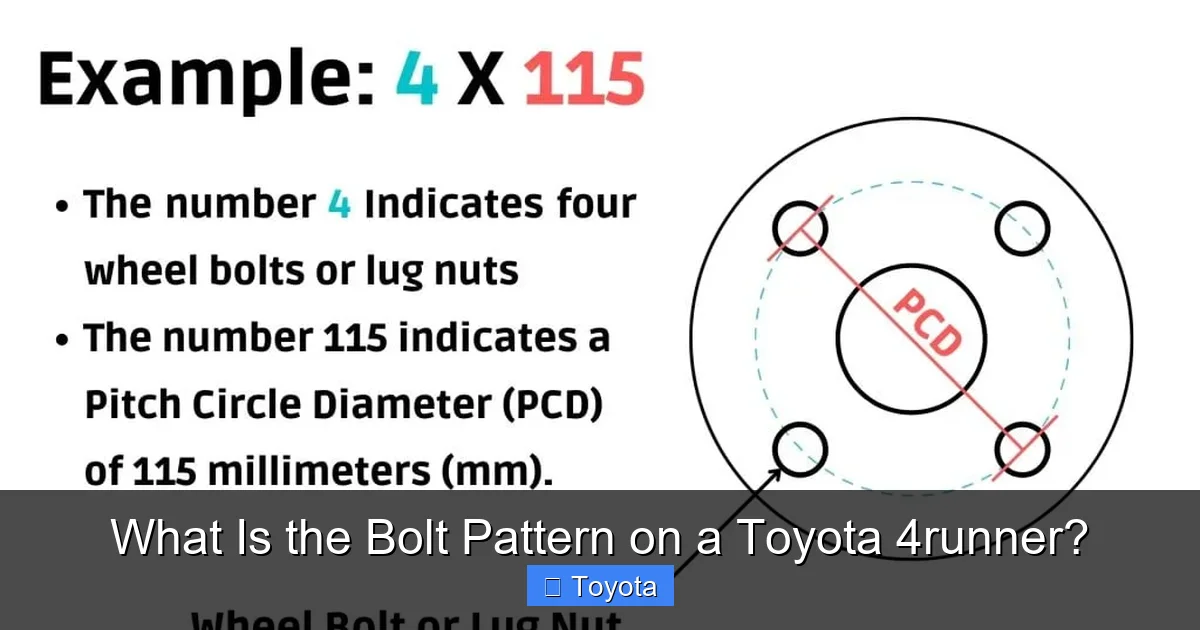
Not sure about your specific bolt pattern? No problem! You can measure it yourself with a few simple tools. All you need is a ruler or measuring tape and maybe a calculator.
First, count the number of lug nuts on your wheel. Most 4Runners have six, but it’s always good to confirm. This number becomes the first part of your bolt pattern measurement.
Next, you’ll need to measure the diameter of the circle formed by the bolt holes. This is where it gets a little tricky, but I’ll walk you through two methods.
Method One: Center-to-Center Measurement
For even-numbered bolt patterns (like the 4Runner’s 6-lug setup), measure from the center of one bolt hole to the center of the bolt hole directly across from it. This gives you the diameter measurement.
In the case of a 6-lug pattern, you’re measuring across two bolt holes that are opposite each other. This measurement should be close to 139.7mm or 5.5 inches for most 4Runners.
Method Two: Backwards Calculation
If measuring across seems difficult, try this alternative method. Measure from the center of one bolt hole to the center of the next closest bolt hole. Then multiply that measurement by a specific number based on your total lug count.
For 6-lug wheels, multiply your measurement by approximately 1.154. For 5-lug wheels, multiply by 1.701. This gives you the actual bolt circle diameter.
Aftermarket Wheel Considerations
Once you know your bolt pattern, you can start exploring aftermarket options. The good news is that the 6×139.7mm pattern opens up many choices for your 4Runner.
Many popular wheel brands offer models specifically designed for this bolt pattern. Companies like Method Race Wheels, Fuel Off-Road, and KMC make wheels that fit perfectly on your 4Runner without any modifications.
But don’t forget about offset and backspacing! These measurements work alongside bolt pattern to ensure proper wheel positioning. Too much or too little offset can cause rubbing issues or affect handling.
Popular Wheel Sizes for 4Runner
Most 4Runner owners stick with 17-inch or 18-inch wheels. These sizes offer a good balance of performance, appearance, and tire availability. Some enthusiasts go up to 20-inch wheels for a more aggressive stance.
When choosing wheel size, consider your tire options. Larger wheels limit your tire choices and often come with higher costs. Smaller wheels might not fill out the wheel wells as nicely, especially on lifted 4Runners.
Common Mistakes to Avoid
Even experienced enthusiasts sometimes make bolt pattern errors. Here are the most common mistakes that cost people time and money.
First, assuming all model years are the same. While most modern 4Runners share the same pattern, older generations might differ. Always verify before purchasing.
Second, forgetting to check the hub bore. Some wheels require hub-centric rings to ensure proper fitment. Ignoring this can cause vibration issues even with the correct bolt pattern.
Third, mixing up metric and standard measurements. The 4Runner uses metric measurements (139.7mm), but many people think in inches. Double-check your measurements to avoid confusion.
Verification Tips Before Purchase
Before buying any wheels, cross-reference your findings with multiple sources. Check your owner’s manual, look up specifications online, and even call the dealer if needed.
Many tire shops will verify fitment for free. Take advantage of their expertise rather than risking an incorrect purchase. They deal with these measurements daily and can spot problems quickly.
Consider keeping your original wheels until you’ve confirmed the new ones fit properly. This gives you a backup plan if something goes wrong with the installation.
Professional Installation Benefits
While measuring bolt pattern is straightforward, professional installation offers peace of mind. Tire professionals have experience with fitment issues and can identify potential problems before they become serious.
They also have the proper tools for installation. Torquing lug nuts to exact specifications is crucial for safety. Most people don’t have torque wrenches capable of achieving these precise measurements.
Professional installers can also help with alignment considerations. New wheels might change your vehicle’s geometry slightly, requiring adjustment to maintain proper handling characteristics.
When to Seek Professional Help
If you’re planning major modifications like a lift kit, definitely consult professionals. The combination of lift and wheel changes affects multiple systems that work together for safe operation.
For simple bolt-on wheel replacements, DIY installation is usually fine. Just make sure you follow proper torque specifications and re-torque after the first 50-100 miles.
Remember that improper installation can void warranties and create safety hazards. When in doubt, trust the professionals who do this work every day.
Conclusion
Understanding the bolt pattern on a Toyota 4Runner doesn’t have to be complicated. With 6×139.7mm being the standard for most recent models, you have plenty of wheel options available. Just remember to verify your specific year’s requirements and consider all aspects of wheel fitment.
Whether you’re upgrading for performance, aesthetics, or both, proper bolt pattern knowledge puts you ahead of the game. Take the time to measure correctly, and don’t hesitate to ask for help when needed. Your safety and satisfaction depend on getting these details right.
With the right wheels installed properly, your 4Runner will not only look better but perform better too. The confidence that comes from knowing everything is correct is worth every minute spent on research and installation.
Frequently Asked Questions
What is the bolt pattern on a Toyota 4Runner?
Most Toyota 4Runner models from 2010 to present use a 6×139.7mm (6×5.5 inch) bolt pattern. This means six lug nuts arranged in a circle with a 139.7mm diameter. Always verify your specific model year before purchasing wheels.
How do I measure my 4Runner’s bolt pattern accurately?
Count your lug nuts first, then measure from the center of one bolt hole to the center of the hole directly across from it. For 6-lug wheels, this measurement should be approximately 139.7mm. You can also measure center-to-center between adjacent holes and multiply by 1.154.
Are all Toyota 4Runner bolt patterns the same across model years?
No, earlier generations (particularly 1984-2002) may have different bolt patterns. The 6×139.7mm pattern became standard starting with the fourth generation in 2003. Always check specifications for your exact model year before wheel shopping.
Can I install aftermarket wheels on my 4Runner myself?
Yes, if you have the correct bolt pattern and proper tools. However, professional installation ensures proper torque specifications and identifies any potential fitment issues. Consider professional help for complex modifications or if you’re unsure about any aspect of installation.
What happens if I use the wrong bolt pattern wheels?
Wrong bolt pattern wheels won’t fit properly and could damage your vehicle or create safety hazards. They may not mount at all, or could come loose while driving. Always verify bolt pattern compatibility before making any wheel purchases.
Do I need hub-centric rings for my 4Runner wheels?
It depends on the wheel manufacturer’s hub bore specifications. If the wheel’s center bore doesn’t match your 4Runner’s hub perfectly, hub-centric rings ensure proper centering. Check wheel specifications or consult with a tire professional to determine if rings are necessary for your specific wheels.