Difference Between 2012 and 2013 Toyota Corolla
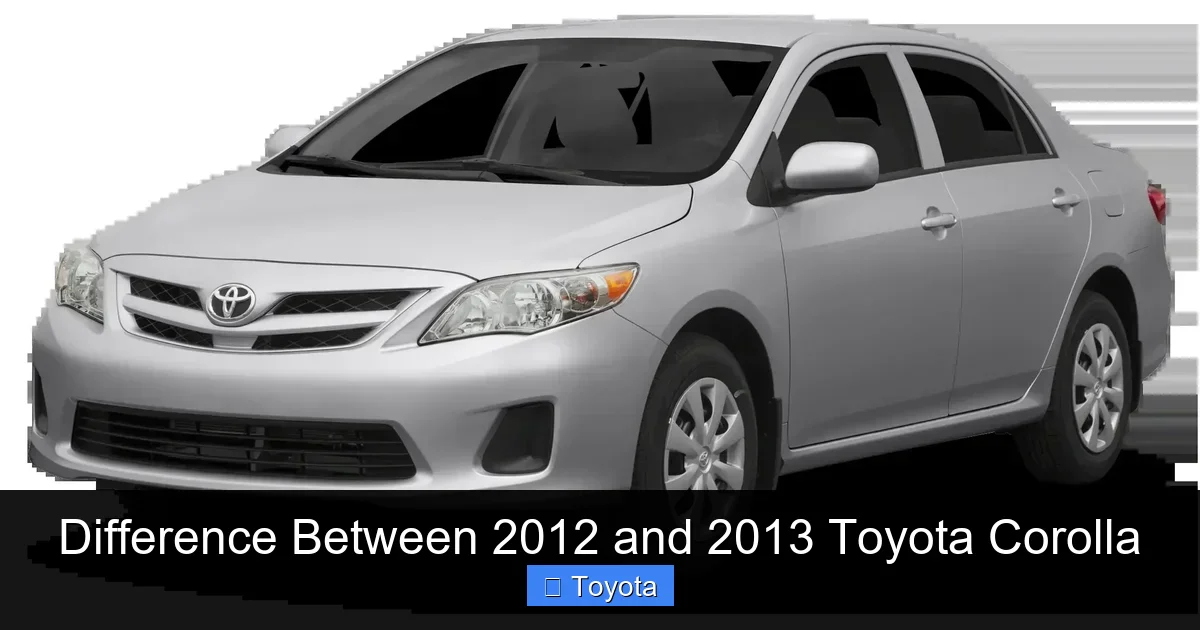
The 2012 and 2013 Toyota Corolla share many similarities but have distinct differences in styling, technology, and available features. While both offer excellent reliability and fuel economy, the 2013 model introduced subtle design refinements and updated interior amenities that set it apart from its predecessor. Understanding these differences helps you make an informed decision when choosing between these two popular compact sedans.
Key Takeaways
- Exterior Styling Updates: The 2013 model received minor front-end refinements including a revised grille and updated headlight design compared to the 2012 version.
- Interior Technology Changes: 2013 Corolla introduced updated infotainment system options and improved dashboard materials for enhanced comfort.
- Safety Feature Enhancements: Both years maintain strong safety ratings but 2013 models benefited from additional standard safety equipment across trim levels.
- Performance Specifications: Engine and transmission options remained largely unchanged with both models featuring the reliable 1.8L four-cylinder powerplant.
- Pricing and Value Considerations: 2013 models typically carry slightly higher prices due to being newer while 2012 models offer better value in the used car market.
- Reliability and Maintenance: Both model years demonstrate Toyota’s reputation for long-term reliability with similar maintenance requirements and costs.
- Trim Level Differences: Available trim packages varied between years with 2013 offering more standardized features across different configurations.
📑 Table of Contents
Introduction
When shopping for a used Toyota Corolla, many buyers find themselves choosing between the 2012 and 2013 model years. These two vehicles are nearly identical twins that separated at birth. They share the same reliable DNA, yet subtle differences exist that could influence your decision.
The Toyota Corolla has earned its reputation as one of America’s most beloved compact cars. Its combination of fuel efficiency, reliability, and affordability makes it a top choice for first-time car buyers and seasoned drivers alike. But when you’re comparing consecutive model years like 2012 and 2013, the differences can be harder to spot.
This comprehensive guide will walk you through everything that sets these two model years apart. From exterior styling tweaks to interior upgrades, we’ll cover the important changes that matter most to drivers. Whether you’re deciding between a certified pre-owned 2012 Corolla or a slightly newer 2013 model, this information will help you make the right choice.
Exterior Design and Styling Differences
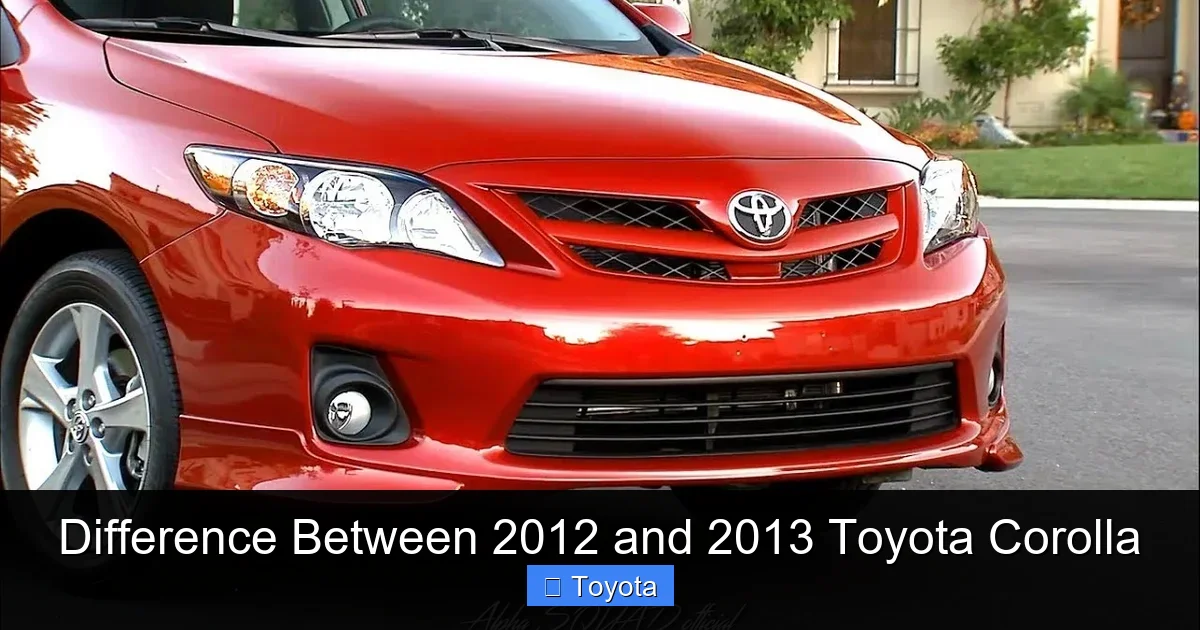
Visual guide about Difference Between 2012 and 2013 Toyota Corolla
Image source: aautomotives.com
At first glance, telling a 2012 Toyota Corolla apart from a 2013 model requires a keen eye. Toyota made subtle but meaningful changes to the exterior appearance that reflect evolving design trends.
Front End Refinements
The most noticeable difference appears up front. The 2013 Corolla received a redesigned grille with a more pronounced horizontal bar pattern. This gives the newer model a slightly more aggressive appearance compared to the simpler grille design of 2012. The headlights also underwent minor reshaping, with 2013 models featuring subtly different housing contours.
These changes might seem insignificant, but they contribute to the overall aesthetic evolution. Toyota aimed to make the 2013 Corolla appear more contemporary without straying too far from the proven formula that worked well in 2012.
Rear Styling Updates
From the back, both model years look remarkably similar. However, 2013 models feature updated taillight lenses with improved clarity and brightness. The rear bumper design also received minor tweaks, though these changes are primarily functional rather than cosmetic.
Color and Trim Options
Toyota introduced two new color options for the 2013 model year. Classic Silver Metallic and Nautical Blue replaced some outgoing colors from the 2012 lineup. Wheel designs remained consistent across both years, with 15-inch steel wheels standard on base models and optional 16-inch alloy wheels available.
Interior Features and Technology Upgrades
Visual guide about Difference Between 2012 and 2013 Toyota Corolla
Image source: platform.cstatic-images.com
While the exterior changes were subtle, Toyota focused more attention on interior improvements for 2013. These enhancements aimed to keep the Corolla competitive in its class.
Infotainment System Improvements
The 2013 Toyota Corolla introduced an updated audio system with better sound quality and more intuitive controls. Higher trim levels gained improved navigation system integration and enhanced connectivity options. Bluetooth streaming became more refined, addressing some connectivity issues reported by 2012 owners.
Dashboard and Material Quality
Toyota upgraded several interior materials for 2013 models. Soft-touch surfaces appeared on upper dashboard areas, replacing harder plastics used in 2012. Door panel materials also received attention, with 2013 models featuring improved texture and durability.
Comfort and Convenience Features
Climate control systems saw minor improvements in 2013, with more precise temperature regulation and quieter fan operation. Seat fabric quality improved slightly, particularly in mid-level trims. Storage compartments and cup holders were repositioned based on customer feedback from the 2012 model year.
Safety Equipment and Ratings
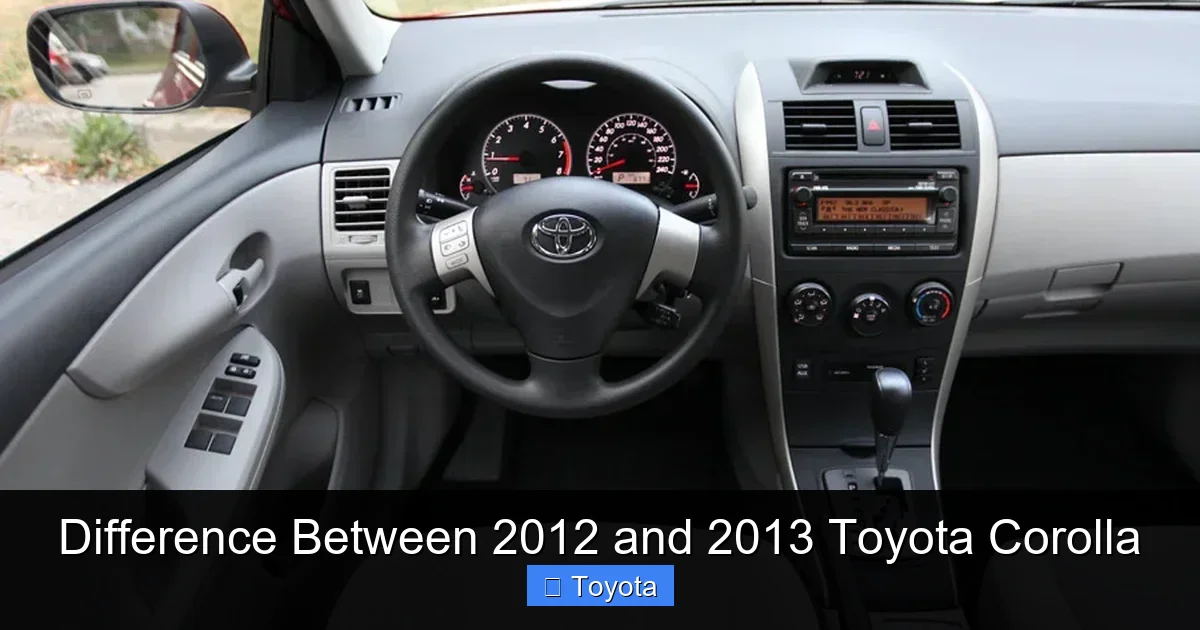
Visual guide about Difference Between 2012 and 2013 Toyota Corolla
Image source: aautomotives.com
Safety remains a cornerstone of the Toyota Corolla’s appeal. Both model years perform well in crash tests, but some differences in available safety equipment exist.
Standard Safety Features
Both 2012 and 2013 Corolla models come standard with Toyota’s Star Safety System. This includes anti-lock brakes, electronic brake-force distribution, and brake assist. Stability control and traction control are also standard across all trims.
Optional Safety Enhancements
The 2013 model year expanded availability of blind-spot monitoring and rear parking sensors. While these features existed in 2012, they became more widely available in 2013’s mid-range trims. Side curtain airbags remained standard across all model years.
Crash Test Performance
Both model years earned top safety ratings from major automotive organizations. Insurance Institute for Highway Safety awarded “Good” ratings in all crash categories for both years. National Highway Traffic Safety Administration gave the Corolla five-star overall safety scores consistently.
Performance and Engine Specifications
Under the hood, the 2012 and 2013 Toyota Corolla remain virtually identical. This continuity reflects Toyota’s confidence in the existing powertrain configuration.
Engine Performance Details
Both model years feature the same 1.8-liter four-cylinder engine producing 132 horsepower. This engine delivers adequate performance for daily driving while maintaining excellent fuel economy. The 1.8L engine earned praise for its smooth operation and minimal maintenance requirements.
Transmission Options
The standard five-speed manual transmission remained unchanged between model years. However, the optional four-speed automatic received software updates in 2013 that improved shift quality and responsiveness. Six-speed manual became available in 2013 as well, offering improved fuel economy potential.
Fuel Economy Comparisons
EPA estimates show minimal differences between the two model years. Both achieve approximately 28 mpg in the city and 35 mpg on highways with automatic transmissions. Manual transmission models see slight improvements in 2013 due to the six-speed option.
Driving Experience
The driving experience remains consistent between both model years. Steering feel, suspension tuning, and noise isolation show no significant changes. Both models provide comfortable rides suitable for daily commuting and longer road trips.
Pricing and Market Value Analysis
Understanding the financial aspects helps when choosing between these model years. Pricing considerations extend beyond initial purchase costs.
New Vehicle Pricing
When new, 2013 Toyota Corolla models carried slightly higher MSRP figures compared to 2012 equivalents. This price difference typically ranged from $200 to $500 depending on trim level. The increase reflected inflation adjustments and minor feature additions.
Used Market Values
Today’s used car market shows clear pricing patterns. 2013 models generally command higher prices due to their newer age. However, 2012 Corollas often provide better value propositions with lower purchase prices and similar reliability ratings.
Depreciation Factors
Both model years depreciate slowly compared to many competitors. Toyota’s reputation for reliability supports strong resale values across the entire Corolla range. Certified pre-owned programs add value for both model years through extended warranties.
Maintenance and Reliability Considerations
Toyota’s commitment to reliability shines through in both model years. Maintenance requirements remain straightforward and affordable.
Common Maintenance Needs
Routine maintenance schedules align perfectly between 2012 and 2013 models. Oil changes, filter replacements, and brake services follow identical intervals. Both model years benefit from Toyota’s extensive dealer network and affordable parts availability.
Reliability Track Record
Consumer reports consistently rate both model years highly for long-term reliability. Complaint frequencies remain low across major automotive surveys. Most issues relate to normal wear items rather than mechanical failures.
Parts Availability
Toyota maintains excellent parts availability for both model years. Many components are interchangeable, simplifying repair processes. Aftermarket support remains strong for performance and aesthetic modifications.
Conclusion
The differences between 2012 and 2013 Toyota Corolla models prove subtle yet meaningful. Exterior styling refinements give the 2013 model a more contemporary appearance while interior upgrades enhance daily driving comfort. Safety equipment expanded in 2013, though both years maintain excellent crash test performance.
Performance specifications remain virtually identical, reflecting Toyota’s satisfaction with the proven powertrain combination. Both model years deliver reliable transportation with impressive fuel economy numbers that appeal to budget-conscious drivers.
When choosing between these model years, consider your priorities carefully. If you value slight styling improvements and updated interior features, the 2013 model deserves consideration. However, if maximizing value matters most, 2012 models often provide excellent deals in today’s used car market.
Both years represent Toyota’s commitment to quality and reliability. Your choice ultimately depends on whether you prefer the latest features or the best value proposition. Either way, you’ll enjoy the dependable transportation that has made Corolla America’s best-selling car nameplate for decades.
Frequently Asked Questions
What are the main differences between 2012 and 2013 Toyota Corolla models?
The primary differences include updated front-end styling with a revised grille design, improved interior materials and infotainment systems, and expanded availability of safety features like blind-spot monitoring in 2013 models.
Is one model year more reliable than the other?
Both model years demonstrate excellent reliability ratings with minimal differences in long-term performance. Toyota’s consistent manufacturing quality ensures both years provide dependable transportation for hundreds of thousands of miles.
Which model year offers better fuel economy?
Fuel economy remains virtually identical between model years. Both achieve approximately 28 mpg city/35 mpg highway with automatic transmissions. The 2013 six-speed manual option may offer slight improvements.
Should I pay more for a 2013 model over a 2012?
Consider your budget and priorities. While 2013 models offer updated features, 2012 models often provide better value in the used market. Both deliver excellent reliability and performance regardless of your choice.
Are parts more expensive for one model year?
No significant price differences exist between parts for 2012 and 2013 models. Many components are interchangeable, and Toyota maintains excellent parts availability for both model years through dealerships nationwide.
How do safety ratings compare between these model years?
Both model years earned top safety ratings from major organizations. They share identical standard safety equipment including Toyota’s Star Safety System, with 2013 models offering expanded optional safety features.