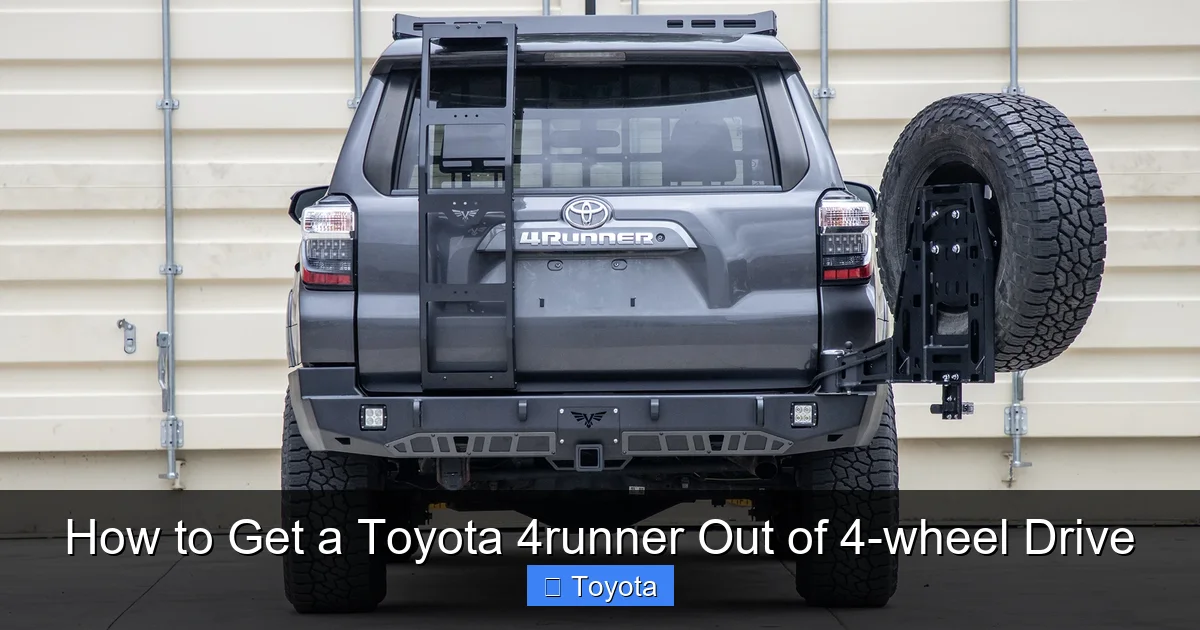
How to Get a Toyota 4runner Out of 4-wheel Drive
Getting your Toyota 4Runner out of 4-wheel drive is simple when you know the correct procedure. Follow the steps to shift from 4HI or 4LO to 2HI, check for indicator lights, and troubleshoot any sticking issues. Proper use keeps your drivetrain healthy and ready for the next adventure.
If you own a Toyota 4Runner, you probably love its ability to tackle rough terrain thanks to the part‑time four‑wheel‑drive system. Knowing how to get a Toyota 4Runner out of 4‑wheel drive is just as important as knowing when to engage it. Leaving the truck in 4HI or 4LO on dry pavement can cause unnecessary wear, lower fuel economy, and even damage the drivetrain over time. In this guide we’ll walk you through the exact steps to shift back to two‑wheel drive, explain what each mode does, and share troubleshooting tips for those moments when the 4WD light refuses to go out.
We’ll also cover why proper disengagement matters, how to maintain the transfer case, and when it’s wise to visit a mechanic. Whether you’re a new 4Runner owner or a seasoned off‑roader, the information below will help you keep your truck running smoothly for years to come.
Key Takeaways
- Know your 4WD modes: The 4Runner offers 2HI, 4HI, and 4LO; each serves different driving conditions.
- Disengage correctly: Shift to neutral, move the transfer case lever to 2HI, then return to drive.
- Watch the indicator: The 4WD light should turn off when you’re back in 2HI.
- Address sticking: If the light stays on, try reversing a few feet or checking for mechanical binding.
- Maintain regularly: Clean the transfer case, check fluid, and inspect linkages to prevent future issues.
- Use the right mode: Stay in 2HI on paved roads to save fuel and reduce wear.
📑 Table of Contents
Understanding the 4Runner’s 4WD System
The Toyota 4Runner uses a part‑time, manual‑shift transfer case. Unlike full‑time AWD systems, you must actively choose when to send power to all four wheels. The driver selects the mode with a lever or rotary switch located on the center console, depending on the model year.
2HI – Two‑Wheel Drive High
This is the default setting for normal road driving. Power goes only to the rear wheels, giving you better fuel efficiency and less wear on the front drivetrain components.
4HI – Four‑Wheel Drive High
In 4HI, the transfer case locks the front and rear driveshafts together, sending torque to all four wheels. Use this mode on loose surfaces like gravel, snow, or light mud where you need extra traction but still want to maintain higher speeds.
4LO – Four‑Wheel Drive Low
4LO provides a lower gear ratio, multiplying torque for slow‑speed, high‑effort situations such as steep climbs, deep sand, or rock crawling. Speed is limited, but you get maximum pulling power.
Knowing when to use each mode helps you decide when it’s time to shift back to 2HI. As a rule of thumb, return to two‑wheel drive as soon as you’re back on paved or firm surfaces.
If you just bought a brand‑new 4Runner, you might want to follow the manufacturer’s break‑in recommendations. For more details on that process, see our guide on how to break in a new car Toyota. Proper break‑in helps the transfer case and other components settle in smoothly.
Step‑by‑Step: How to Get a Toyota 4Runner Out of 4‑Wheel Drive
Disengaging 4WD is straightforward, but you must follow the sequence to avoid grinding or damaging the transfer case. Below is the exact procedure for most 4Runner model years (1996‑present). If your vehicle has electronic push‑button controls, the steps are similar—just replace the lever movement with button presses.
Visual guide about How to Get a Toyota 4runner Out of 4-wheel Drive
Image source: victory4x4.com
1. Reduce Speed and Come to a Stop
Before shifting, slow down to under 5 mph and bring the vehicle to a complete stop. Shifting while moving can cause gear clash, especially when moving from 4LO to 2HI.
2. Shift the Transmission to Neutral
With your foot on the brake, move the gear selector to N (neutral). This disconnects the engine from the wheels and allows the transfer case to spin freely.
3. Move the Transfer Case Lever to 2HI
Locate the 4WD selector lever (or switch). Pull it firmly from 4HI or 4LO straight back to the 2HI position. You should feel a positive click as the locking collar disengages.
4. Return the Transmission to Drive
Shift the gear selector back to D (drive) or R (reverse) as needed. Release the brake and gently accelerate.
5. Verify the Indicator Light
Check the instrument cluster. The 4WD indicator light should be off. If it stays illuminated, proceed to the troubleshooting section below.
That’s all there is to it—once the light is off, you’re officially back in two‑wheel drive.
When to Use 2HI Versus 4HI or 4LO
Understanding the right moments to switch modes protects your drivetrain and improves fuel economy. Here’s a quick reference:
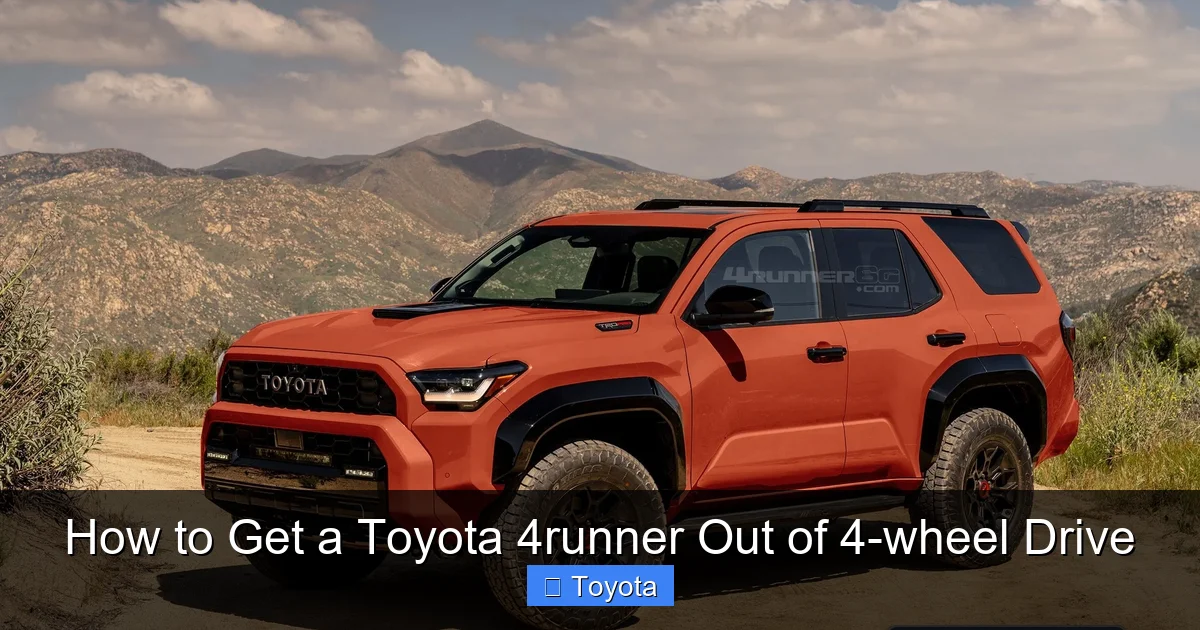
Visual guide about How to Get a Toyota 4runner Out of 4-wheel Drive
Image source: s1.cdn.autoevolution.com
- City streets, highways, dry pavement: Stay in 2HI.
- Wet roads, light snow, gravel: 4HI provides extra slip resistance without sacrificing speed.
- Deep snow, sand, mud, steep inclines: Shift to 4LO for maximum torque at low speed.
- Transitioning from off‑road to pavement: Always drop back to 2HI as soon as you hit a solid surface.
Frequent unnecessary use of 4HI or 4LO can lead to overheated transfer case fluid and accelerated wear on the front differential. Making a habit of checking the mode before you hit the pavement saves money in the long run.
Troubleshooting: What If the 4WD Light Won’t Turn Off?
Sometimes, despite following the steps, the 4WD indicator remains lit. This usually means the transfer case hasn’t fully disengaged. Below are common causes and fixes.

Visual guide about How to Get a Toyota 4runner Out of 4-wheel Drive
Image source: s.yimg.com
Mechanical Binding
If the truck is parked on a steep angle or the wheels are cocked, the locking collar can bind. Solution: shift into reverse and back up a few feet, then try the disengage steps again. The slight movement often releases the pressure.
Low or Contaminated Transfer Case Fluid
Old or dirty fluid increases friction, making the collar stick. Check the fluid level and condition according to the owner’s manual. If it looks dark or smells burnt, drain and refill with the recommended Toyota ATF‑type fluid.
Worn Linkage or Shift Fork
Over time, the mechanical linkage that moves the collar can wear or become misaligned. Inspect the lever and cables for excessive play or damage. A worn shift fork inside the transfer case may require professional replacement.
Electrical Sensor Glitch (Later Models)
Some newer 4Runners use a sensor to detect the transfer case position. A faulty sensor can falsely indicate 4WD engagement. Use an OBD‑II scanner to read any related codes (e.g., C1234 – Transfer Case Position Sensor). If a code appears, the sensor may need replacement.
If you’ve tried the above and the light stays on, it’s best to consult a qualified mechanic. Continuing to drive with the transfer case partially engaged can cause damage.
For a deeper look at how drivetrain wear accumulates over time, check out our article on how to calculate wear and tear on a car. It explains why timely maintenance matters.
Maintenance Tips to Keep Your 4WD System Healthy
Preventive care is the easiest way to avoid sticky 4WD situations. Incorporate these habits into your regular service routine.
Regular Fluid Checks
The transfer case uses its own lubricant, separate from the engine oil and transmission fluid. Toyota recommends checking the level every 15,000 miles and changing it every 30,000 miles—or sooner if you frequently use 4LO in harsh conditions.
Inspect the Linkage and Boots
Look for cracked rubber boots around the shift lever and any signs of rust on the linkage. Replace damaged boots promptly to keep dirt and moisture out.
Clean the Undercarriage
After off‑road trips, mud, sand, and salt can accumulate around the transfer case and driveshafts. A thorough wash helps prevent corrosion. For tips on cleaning the engine bay and undercarriage, see our guide on how to clean a car engine bay. A clean undercarriage reduces the risk of seized components.
Exercise the Transfer Case
Even if you don’t plan to go off‑road for a while, shift into 4HI and drive a short distance (a few hundred feet) every month. This keeps the internal parts lubricated and prevents the collar from sticking due to inactivity.
Listen for Unusual Noises
Grinding, whining, or clunking when shifting between modes can indicate worn bearings or gear damage. Address these sounds early to avoid costly repairs.
By staying on top of these simple tasks, you’ll ensure that getting your Toyota 4Runner out of 4‑wheel drive remains a quick, hassle‑free process.
Conclusion
Knowing how to get a Toyota 4Runner out of 4‑wheel drive is essential for preserving the longevity of your truck’s drivetrain and maintaining good fuel economy. The process is simple: stop, shift to neutral, move the transfer case lever to 2HI, return to drive, and confirm the indicator light is off. If the light stays on, try reversing a few feet, check the fluid, inspect the linkage, or look for sensor faults.
Regular maintenance—fluid changes, linkage inspection, and occasional exercise of the transfer case—prevents most issues before they start. Remember to use 2HI on paved roads, reserve 4HI for slippery surfaces, and save 4LO for the toughest, low‑speed challenges.
With these steps and tips, you’ll confidently switch between drive modes, enjoy smoother rides on the highway, and be ready for the next off‑road adventure whenever the trail calls.
Frequently Asked Questions
Do I need to be in neutral to shift out of 4WD?
Yes. Shifting the transmission to neutral disconnects the engine from the wheels, allowing the transfer case to spin freely and preventing gear clash when you move the lever.
Can I shift from 4LO directly to 2HI while moving?
It’s not recommended. Always reduce speed to under 5 mph, come to a complete stop, and shift to neutral before moving the transfer case lever. Shifting while rolling can cause damage.
Why does my 4WD light flicker after I disengage?
A flickering light often indicates a loose connection or a failing position sensor. Check the wiring harness at the transfer case and consider scanning for fault codes.
How often should I change the transfer case fluid?
Toyota suggests every 30,000 miles under normal use. If you frequently use 4LO in extreme conditions, change it every 15,000 miles or once a year, whichever comes first.
Is it harmful to leave the 4Runner in 4HI on dry pavement?
Yes. Driving in 4HI on high‑traction surfaces creates drivetrain bind, leading to increased wear, reduced fuel economy, and potential overheating of the transfer case.
What should I do if the transfer case lever feels stuck?
First, ensure the vehicle is on level ground and in neutral. Gently wiggle the lever while applying light pressure. If it still won’t move, do not force it—inspect the linkage for damage or seek professional help.