Car Sounds Like a Lawn Mower When Idling

If your car sounds like a lawn mower when idling, the issue often stems from exhaust leaks, engine misfires, or worn belts. This guide walks you through diagnosing the noise, practical repair tips, and preventive maintenance to keep your engine running smoothly and quietly.
When you start your car and hear a harsh, rattling noise that reminds you of a lawn mower, it can be both annoying and worrisome. That distinctive sound usually means something is off with the engine’s idle quality. While a lawn‑mower‑like idle isn’t always a sign of catastrophic failure, ignoring it can lead to reduced fuel efficiency, increased emissions, and eventually more serious mechanical issues. Understanding the root causes helps you decide whether a quick fix will do the trick or if a deeper inspection is needed.
In this article we’ll break down the most common reasons a car sounds like a lawn mower when idling, show you how to diagnose the problem safely, and walk through practical repair steps. We’ll also share preventive tips so you can keep your engine humming quietly for miles to come. Whether you’re a seasoned DIYer or prefer to leave the work to a mechanic, the information here will help you make informed decisions.
Key Takeaways
- Exhaust leaks are a frequent culprit: Cracks or holes in the manifold, muffler, or catalytic converter can produce a loud, lawn‑mower‑like rumble at idle.
- Engine misfires create uneven firing: Faulty spark plugs, ignition coils, or fuel injectors cause a rough, choppy idle that mimics a small engine.
- Worn or loose belts generate high‑pitched noise: A frayed serpentine belt or failing pulley can squeal or rattle, adding to the lawn‑mower sound.
- Simple diagnostics help pinpoint the source: Listen for specific tones, inspect visually, and use an OBD‑II scanner to read trouble codes.
- Timely repairs prevent further damage: Fixing exhaust leaks, replacing belts, and addressing ignition issues early saves costly repairs down the road.
- Regular maintenance keeps idle smooth: Clean the engine bay, follow service intervals, and use quality fuel to avoid future noise problems.
📑 Table of Contents
Common Causes of Lawn Mower‑Like Idle Noise
Several systems can create that rough, uneven idle reminiscent of a small gasoline engine. Identifying the source is the first step toward a quiet ride.
Exhaust System Issues
The exhaust system carries hot gases away from the engine. If there’s a leak, crack, or loose component, the escaping gas can produce a loud, low‑frequency rumble that many describe as a lawn‑mower sound. Common trouble spots include the exhaust manifold, the catalytic converter, and the muffler. Rust, road debris, or simple wear can cause holes that let gas escape before it’s properly silenced.
When you hear the noise, try to locate where it’s loudest. A leak near the manifold will often be most audible under the hood, while a muffler issue may be louder at the rear of the vehicle. In many cases, a visual inspection will reveal black soot around a crack, indicating escaping exhaust.
Engine Misfires
An engine misfire occurs when one or more cylinders fail to ignite the air‑fuel mixture at the right time. This results in uneven power pulses, which can make the engine sound choppy or like it’s struggling—similar to a lawn mower that’s sputtering. Misfires are often traced to faulty spark plugs, worn ignition coils, clogged fuel injectors, or problems with the engine’s timing.
Besides the noise, you might notice a loss of power, rough acceleration, or a check‑engine light flashing. Diagnosing misfires usually involves checking the spark plugs first, then moving on to coils and injectors if needed.
Loose or Damaged Belts
The serpentine belt drives accessories like the alternator, power steering pump, and air‑conditioning compressor. If the belt is worn, glazed, or loose, it can slip on the pulleys and create a high‑pitched squeal or rattling noise that blends into the overall idle sound. A failing tensioner or idler pulley can also produce similar noises.
Belt‑related noise tends to change with engine speed; you may hear it more clearly at idle and lessen as you rev the engine. Inspect the belt for cracks, fraying, or glazing, and check that the tensioner arm moves smoothly.
Air Intake Problems
While less common, a leak in the air intake system can cause a whistling or hissing sound that, combined with other issues, contributes to a lawn‑mower‑like idle. Cracked hoses, a loose intake manifold gasket, or a damaged air‑filter housing can let unmetered air enter the engine, disturbing the air‑fuel ratio.
These leaks often trigger a lean‑condition code (like P0171 or P0174) and may cause the engine to idle higher than normal before settling into a rough rhythm.
How to Diagnose the Problem
Before diving into repairs, a systematic diagnosis helps you avoid unnecessary parts replacement. Start with the simplest checks and work toward more involved tests.
Visual guide about Car Sounds Like a Lawn Mower When Idling
Image source: blogger.googleusercontent.com
Listening for Specific Sounds
Grab a mechanic’s stethoscope or a long screwdriver (use the handle as a makeshift probe) and carefully listen to different components while the engine is idling. Place the tip near the exhaust manifold, muffler, belts, and intake. Note where the noise is loudest and what character it has—low rumble, high squeal, or irregular popping.
If the sound changes when you rev the engine slightly, that can give clues. For example, exhaust or belt issues. A noise that stays constant regardless of RPM often points to internal engine problems like misfires.
Visual Inspection Tips
With the engine off and cooled, open the hood and look for obvious signs of wear:
- Exhaust: Black soot or rust spots near joints, cracks in the manifold, or holes in the muffler.
- Belts: Cracks, fraying, glazing, or missing chunks on the serpentine belt; wobbling pulleys.
- Intake: Loose clamps, cracked hoses, or a misaligned air‑filter housing.
- Engine bay: Loose bolts, missing heat shields, or debris that could be vibrating.
Take photos of anything suspicious; they’re helpful when consulting a mechanic or ordering parts.
Using an OBD‑II Scanner
Modern vehicles store trouble codes when sensors detect anomalies. Plug an OBD‑II scanner into the port under the dash and read any stored codes. Common codes related to a lawn‑mower idle include:
- P0300‑P0306: Random or specific cylinder misfires.
- P0420/P0430: Catalyst system efficiency (often tied to exhaust leaks).
- P0171/P0174: System too lean (possible intake leak).
- P0562: System voltage low (could indicate battery or alternator issues affecting idle).
If you see a code, note it and research the specific meaning. Many scanners also show live data, letting you watch fuel trims, RPM, and sensor voltages in real time.
For battery‑related concerns that might affect idle quality, you can refer to our guide on how to diagnose a car battery problem to ensure the electrical system isn’t contributing to the roughness.
Fixing Exhaust‑Related Noises
Once you’ve identified an exhaust leak as the source, repairs can range from a simple sealant fix to component replacement.

Visual guide about Car Sounds Like a Lawn Mower When Idling
Image source: bestsowftware.com
Checking the Muffler and Catalytic Converter
Start at the rear of the vehicle. Tap the muffler lightly with a rubber mallet; a rattling sound inside indicates broken baffles or internal corrosion. Look for visible holes or rusted sections. The catalytic converter, located closer to the engine, can also crack due to thermal shock or impact.
If the converter is damaged, it’s usually best to replace it rather than attempt a repair, as a failing converter can cause poor performance and trigger emissions codes.
Repairing Leaks
Small cracks in the exhaust manifold or pipe can sometimes be sealed with high‑temperature exhaust repair tape or epoxy designed for exhaust systems. Clean the area thoroughly, apply the product according to the manufacturer’s instructions, and allow it to cure before starting the engine.
For larger holes or severe rust, replacing the affected section is the safer option. When replacing a manifold, consider upgrading to a stainless‑steel version for longer life.
When to Replace Components
If the muffler is rusted through, the catalytic converter is rattling, or the manifold shows multiple cracks, replacement is the most reliable solution. While aftermarket parts can be cost‑effective, ensure they meet OEM specifications for fit and durability.
After any exhaust work, double‑check all clamps and hangers are secure. A loose hanger can cause the exhaust to vibrate against the chassis, recreating that lawn‑mower noise.
Addressing Engine Misfires and Ignition Issues
When the problem lies within the combustion process, focusing on the ignition and fuel delivery systems usually resolves the rough idle.
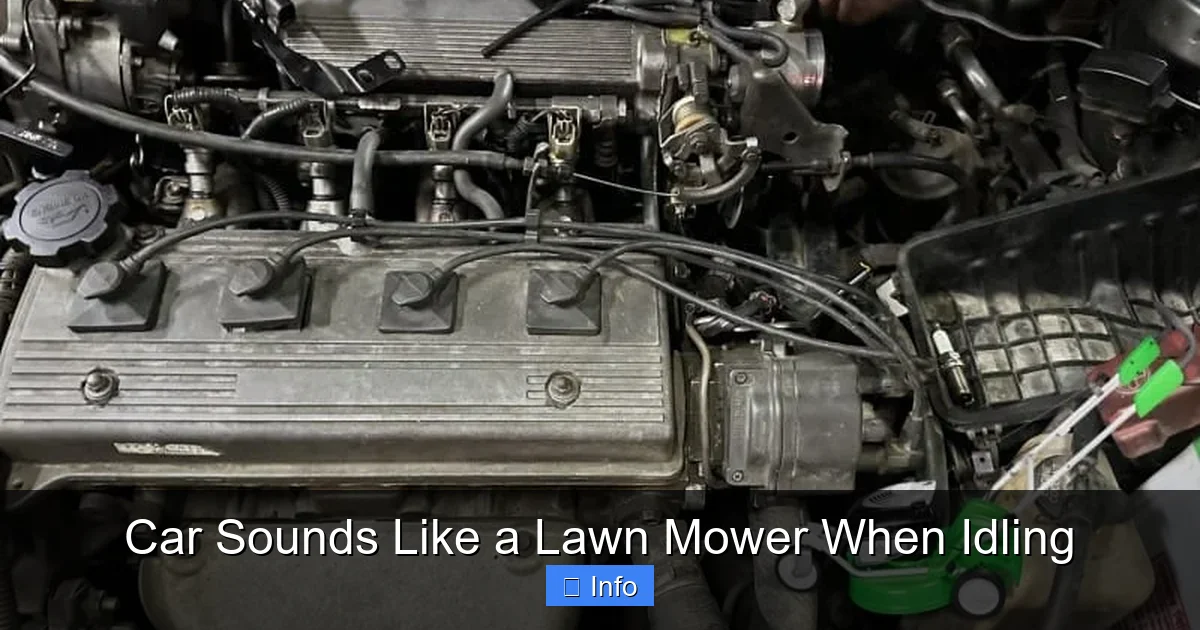
Visual guide about Car Sounds Like a Lawn Mower When Idling
Image source: mechanicfixa.com
Spark Plug Inspection
Remove each spark plug and examine the tip. Look for:
- Worn electrodes (rounded or eroded).
- Excessive carbon buildup (indicating a rich mixture).
- Oil fouling (suggests internal oil leakage).
- Melting or blistering (sign of overheating).
Replace plugs that show any of these signs. Use the plug type and gap recommended by the vehicle manufacturer.
Ignition Coils and Wires
If the plugs look fine but misfires persist, test the ignition coils. A simple swap test—moving a coil from one cylinder to another and seeing if the misfire follows—can identify a faulty coil. For older vehicles with spark‑plug wires, check for cracks, brittleness, or high resistance with a multimeter.
Replace any coil or wire set that fails testing. It’s often wise to replace coils in pairs to maintain balanced performance.
Fuel Injector Concerns
Clogged or leaking injectors can disturb the air‑fuel ratio, causing a rough idle. You can try a fuel‑injector cleaner additive first; run it through a full tank of gasoline as directed. If the idle improves, the injectors may have been mildly fouled.
For persistent issues, professional cleaning or replacement of the injectors may be necessary. A mechanic can perform a flow test to confirm each injector’s output.
Dealing with Belt and Pulley Problems
A noisy belt or pulley can add a high‑pitched element to the overall lawn‑mower sound. Addressing these components often quiets the engine noticeably.
Serpentine Belt Wear
Inspect the belt for:
- Cracks that go deep into the rubber.
- Frayed edges or missing chunks.
- Glazing (a shiny, hard surface) indicating slippage.
If any of these are present, replace the belt. When installing a new belt, follow the routing diagram usually found on a sticker under the hood.
Tensioner and Idler Pulley Checks
The tensioner keeps the belt tight; a weak spring or seized bearing can cause belt slip. Spin each pulley by hand—it should rotate smoothly without grinding or wobble. Listen for any noise as you spin them.
Replace the tensioner or any pulley that feels rough or noisy. It’s relatively inexpensive and prevents premature belt wear.
Replacement Guidelines
When replacing the belt, it’s a good practice to replace the tensioner and idler pulleys at the same time, especially if the vehicle has high mileage. This reduces labor later and ensures the whole drive system operates smoothly.
After installation, start the engine and listen. The belt should run quiet with no squeal or chirp. If noise persists, double‑check alignment and tension.
Preventive Maintenance to Keep Idle Smooth
Regular care goes a long way toward preventing that annoying lawn‑mower idle from returning.
Regular Engine Bay Cleaning
A clean engine bay makes it easier to spot leaks, loose bolts, and deteriorating components. Dirt and grime can hide cracks in hoses or corrosion on metal parts. Use a gentle degreaser, a soft brush, and low‑pressure water to clean the area, avoiding direct spray on electrical connectors.
For a step‑by‑step guide, see our article on how to clean a car engine bay. Keeping the bay clean also helps you notice early signs of wear before they become noisy problems.
Routine Tune‑Ups
Follow the manufacturer’s service schedule for spark plug replacement, fuel‑filter changes, and ignition‑system inspections. Even if the car seems to run fine, these preventive steps keep combustion efficient and reduce the chance of misfires.
Monitoring Fluid Levels
Low engine oil, coolant, or power‑steering fluid can cause accessories to work harder, leading to belt strain and unusual noises. Check fluids monthly and top off with the recommended types.
Using Quality Fuel and Additives
Top‑tier gasoline with adequate detergent additives helps keep injectors and combustion chambers clean. Periodically using a fuel‑system cleaner can prevent buildup that leads to rough idle.
If you live in an area with extreme temperatures, consider a fuel additive designed for cold‑weather performance to avoid fuel‑line freezing and related idle issues.
Conclusion
Hearing your car sound like a lawn mower when idling is a clear signal that something needs attention. By systematically checking the exhaust system, ignition components, belts, and air intake, you can pinpoint the source and apply the appropriate fix. Whether it’s sealing a small exhaust crack, replacing worn spark plugs, or installing a new serpentine belt, most remedies are straightforward and cost‑effective when tackled early.
Remember that preventive maintenance—like regular engine‑bay cleaning, timely tune‑ups, and using quality fuel—keeps these problems from recurring. If you’re ever unsure about a diagnosis or repair, don’t hesitate to consult a trusted mechanic. A smooth, quiet idle not only makes driving more pleasant but also helps your vehicle run efficiently and last longer.
Take the time to listen, inspect, and act. Your car—and your ears—will thank you.
For more car‑care tips, explore our other guides on topics like best long lasting car fresheners and how to maintain a car battery in cold weather.
Frequently Asked Questions
What does it mean when my car sounds like a lawn mower at idle?
It usually indicates an issue such as an exhaust leak, engine misfire, or worn belt that creates uneven or noisy engine operation. Identifying the specific sound helps narrow down the cause.
Can I drive my car if it sounds like a lawn mower when idling?
You can drive short distances, but prolonged operation may worsen the problem, reduce fuel efficiency, and potentially cause further damage. It’s best to diagnose and repair the issue promptly.
How much does it cost to fix a lawn‑mower‑like idle?
Costs vary widely: a simple exhaust‑pipe seal might be under $50, while replacing a catalytic converter or a set of ignition coils can run several hundred dollars. Getting an accurate quote after diagnosis is the best approach.
Will a bad battery cause my car to idle roughly?
A weak or failing battery can affect the alternator and electrical systems, which may lead to irregular idle speed or stalling. Checking battery health is a good step when diagnosing idle issues.
How often should I inspect the serpentine belt?
Inspect the belt at every oil change or at least every 6,000 miles. Look for cracks, fraying, glazing, and proper tension to prevent noise and sudden failure.
Can using a fuel additive fix a rough idle?
A quality fuel additive can help clean injectors and remove minor deposits, which may improve idle quality. However, if the underlying cause is mechanical (like a leak or misfire), additives alone won’t solve the problem.