How to Tell If Your Car Has a Factory Amp

Not sure if your car came with a factory amplifier? This comprehensive guide shows you how to identify amplifier components through visual inspection, audio testing, and documentation review. We’ll walk you through practical methods to check your car’s audio system configuration and explain what to look for in different vehicle makes and models.
Key Takeaways
- Check your owner’s manual: The most reliable source for determining if your vehicle includes a factory amplifier in its audio system.
- Look for physical amplifier locations: Factory amps are typically found behind trim panels, under seats, or in the trunk area of vehicles.
- Test audio output differences: Compare sound quality between different volume levels and speaker configurations to identify amplification.
- Examine speaker wiring: Factory amplified systems often have thicker gauge wires and additional connections running to speakers.
- Review radio specifications: Check your head unit’s power output ratings to determine if external amplification is present.
- Consider trim level differences: Higher trim packages often include amplified audio systems as standard or optional features.
- Seek professional diagnosis: When in doubt, automotive electronics specialists can quickly identify amplifier presence and functionality.
📑 Table of Contents
Understanding Factory Amplifiers in Modern Vehicles
Modern car audio systems have come a long way from the basic AM/FM radios of decades past. Today’s vehicles often feature sophisticated sound systems that include multiple speakers, subwoofers, and amplification components. But how do you know if your car rolled off the assembly line with a factory amplifier already installed?
This question becomes important when you’re considering audio upgrades, troubleshooting sound issues, or simply trying to understand your vehicle’s capabilities. Many drivers discover their cars have hidden amplifier components only after attempting modifications or experiencing audio problems. Knowing whether you have a factory amp can save you time, money, and frustration in your automotive audio journey.
What Exactly is a Factory Amplifier?
The Role of Car Amplifiers
A factory amplifier is an electronic component installed during vehicle manufacturing that boosts the audio signal from your radio to your speakers. Think of it as a megaphone for your music – it takes the weak electrical signal from your head unit and makes it strong enough to power multiple speakers throughout your vehicle.

Visual guide about How to Tell If Your Car Has a Factory Amp
Image source: autostereoguide.com
Most factory amplifiers serve several key functions:
- Increasing power output to drive multiple speakers effectively
- Improving overall sound quality and clarity
- Separating audio frequencies for better speaker performance
- Providing consistent volume across different listening conditions
Why Manufacturers Include Factory Amps
Car manufacturers don’t just throw amplifiers into vehicles randomly. They install them for specific reasons related to performance and customer satisfaction. Premium trim levels often come with enhanced audio packages that require amplification to deliver the promised sound experience.
These systems help overcome challenges like road noise, wind noise, and the acoustic limitations of vehicle interiors. Without proper amplification, even high-quality speakers struggle to produce clear, powerful sound in a moving vehicle environment.
Visual Inspection Methods
Common Amplifier Locations
The first step in identifying a factory amp is knowing where to look. These components are typically hidden away but follow predictable placement patterns across different vehicle types.

Visual guide about How to Tell If Your Car Has a Factory Amp
Image source: i.ytimg.com
Behind trim panels: Many vehicles hide amplifiers behind door panels, dashboard trim, or rear deck panels. You might need to remove screws or clips to access these areas safely.
Under seats: Some manufacturers place amplifiers beneath the front or rear seats. Look for rectangular metal boxes with wiring harnesses connected to them.
In the trunk: Luxury vehicles and trucks often mount amplifiers in the cargo area, either against the rear wall or tucked away in side panels.
Under the dashboard: Smaller amplifiers sometimes fit in the lower dashboard area, near the steering column or center console.
Identifying Amplifier Components
Once you locate a potential amplifier, look for these telltale signs:
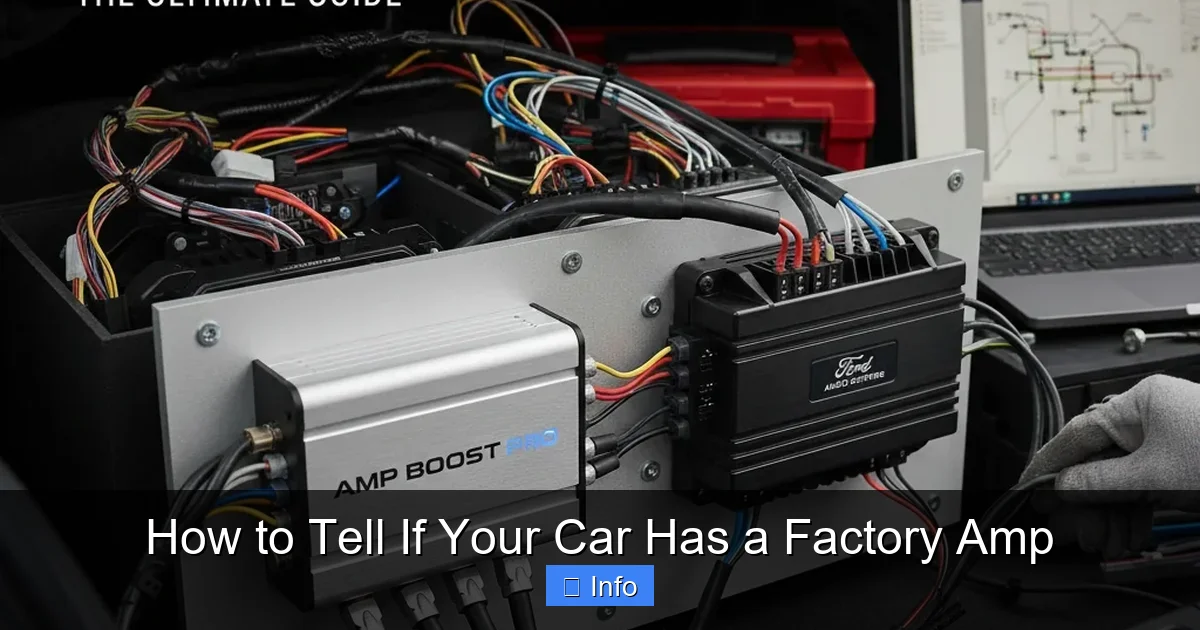
- Metal or plastic housing with heat sink fins
- Multiple wire connections (usually 6-12 wires)
- Manufacturer part numbers or branding labels
- Ventilation holes or cooling fans
- Mounting brackets or screws securing the unit
Factory amplifiers typically have fewer adjustment options than aftermarket units. They’re designed to work seamlessly with your specific vehicle’s audio system, so you won’t find complex EQ settings or gain controls.
Audio Testing Techniques
Sound Quality Comparison Tests
Your ears can be valuable tools in detecting amplifier presence. Here’s how to conduct simple audio tests:
Visual guide about How to Tell If Your Car Has a Factory Amp
Image source: autostereoguide.com
Volume level testing: Turn your radio up to about 75% volume. If the sound remains clear and distortion-free, you likely have amplification. Unamplified systems often distort at high volumes.
Speaker balance evaluation: Play music with distinct left and right channel separation. Amplified systems maintain better balance and clarity across all speakers simultaneously.
Bass response analysis: Listen to songs with strong bass lines. Factory amplified systems typically provide more controlled, deep bass response compared to unamplified setups.
Technical Audio Measurements
For more precise testing, consider these approaches:
- Use a multimeter to check voltage output at speakers
- Install a temporary aftermarket head unit to compare performance
- Listen for consistent sound levels when opening doors or windows
- Test fade and balance controls responsiveness
If you notice significant improvements in sound quality after bypassing potential factory components, this strongly suggests amplifier presence.
Documentation and Specification Research
Owner’s Manual Investigation
Your vehicle’s owner’s manual is the most authoritative source for answering this question. Look for sections titled “Audio System,” “Sound System,” or “Entertainment Features.” These sections often specify whether your particular trim level includes amplification.
Check the specifications page for details about:
- Total speaker count and wattage
- Number of amplifier channels
- Audio system brand (Bose, Harman Kardon, etc.)
- Special audio features or packages
Vehicle Identification Number Decoding
Your VIN contains valuable information about factory-installed options. Many online VIN decoders can reveal audio system specifications based on your vehicle’s build sheet. Look for codes related to “audio,” “sound,” or “entertainment” in the decoded information.
You can also contact your dealership with your VIN. Service advisors can access factory build records to confirm amplifier installation details.
Trim Level and Package Considerations
Understanding Audio Package Options
Manufacturers typically tie amplifier inclusion to specific trim levels or optional packages. Research your vehicle’s available configurations to understand what audio components were standard or optional when new.
Luxury trim levels: Vehicles with premium trims often include amplified systems as standard equipment.
Audio upgrade packages: Optional premium audio packages almost always include factory amplification components.
Technology packages: Some tech-focused trim packages bundle enhanced audio systems with amplification.
Researching Your Specific Model
Online forums and owner communities can provide insights about your exact vehicle year, make, and model. Search for discussions about audio system configurations to learn from other owners who’ve investigated the same question.
Factory service manuals available online often contain detailed wiring diagrams showing amplifier locations and connections for specific vehicle variants.
Professional Diagnosis and Confirmation
When to Seek Expert Help
If your investigation leaves questions unanswered, professional automotive electronics technicians can provide definitive answers. They have specialized tools and experience identifying factory audio components across various vehicle makes and models.
Consider professional diagnosis when:
- You plan major audio system modifications
- Your current system shows signs of amplifier failure
- Visual inspection reveals conflicting information
- You want to add components without causing damage
Cost-Effective Professional Options
Mobile electronics installers often provide consultation services at reasonable rates. They can quickly scan your vehicle’s audio system and identify amplifier presence without requiring full installation work.
Some dealerships offer audio system inspections during routine maintenance visits. While not free, these inspections can provide accurate information about factory components.
Conclusion
Identifying whether your car has a factory amplifier doesn’t have to be a mystery. By combining visual inspection, audio testing, and documentation research, you can confidently determine your vehicle’s audio configuration. Remember that amplifier presence often relates to trim level and optional packages, so understanding your specific vehicle’s original specifications provides valuable context.
Whether you’re planning upgrades, troubleshooting issues, or simply satisfying curiosity, knowing about your factory amplifier helps you make informed decisions about your car’s audio system. Take your time with the investigation process, and don’t hesitate to seek professional assistance when needed. The investment in proper identification will pay dividends in whatever automotive audio path you choose to pursue.
Additional Resources
If you’re specifically dealing with Jeep Grand Cherokee models and need guidance on working with factory amplifiers, check out our detailed guide on how to bypass factory amp in Jeep Grand Cherokee. Understanding your amplifier’s role is crucial before attempting any modifications to avoid damaging your vehicle’s electrical system.
For those interested in other automotive upgrades, learning about how to install a GPS system in your car can complement your audio enhancement projects with modern navigation capabilities.
Regular vehicle maintenance extends beyond just engine care. Make sure to keep up with tasks like how to replace car air filter yourself to ensure optimal performance of all your vehicle’s systems, including audio components that rely on proper electrical function.
Frequently Asked Questions
How can I tell if my car has a factory amp without removing panels?
You can perform audio tests by playing music at moderate to high volumes and listening for distortion. Factory amplified systems typically maintain clearer sound at higher volumes. Check your owner’s manual specifications and research your VIN online to confirm without physical inspection.
Where are factory amplifiers usually located in cars?
Factory amplifiers are commonly found behind trim panels, under seats, in the trunk area, or under the dashboard. Location varies significantly by manufacturer and vehicle type. Luxury vehicles tend to have more accessible mounting locations, while economy cars may hide them more discretely.
Will removing my factory amplifier improve my car’s audio system?
Not necessarily. Factory amplifiers are designed to work optimally with your vehicle’s specific speakers and audio configuration. Removing them without proper replacement can actually degrade sound quality. Consider your goals carefully before making modifications.
Can I install an aftermarket amplifier alongside my factory amp?
This depends on your specific setup and goals. Some configurations allow for additional amplification, while others may require bypassing the factory amplifier entirely. Professional installation ensures compatibility and prevents electrical system damage.
What does a factory amplifier look like?
Factory amplifiers are typically rectangular metal or plastic boxes with heat sink fins, multiple wire connections, and manufacturer branding. They’re smaller and less adjustable than aftermarket units, designed specifically for your vehicle’s audio system requirements.
How much does it cost to have a professional identify my amplifier?
Professional identification typically costs between $50-$150 depending on location and complexity. Many mobile electronics shops offer quick consultation services. Some dealerships provide this service during routine maintenance visits at no additional charge.