2 7 Ecoboost Vs 3 5 Ecoboost
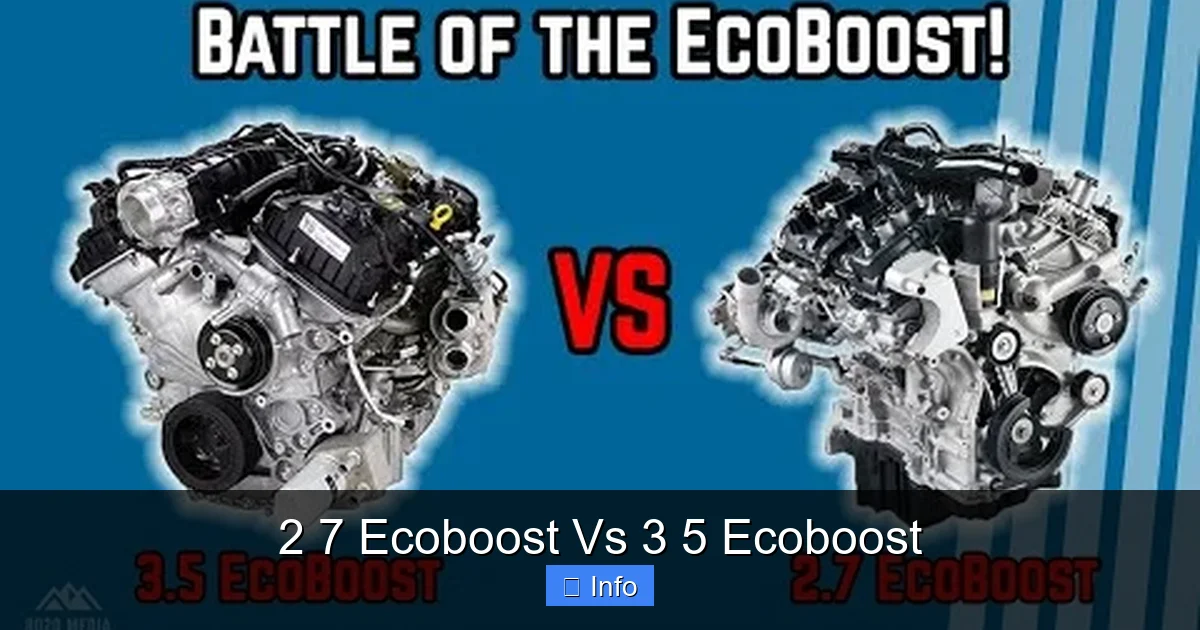
The 2.7L EcoBoost and 3.5L EcoBoost engines each have strengths; the smaller one offers better fuel economy while the larger delivers more torque. Choose based on your towing and driving style.
Key Takeaways
- Point 1: The 2.7L EcoBoost delivers up to 325 horsepower and 350 lb‑ft of torque, perfect for daily driving.
- Point 2: The 3.5L EcoBoost pushes 410 horsepower and 450 lb‑ft of torque, ideal for heavy towing.
- Point 3: Fuel economy drops about 2‑3 MPG when moving from the 2.7L to the 3.5L.
- Point 4: Payload capacity is slightly higher with the 3.5L due to stronger frame tuning.
- Point 5: Maintenance costs are similar, but the 3.5L may need more frequent oil changes under heavy load.
- Point 6: The 2.7L EcoBoost typically has a lower purchase price.
- Point 7: Your choice should match how you use the truck – commute vs. worksite.
📑 Table of Contents
- Understanding the Basics of the 2 7 Ecoboost Vs 3 5 Ecoboost
- Performance Comparison: Power and Torque
- Fuel Efficiency and Economy
- Towing and Payload Capacity
- Reliability and Maintenance Considerations
- Cost of Ownership
- Choosing the Right Engine for Your Lifestyle
- Practical Tips for Owners
- Conclusion
Understanding the Basics of the 2 7 Ecoboost Vs 3 5 Ecoboost
When you shop for a new Ford truck you will see two EcoBoost options. The 2.7L EcoBoost is the smaller turbocharged engine. The 3.5L EcoBoost is the larger version. Both use turbochargers and direct injection. They share a modern design but they target different needs. In this section we break down the core similarities and differences.
Engine Architecture
The 2.7L uses a 4‑cylinder block. The 3.5L uses a 6‑cylinder block. Both have aluminum heads and a high‑strength block. The 3.5L has a longer stroke which helps it make more torque.
Performance Comparison: Power and Torque
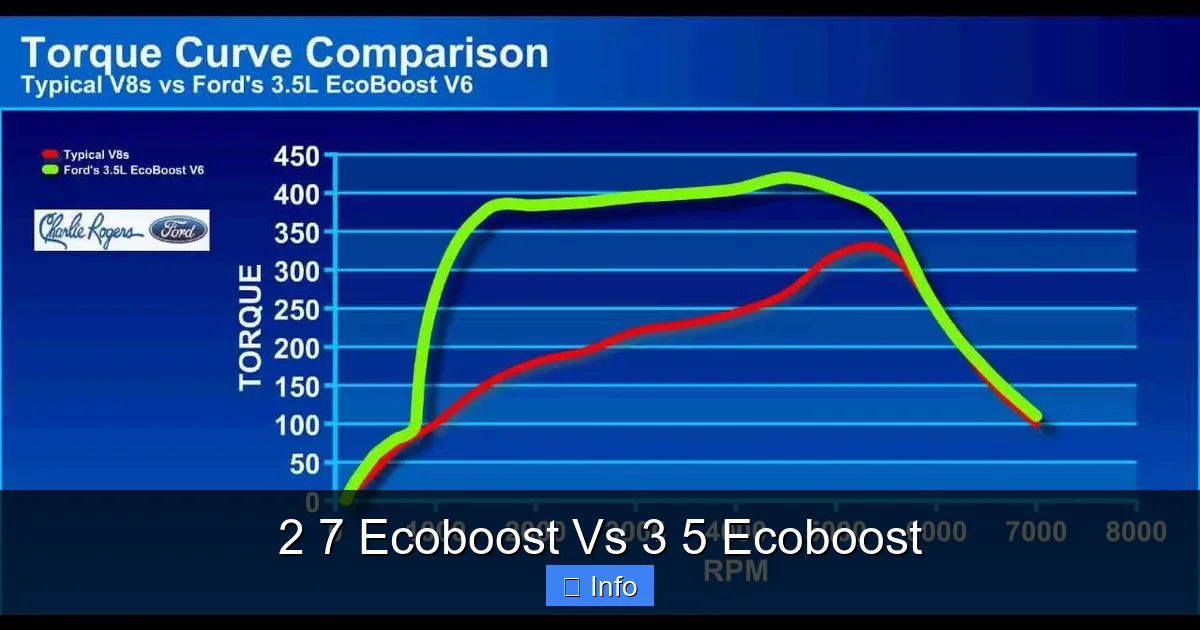
Performance is the first thing most buyers look at. The 2.7L EcoBoost produces about 325 horsepower and 350 lb‑ft of torque. The 3.5L EcoBoost delivers roughly 410 horsepower and 450 lb‑ft of torque. That extra power makes a big difference when you need to haul heavy loads.
Visual guide about 2 7 Ecoboost Vs 3 5 Ecoboost
Image source: i.ytimg.com
Acceleration
With the 2.7L you can go from 0 to 60 in around 7.5 seconds. The 3.5L does it in about 5.5 seconds. That quicker launch feels more responsive on highways.
Top Speed
Both engines are electronically limited but the 3.5L can reach higher top speeds comfortably.
Fuel Efficiency and Economy
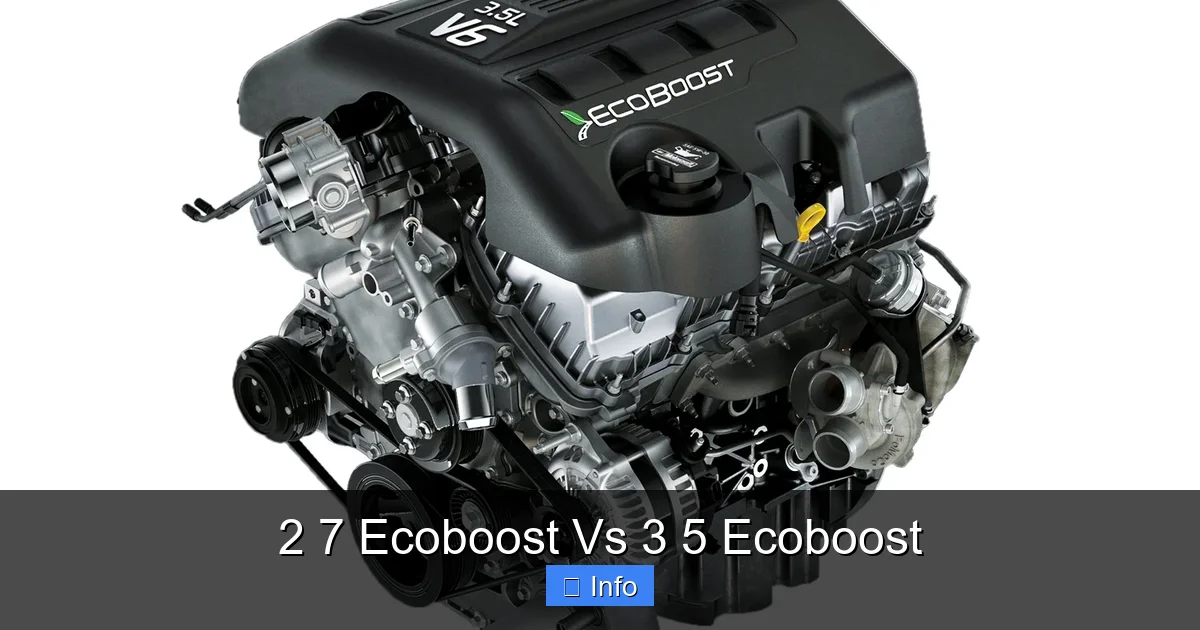
Fuel economy is a major factor for daily drivers. The 2.7L EcoBoost gets an EPA rating of about 20 city and 26 highway miles per gallon. The 3.5L drops to roughly 17 city and 23 highway MPG. The difference may seem small but it adds up over long miles.
Visual guide about 2 7 Ecoboost Vs 3 5 Ecoboost
Image source: onallcylinders.com
Real‑World Driving
If you mostly drive in the city the 2.7L will save you money at the pump. If you spend a lot of time on the highway the gap narrows but the 3.5L still uses more fuel.
Fuel Tank Size
Both engines share the same tank capacity, usually around 23 gallons. This means the 2.7L can travel farther on a single fill.
Towing and Payload Capacity
When you need to tow a trailer the engine choice matters. The 2.7L EcoBoost is rated for up to 7,700 pounds of towing. The 3.5L EcoBoost can tow up to 13,100 pounds depending on the configuration.
Torque Curve
Higher torque means easier climbs and less gear shifting. The 3.5L’s torque curve stays strong at lower RPMs which helps when climbing hills with a heavy load.
Payload
Payload is the weight you can carry inside the cabin and bed. The 3.5L usually adds a few hundred pounds of extra payload capacity.
Reliability and Maintenance Considerations
Both engines are built for durability. However they have different maintenance needs. The 2.7L has fewer moving parts which can mean fewer potential failures. The 3.5L, while more powerful, may require more frequent oil changes under heavy use.
Common Issues
Owners of the 2.7L sometimes report minor turbo lag. The 3.5L can experience higher exhaust temperatures when towing at maximum capacity. Regular maintenance can mitigate both issues.
Service Intervals
Ford recommends oil changes every 7,500 miles for the 2.7L. For the 3.5L under heavy load they suggest every 5,000 miles.
Cost of Ownership
Price matters when you compare the 2 7 Ecoboost Vs 3 5 Ecoboost. The 2.7L typically starts at a lower MSRP. It also tends to have slightly lower insurance costs.
Fuel Costs
Because the 2.7L is more efficient you will spend less on fuel over the life of the vehicle. Over 100,000 miles that can save you several thousand dollars.
Resale Value
Both engines hold value well, but trucks with the 3.5L often command a higher resale price due to their towing capability.
Choosing the Right Engine for Your Lifestyle
Now that you know the differences you can decide which engine fits your needs. If you drive mostly on roads and need good fuel economy the 2.7L EcoBoost is a smart pick. If you regularly tow heavy loads or need extra power for work the 3.5L EcoBoost is the better choice.
Driving Style
Consider how you accelerate. If you love quick bursts the 3.5L will feel more thrilling. If you prefer smooth steady power the 2.7L may be sufficient.
Budget
Your budget may also influence the decision. The lower upfront cost of the 2.7L can be appealing for first‑time truck buyers.
Practical Tips for Owners
Regardless of which engine you choose there are tips to get the most out of it. Keep up with scheduled maintenance. Use high‑quality oil, especially if you tow often. Monitor coolant levels to prevent overheating.
Oil Selection
For the 3.5L under heavy load consider using a top‑rated synthetic oil. You can read more about the best options in our guide on Top 5 best 5W-30 synthetic oils for performance and protection.
Suspension Upgrades
If you plan to tow with the 3.5L you might want a stiffer suspension. Check out our comparison of Rancho vs Bilstein which suspension system is right for your car to find the right setup.
Traction Control
When you haul heavy cargo traction can become a concern. Learn about the differences in Exploring the differences limited slip vs posi traction which is right for your car to choose the right system for your truck.
Conclusion
The 2 7 Ecoboost Vs 3 5 Ecoboost debate comes down to what you need most. If fuel efficiency, lower cost, and everyday driving are your priorities the 2.7L EcoBoost is the winner. If you need extra power, higher torque, and the ability to tow heavy loads the 3.5L EcoBoost is the clear choice. Both engines are modern, reliable, and backed by Ford’s warranty. Make your decision based on how you plan to use your truck and you will enjoy the perfect match.
Frequently Asked Questions
What is the main difference between the 2.7L and 3.5L EcoBoost engines?
The 2.7L is a smaller turbocharged four‑cylinder that offers better fuel economy, while the 3.5L is a larger V6 that produces more horsepower and torque for heavy towing.
Can the 2.7L EcoBoost handle towing?
Yes, the 2.7L can tow up to about 7,700 pounds, which is sufficient for many light‑to‑moderate towing needs.
Is the 3.5L EcoBoost more expensive to maintain?
Maintenance costs are similar, but the 3.5L may require more frequent oil changes under heavy load, which can add a small extra expense.
Which engine is better for off‑road driving?
Both engines can handle off‑road conditions, but the 3.5L’s extra torque can be advantageous when climbing steep, uneven terrain with a loaded truck.
Do I need a special transmission for the 3.5L?
The 3.5L pairs with Ford’s 10‑speed automatic transmission, which is designed to handle the higher torque and provide smooth shifts.
How does fuel economy differ in real‑world driving?
In everyday city driving the 2.7L typically gets 2‑3 MPG more than the 3.5L, while highway differences are smaller but still noticeable.