13 Vs 16 Psi Radiator Cap
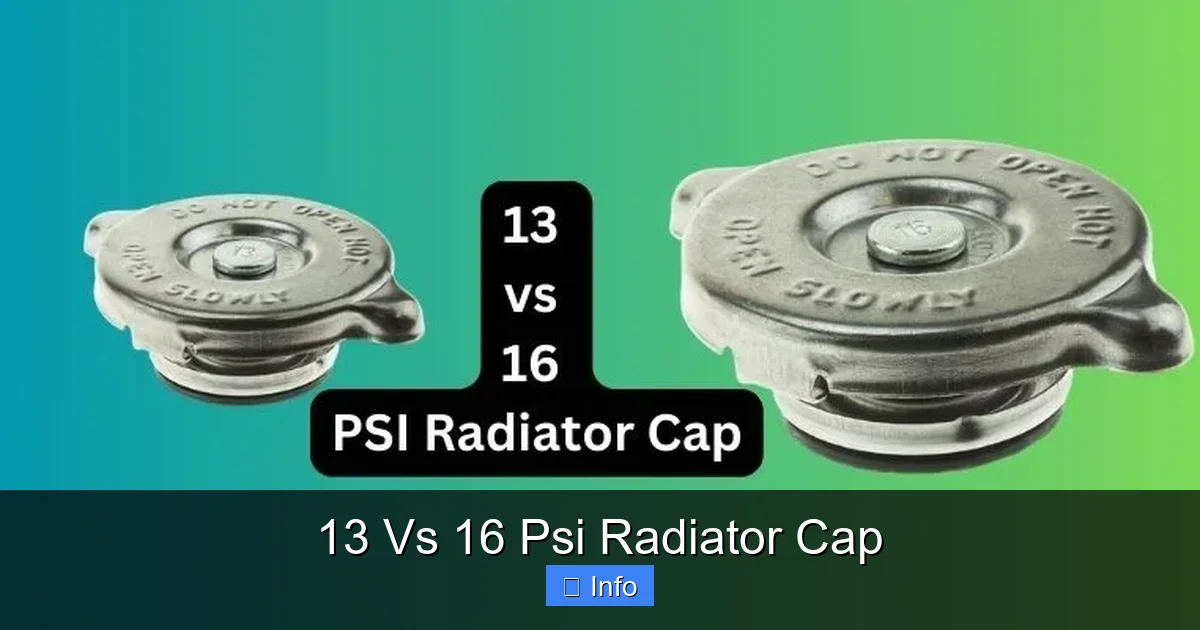
Choosing between a 13 vs 16 psi radiator cap depends on your engine’s design and cooling system limits. While a 16 psi cap raises the boiling point to prevent overheating, a 13 psi cap reduces stress on old hoses and gaskets. The most important rule is to always follow your manufacturer’s specifications to avoid system failure.
[FEATURED_IMAGE_PLACEdonor]
Have you ever looked at your radiator cap and wondered what those little numbers actually mean? You might see “13 psi” or “16 psi” stamped right on the metal. At first glance, it seems like a tiny difference. After all, it is just three pounds of pressure, right? But in the world of engine cooling, those few pounds can be the difference between a cool engine and a blown head gasket.
Understanding the 13 vs 16 psi radiator cap debate is all about balance. You want your engine to stay cool, but you don’t want to push your cooling system to the breaking point. Think of your radiator cap as a safety valve. Its main job is to keep the coolant inside the engine while letting out just enough pressure to prevent an explosion. If you pick the wrong one, you might solve one problem but create a much bigger, more expensive one.
In this guide, we are going to break down everything you need to know. We will talk about how pressure affects boiling points, why your car was built with a specific rating, and what happens when you try to “upgrade” your cap. Whether you are a DIY mechanic or just someone trying to keep their daily driver running, this will help you make the right choice.
Key Takeaways
- Pressure and Boiling: Higher psi ratings (16 psi) raise the boiling point of coolant, which helps prevent overheating in hot weather.
- System Stress: Lower psi ratings (13 psi) put less pressure on your radiator, hoses, and gaskets, reducing the risk of leaks.
- OEM Priority: You should almost always stick to the Original Equipment Manufacturer (OEM) rating to avoid damaging your engine.
- Risk of Over-pressurizing: Using a 16 psi cap on a system designed for 13 psi can cause hoses to burst or gaskets to blow.
- Coolant Flow: The radiator cap acts as a pressure relief valve; if it fails, your engine will overheat regardless of the psi rating.
- Compatibility: Always check your owner’s manual before upgrading or replacing a cap to ensure the correct pressure rating.
📑 Table of Contents
- What Does a Radiator Cap Actually Do?
- 13 Psi Radiator Cap: The Gentle Approach
- 16 Psi Radiator Cap: The High-Performance Option
- Comparing 13 vs 16 Psi: The Direct Trade-off
- Can You Swap a 13 Psi Cap for a 16 Psi Cap?
- How to Choose the Right Cap for Your Vehicle
- Maintenance Tips for Your Cooling System
- Common Misconceptions About Radiator Caps
- Conclusion
What Does a Radiator Cap Actually Do?
Before we dive into the 13 vs 16 psi comparison, let’s talk about how the system works. Your engine generates a massive amount of heat. To keep it from melting, coolant flows through the engine and the radiator. As the coolant heats up, it expands. This expansion creates pressure inside the system.
The Role of the Pressure Valve
The radiator cap isn’t just a lid; it is a precision-engineered valve. When the pressure reaches the rating stamped on the cap (like 13 or 16 psi), a spring-loaded valve opens. This allows the excess pressure and some coolant to flow into the overflow tank. Once the engine cools down, a second valve opens to suck that coolant back into the radiator.
Why Pressure Matters
Pressure is the secret ingredient in cooling. By increasing the pressure inside the system, you raise the boiling point of the coolant. Water boils at 212°F at sea level. But under pressure, that boiling point goes up. This means your engine can run hotter without the coolant turning into steam. Steam is a terrible coolant because it doesn’t move heat away from the engine blocks as well as liquid does.
13 Psi Radiator Cap: The Gentle Approach
A 13 psi radiator cap is very common in many passenger cars and older vehicles. It is designed for systems that don’t need extreme pressure to stay cool. For most daily driving, 13 psi is more than enough to keep the coolant liquid and the engine temperature stable.
Benefits of 13 Psi
The biggest advantage of a 13 psi cap is the reduced stress on your components. Your radiator, rubber hoses, and gaskets are all rated for a certain amount of pressure. By keeping the pressure lower, you reduce the chance of a hose splitting or a gasket leaking. This is especially important for older cars where the rubber hoses might be getting brittle with age.
When to Use a 13 Psi Cap
If your owner’s manual calls for 13 psi, stick with it. Using this rating ensures that your system operates exactly as the engineers intended. It provides a safe margin of error. If you are driving a standard sedan or a small SUV in a moderate climate, 13 psi is usually the perfect balance of performance and safety.
16 Psi Radiator Cap: The High-Performance Option
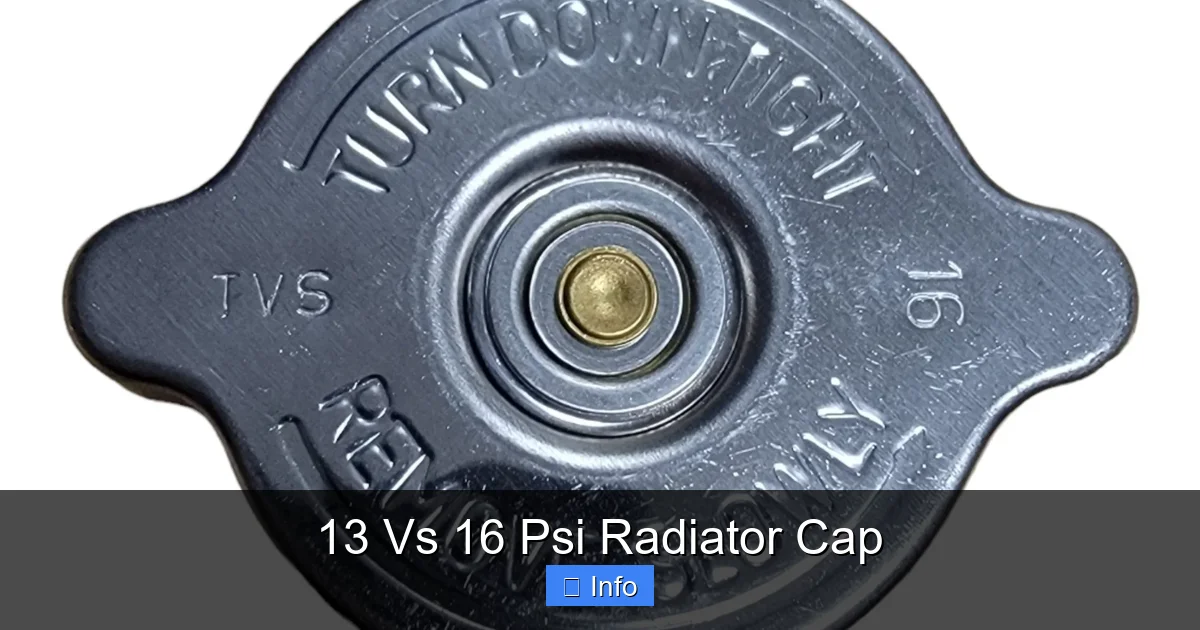
A 16 psi radiator cap allows the system to build more pressure before the valve opens. This pushes the boiling point of the coolant even higher than a 13 psi cap would. This is often seen in heavy-duty trucks, performance cars, or vehicles designed for towing and hauling.
Visual guide about 13 Vs 16 Psi Radiator Cap
Image source: allprodiesel.net
The Advantage of Higher Pressure
The main benefit here is “headroom.” If you live in a place with scorching summers or if you frequently drive up steep mountains, your engine works harder. A 16 psi cap helps prevent “localized boiling.” Localized boiling happens when tiny bubbles of steam form against the cylinder walls, creating hot spots that can lead to engine damage. By raising the pressure, you keep the coolant liquid longer.
The Risks of 16 Psi
The downside is the added stress. If your radiator was only designed for 13 psi, adding a 16 psi cap is like inflating a balloon too much. Eventually, something is going to pop. The weakest link in your system—usually an old hose or a worn-out radiator seam—will likely fail. If you notice why your radiator is building up too much pressure, switching to a higher psi cap will only make the problem worse.
Comparing 13 vs 16 Psi: The Direct Trade-off
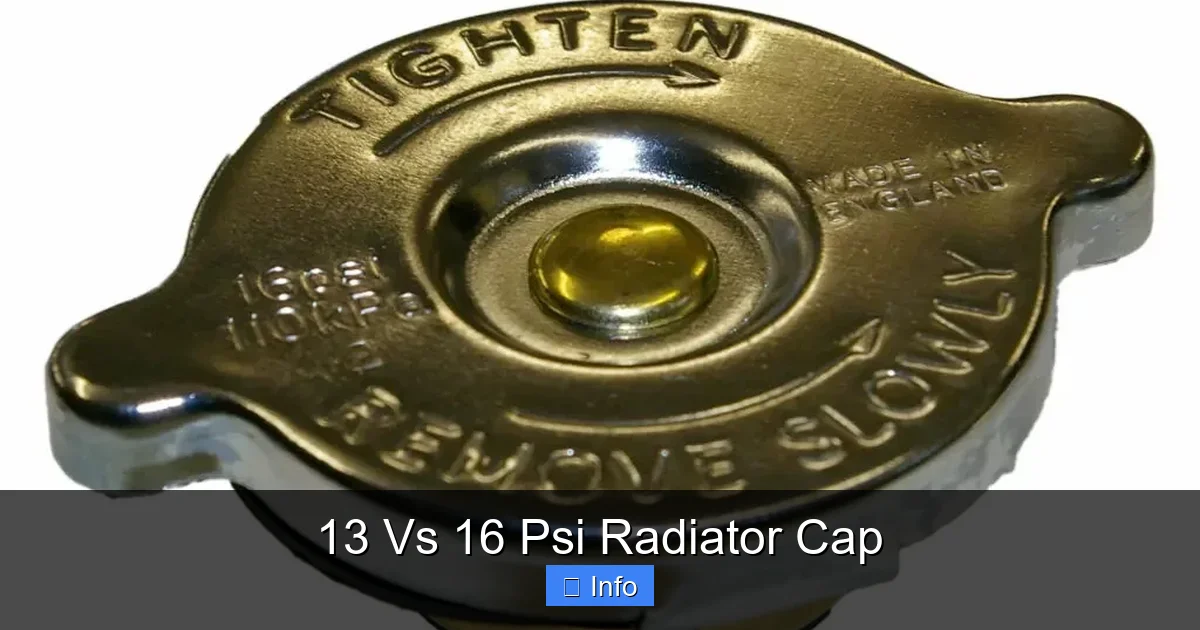
When comparing 13 vs 16 psi radiator caps, it comes down to a trade-off between boiling point and system integrity. Let’s look at how they stack up in different scenarios.
Visual guide about 13 Vs 16 Psi Radiator Cap
Image source: cdn11.bigcommerce.com
Boiling Point Comparison
A 16 psi cap will technically keep your coolant liquid at a higher temperature than a 13 psi cap. In a racing environment or under heavy load, this can prevent overheating. However, for 90% of drivers, the difference in actual operating temperature is negligible. Your thermostat controls the temperature, not the cap. The cap just determines when the system “gives up” and vents to the overflow tank.
Wear and Tear
Over time, high pressure takes a toll. A 16 psi cap puts more constant tension on the radiator’s aluminum cores and the rubber seals. If you have a brand new cooling system, this might not be an issue. But if you are driving a 10-year-old car, that extra 3 psi can be the tipping point that causes a leak.
Towing and Heavy Loads
If you are towing a heavy trailer, your engine generates significantly more heat. In these specific cases, a 16 psi cap (if supported by the vehicle) is a lifesaver. It prevents the coolant from boiling over during those long climbs. This is why many heavy-duty pickups come with higher-rated caps from the factory.
Can You Swap a 13 Psi Cap for a 16 Psi Cap?
This is the most common question DIYers ask. “Can I just put a 16 psi cap on my 13 psi system to stop it from overheating?” The short answer is: No, you should not do this unless the manufacturer says it is okay.
The Danger of “Upgrading”
Many people think a higher psi cap “fixes” an overheating problem. It doesn’t. If your car is overheating, you likely have a clogged radiator, a failing water pump, or a stuck thermostat. Adding a 16 psi cap doesn’t fix the cooling problem; it just hides the symptom by keeping the coolant in the engine longer. While the temperature gauge might look better, the internal pressure is climbing, which can lead to a catastrophic failure.
What Happens During a Failure?
If a 16 psi cap causes a failure in a 13 psi system, you won’t get a slow leak. You’ll likely get a “burst.” A hose might blow out, spraying hot coolant everywhere. This leads to an immediate loss of coolant and an instant overheat, which can warp your cylinder head or blow a head gasket. The cost of a new head gasket is thousands of dollars; the cost of the correct 13 psi cap is about ten dollars. It is not a risk worth taking.
How to Choose the Right Cap for Your Vehicle
Choosing the right cap is simpler than you think. You don’t need to do complex math or engineering calculations. You just need to follow a few simple steps.
Check the Owner’s Manual
The manual is the gold standard. It will tell you exactly what the factory specification is. If it says 13 psi, buy 13 psi. If it says 16 psi, buy 16 psi. Manufacturers spend millions of dollars testing these systems to find the perfect balance for that specific engine.
Look at the Old Cap
If you don’t have the manual, look at the cap currently on the car. The rating is usually stamped on the top or the side of the cap. If it says “13,” replace it with another “13.” If the stamp is worn off, search for your vehicle’s year, make, and model on a reputable parts website.
Consider Your Environment
While you should always follow OEM specs, if you have completely rebuilt your cooling system with high-pressure reinforced hoses and a heavy-duty aluminum radiator, you might be able to handle a higher psi rating. But even then, you must ensure every single component in the loop is rated for that higher pressure.
Maintenance Tips for Your Cooling System
Regardless of whether you use a 13 or 16 psi cap, the cap is only one part of the equation. To keep your engine running cool, you need a holistic approach to maintenance.
Inspect Your Hoses
Check your hoses for “sponginess” or cracks. If a hose feels soft when you squeeze it, it is failing. A failing hose will not handle any pressure—not even 13 psi—and will eventually burst.
Flush Your Coolant
Old coolant loses its ability to inhibit corrosion and manage heat. Flush your system every two years or according to your manual. This prevents scale build-up inside the radiator, which helps the system manage pressure more efficiently.
Ensure Proper Airflow
Pressure management is useless if the heat isn’t leaving the radiator. Make sure your grill is clear of debris. If you have an aging cooling system, you might consider looking into the best electric radiator cooling fans for efficient performance to help pull more heat away from the radiator, reducing the reliance on high pressure to prevent boiling.
Check the Overflow Tank
The overflow tank is the “safety net.” Make sure it is filled to the correct level with the proper mix of coolant and distilled water. If the tank is empty, the system can’t “recover” the coolant after the radiator cap vents, leading to air pockets in the engine.
Common Misconceptions About Radiator Caps
There are a lot of myths in the automotive world. Let’s clear up a few regarding radiator pressure.
Myth: “Higher Pressure Always Means Better Cooling”
False. Higher pressure only raises the boiling point. It does not make the radiator “cooler.” Cooling is about heat exchange (moving heat from the liquid to the air). A 16 psi cap doesn’t move more heat; it just allows the liquid to get hotter before it turns to steam.
Myth: “I Can Use Any Cap That Fits the Neck”
False. Just because a cap fits the opening doesn’t mean it is the right one. Many caps have the same physical size but different spring tensions (psi ratings). Always check the number, not just the fit.
Myth: “A New Cap Will Fix My Overheating”
Rarely. A new cap only fixes overheating if the old cap’s spring was broken or the seal was leaking. If the engine is overheating due to a mechanical failure, a new cap is just a bandage on a broken leg.
Conclusion
In the battle of 13 vs 16 psi radiator caps, there is no universal “winner.” The “winner” is whichever one was designed for your specific engine. A 13 psi cap is great for longevity and reducing stress on your hoses. A 16 psi cap is great for high-load situations and extreme heat, provided the system can handle it.
The most important takeaway is to avoid the temptation to “upgrade” your pressure rating to solve a cooling problem. Over-pressurizing your system is a recipe for disaster. Stick to the OEM specifications, maintain your hoses, and keep your coolant fresh. By doing this, you ensure that your engine stays cool and your gaskets stay intact for years to come.
Whether you are focusing on the engine or other parts of your car—like deciding between Kyb vs Monroe suspension brands for a smoother ride—the rule is always the same: the right part for the right job is the only way to ensure reliability. Keep it simple, follow the manual, and your car will thank you.
Frequently Asked Questions
Can I put a 16 psi cap on a 13 psi system?
It is not recommended. Doing so increases the risk of blowing a hose or leaking a gasket because the system is being pushed beyond its designed pressure limit.
Will a 13 psi cap cause my car to overheat?
Not if your car was designed for 13 psi. However, if your car requires 16 psi and you use a 13 psi cap, the coolant may boil and vent to the overflow tank too early, potentially leading to overheating.
How do I know if my radiator cap is bad?
Signs of a bad cap include coolant leaking from the overflow tank when the engine is cool, visible rust on the cap, or a rubber seal that is cracked or flattened.
Does the psi rating affect fuel economy?
No, the radiator cap pressure has no direct impact on your fuel economy. It only affects the boiling point of the coolant and the pressure levels within the cooling loop.
Should I use distilled water or tap water with my coolant?
Always use distilled water. Tap water contains minerals that can create scale build-up, which restricts flow and can cause the system to build up pressure unevenly.
How often should I replace my radiator cap?
There is no set schedule, but it is a good idea to inspect the seal every time you change your coolant. If the rubber looks worn, replace the cap as a cheap insurance policy against overheating.