Rto Approved Sun Control Film for Car Price
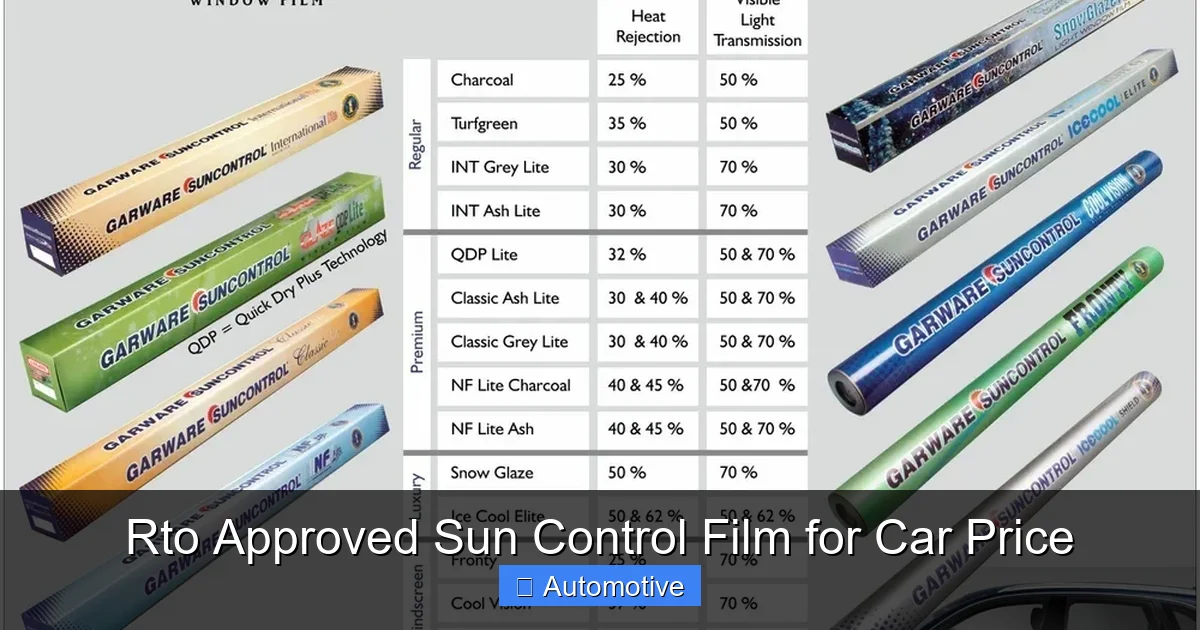
RTO approved sun control film for car is a legal way to reduce heat and glare, making your drive more comfortable. This guide breaks down pricing, features, and installation tips to help you pick the best film for your vehicle.
When you step into your car on a hot summer day, the interior can feel like an oven. The sun beats down, the dashboard heats up, and the air conditioning struggles to keep up. One effective solution is to apply a sun control film that not only cuts the heat but also complies with local traffic regulations.
In India, the Regional Transport Office (RTO) sets specific rules about how much light can be reflected or transmitted through vehicle windows. An rto approved sun control film for car price ensures that your tint meets these standards while providing the comfort and protection you need. This article will guide you through the essentials of choosing, pricing, and installing such a film.
Key Takeaways
- Legal Compliance: RTO approved films meet regional reflectance and visibility standards.
- Heat Reduction: Quality films can lower interior temperature by up to 10°C.
- UV Protection: They block over 99% of harmful ultraviolet rays.
- Price Range: Expect to pay between ₹2,000 and ₹8,000 depending on brand and features.
- Installation Options: DIY kits are available, but professional installation ensures proper fit and warranty.
- Maintenance: Use mild cleaners and avoid abrasive pads to preserve film integrity.
📑 Table of Contents
Understanding RTO Approval and Why It Matters
What is RTO Approval?
The Regional Transport Office (RTO) in India regulates the use of window films on vehicles. An rto approved sun control film for car price is a product that has been tested and certified to meet the legal limits for light transmission and reflection. These limits vary by state, but generally the front windshield must allow at least 70% of visible light, while side windows may have a lower requirement.
State authorities may issue their own guidelines, so it is wise to check the specific regulations for your region before purchasing a film. Some states also require a certificate of compliance that must be displayed on the vehicle.
Legal Implications
Using a film that does not comply with RTO standards can result in fines, vehicle impoundment, or even failure during the annual fitness check. By choosing an approved film, you avoid these risks and ensure that your vehicle remains road‑legal. Additionally, many insurance companies prefer vehicles with compliant tint, which can help in claim processing.
Enforcement agencies often use handheld light meters to verify that the film meets the required VLT. If the reading is too low, you may be asked to remove the film or face penalties. Therefore, investing in an approved product is not just a comfort upgrade but also a legal safeguard.
Types of Sun Control Films Available
Metalized Films
Metalized films contain tiny metallic particles that reflect infrared heat. They are effective at reducing interior temperature but can interfere with GPS and mobile signals. If you rely on navigation, this might be a drawback.
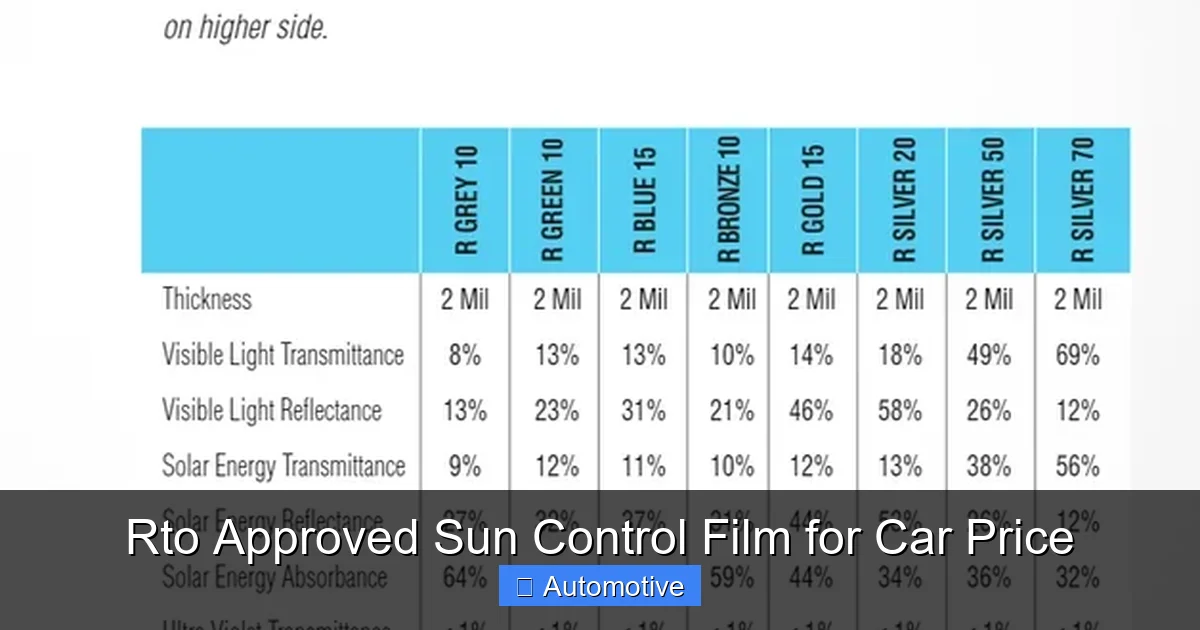
Visual guide about Rto Approved Sun Control Film for Car Price
Image source: 5.imimg.com
These films often have a slightly reflective appearance, which some owners appreciate for its aesthetic quality. However, the metallic layer can also cause occasional glitches in radio reception, so consider your daily driving habits before choosing this type.
Ceramic Films
Ceramic films use non‑conductive particles to block heat without affecting radio waves. They offer high clarity, excellent UV protection, and are less likely to cause signal loss. For many drivers, the best car tint brands include ceramic options that balance performance and price.
Ceramic technology is relatively new, but it has quickly become a favorite because it maintains the vehicle’s original look while providing superior heat rejection. It is also resistant to fading, making it a long‑term investment.
Dyed Films
Dyed films rely on dye layers to absorb heat. They are usually the most affordable but may not last as long as metalized or ceramic types. They also tend to have a darker appearance, which can affect visibility at night.
Because of their lower cost, dyed films are popular among budget‑conscious consumers. However, they may require replacement sooner, especially if the car is frequently exposed to intense sunlight.
Hybrid Films
Hybrid films combine elements of dyed and metalized technologies. They aim to provide a balance between cost and performance, offering moderate heat rejection without significant signal interference.
These can be a good middle ground if you are unsure which type suits your needs. They are often marketed as “all‑round” solutions for everyday driving.
Key Features to Evaluate Before Buying
Visible Light Transmission (VLT)
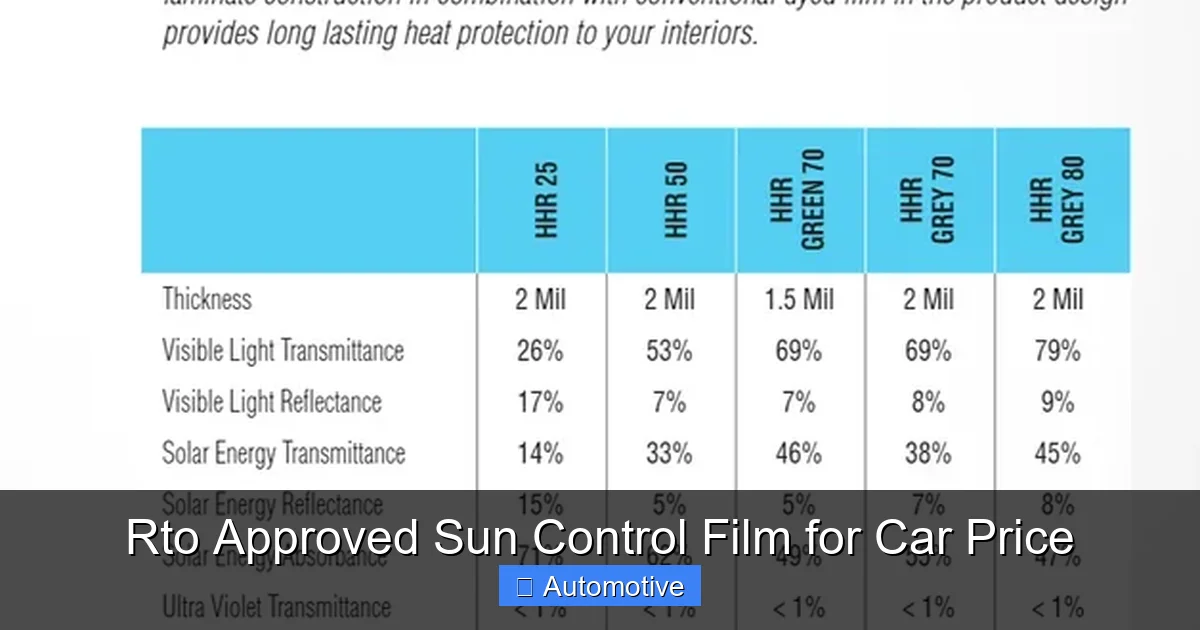
VLT measures how much visible light passes through the film. A lower VLT means darker tint, but it must stay above the legal minimum. For example, a VLT of 30% allows 30% of light to pass, which is often acceptable for side windows.
Visual guide about Rto Approved Sun Control Film for Car Price
Image source: 5.imimg.com
When selecting a VLT, consider both legal requirements and personal comfort. Some drivers prefer a slightly higher VLT for better nighttime visibility, while others prioritize maximum heat reduction.
Infrared Rejection
This indicates the percentage of infrared heat that the film blocks. Higher numbers mean better heat reduction. Look for films that reject at least 80% of infrared rays for optimal comfort.
Infrared rejection directly impacts the cabin temperature. A film with 90% rejection can keep the interior up to 10°C cooler than one with only 50% rejection, reducing the load on the air conditioning system.
UV Rejection
Quality films block over 99% of ultraviolet radiation, protecting both passengers and the car’s interior from fading.
UV rays are a major cause of dashboard cracking and upholstery deterioration. By blocking them, the film helps preserve the vehicle’s resale value.
Durability
Consider the warranty and expected lifespan. Premium films can last 10 years or more, while cheaper options may start to bubble or peel within a few years.
Look for warranties that cover peeling, bubbling, and color fading. A longer warranty often reflects the manufacturer’s confidence in the product’s longevity.
Adhesive Quality
The adhesive used in the film affects how well it bonds to the glass. High‑quality adhesives resist moisture and temperature changes, reducing the risk of delamination.
When comparing products, check if the adhesive is specifically formulated for automotive use and whether it has been tested for humidity resistance.
Independent laboratory tests can provide objective data on heat rejection and UV blocking capabilities.
Price Breakdown: What You Should Expect
Factors Affecting Cost
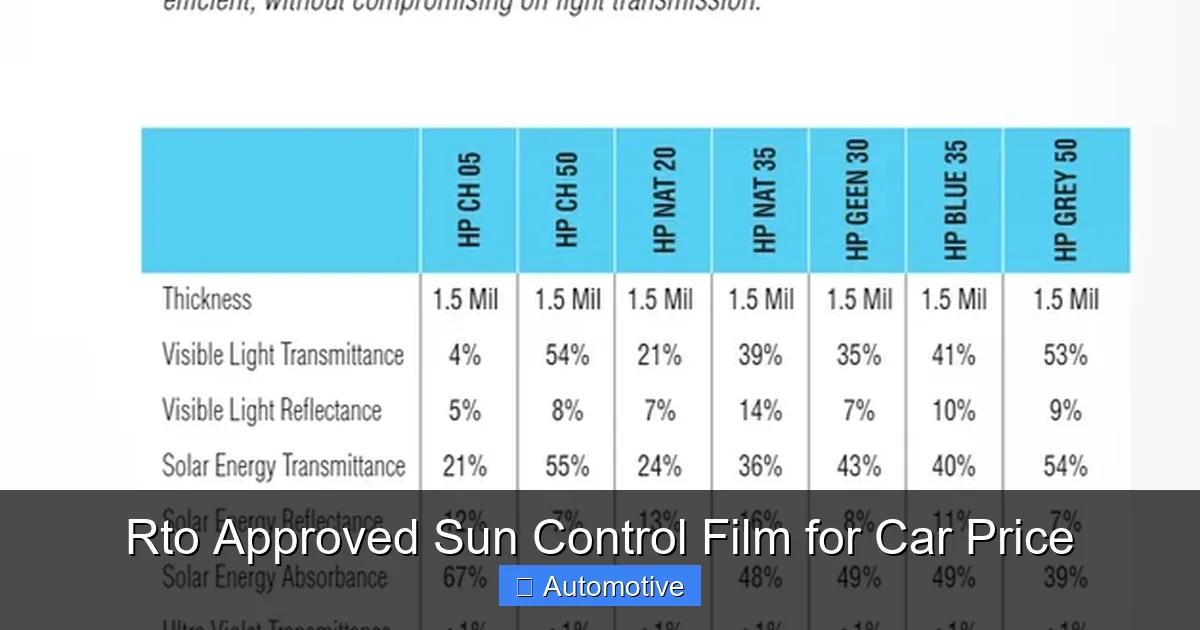
The price of an rto approved sun control film for car price depends on the brand, type, and size of the film. Ceramic and metalized films are generally more expensive than dyed ones. Larger vehicles like SUVs require more material, increasing the total cost.
Visual guide about Rto Approved Sun Control Film for Car Price
Image source: 5.imimg.com
Additional features such as holographic protection, infrared blocking layers, or custom fit patterns can also raise the price. It is important to balance these features with your budget.
Average Price Range
For a typical sedan, you can expect to pay between ₹2,000 and ₹5,000 for a quality film. Premium brands or those with additional features such as holographic protection may push the price up to ₹8,000. Installation fees, if you choose professional service, add another ₹500 to ₹1,500.
When comparing quotes, ask whether the price includes the film, labor, and any additional treatments like edge sealing. Some installers offer package deals that can provide better value.
Budget vs Premium
Budget films may save you money upfront but could require earlier replacement. Premium films, though costlier initially, often provide better heat rejection and longer durability, making them a worthwhile investment.
Consider the total cost of ownership. A premium film that lasts twice as long may be cheaper overall than a budget film that needs replacement every three years.
Hidden Costs
Beyond the sticker price, you should account for potential expenses such as registration updates, if required by your state, and the cost of cleaning products that are safe for the film.
Some vehicle owners also need to replace their best interior cleaner for a car because standard cleaners can damage the film. Using a dedicated cleaner adds a small ongoing cost but protects your investment.
Installation: DIY vs Professional
DIY Kits
Many manufacturers sell do‑it‑yourself kits that include the film, a squeegee, and instructions. They are suitable for those with basic hand‑y skills and can save labor costs. However, achieving a bubble‑free finish on curved windows can be challenging.
Before attempting a DIY install, watch tutorial videos and practice on a piece of glass. Patience is key, especially when handling the film’s adhesive side.
Professional Installation
Professional installers have experience with different window shapes and use heat guns to conform the film to curves. They also provide a warranty on workmanship. If you want a seamless look and peace of mind, hiring a pro is worth the extra expense.
Many shops offer a lifetime warranty on the installation, which can be a significant advantage if you plan to keep the car for many years.
Tools Needed
For DIY, you’ll need a razor blade, a squeegee, a spray bottle with water, and a microfiber cloth. Some kits include a special solution that helps the film adhere smoothly.
Having a clean, dust‑free environment is crucial. Any trapped particles can cause bubbles that are difficult to remove later.
Common Mistakes
One frequent error is installing the film in direct sunlight, which can cause the adhesive to set too quickly. Another is not aligning the film properly, leading to uneven edges.
To avoid these issues, work in a shaded area and use a level to check alignment before pressing the film onto the glass.
After the film is applied, allow the vehicle to sit in a shaded area for at least an hour. This waiting period helps the adhesive set properly and reduces the chance of bubbles forming later.
Maintenance and Longevity
Cleaning Methods
To preserve the film, use a soft cloth and a mild soap solution. Avoid ammonia‑based cleaners, which can degrade the adhesive. For stubborn dirt, a dedicated best car wash soap for ceramic coated cars is safe and effective.
When washing the exterior, be gentle around the window edges. High‑pressure water jets can lift the film if not used carefully.
Avoiding Damage
Do not roll windows down for at least 48 hours after installation. Also, refrain from using abrasive pads or high‑pressure water jets near the edges, as they can lift the film.
In winter, avoid scraping ice directly on the tinted windows. Use a de‑icer spray or a plastic scraper instead to protect the film.
Warranty
Most reputable brands offer a warranty of 5 to 10 years against peeling, bubbling, and fading. Keep the receipt and register the product online to claim the warranty if needed.
Some warranties also cover labor costs for removal and reinstallation if the film fails. Read the terms carefully to understand what is included.
Interior Air Quality
The film can also improve cabin air quality by reducing the need for frequent air conditioning, which can circulate dust and allergens. Pairing the film with a best car cabin air filter for allergies can further enhance the breathing environment inside the vehicle.
Regularly replacing the cabin filter, typically every 12,000 to 15,000 miles, helps maintain a fresh and healthy interior.
Periodically inspect the edges of the film for any signs of peeling or lifting. If you notice any issues, contact the installer promptly to avoid further damage.
Conclusion
Choosing an rto approved sun control film for car price is a balance between legal compliance, heat reduction, and budget. By understanding the different film types, evaluating key features, and considering installation options, you can select a product that keeps your cabin cool without breaking the law. Remember to maintain the film properly to enjoy its benefits for years to come. For a fresher interior, consider adding a best car air fresheners for new car scent to complete the comfort upgrade.
With the right film, your driving experience will be more comfortable, your vehicle’s interior will be protected, and you will stay on the right side of the law. Take the time to research and choose a product that meets your specific needs, and enjoy the peace of mind that comes with a well‑informed decision.
Frequently Asked Questions
What is an RTO approved sun control film?
An RTO approved film meets the legal light transmission and reflection standards set by regional transport authorities, ensuring your vehicle remains road‑legal.
How much does RTO approved sun control film cost?
Prices typically range from ₹2,000 to ₹8,000 depending on film type, brand, and vehicle size, with installation fees adding ₹500–₹1,500.
Can I install the film myself?
DIY kits are available and can save money, but they require patience and a clean workspace to avoid bubbles and misalignment.
Will the film affect my car’s warranty?
Most manufacturers allow aftermarket films as long as they are installed correctly and do not damage the glass or electrical systems.
How long does the film last?
Quality films can last 5–10 years, while cheaper options may need replacement within 3 years, depending on usage and maintenance.
Is it legal to have tinted windows in all states?
Legality varies by state; some regions require a minimum visible light transmission, so always check local RTO regulations before applying any film.