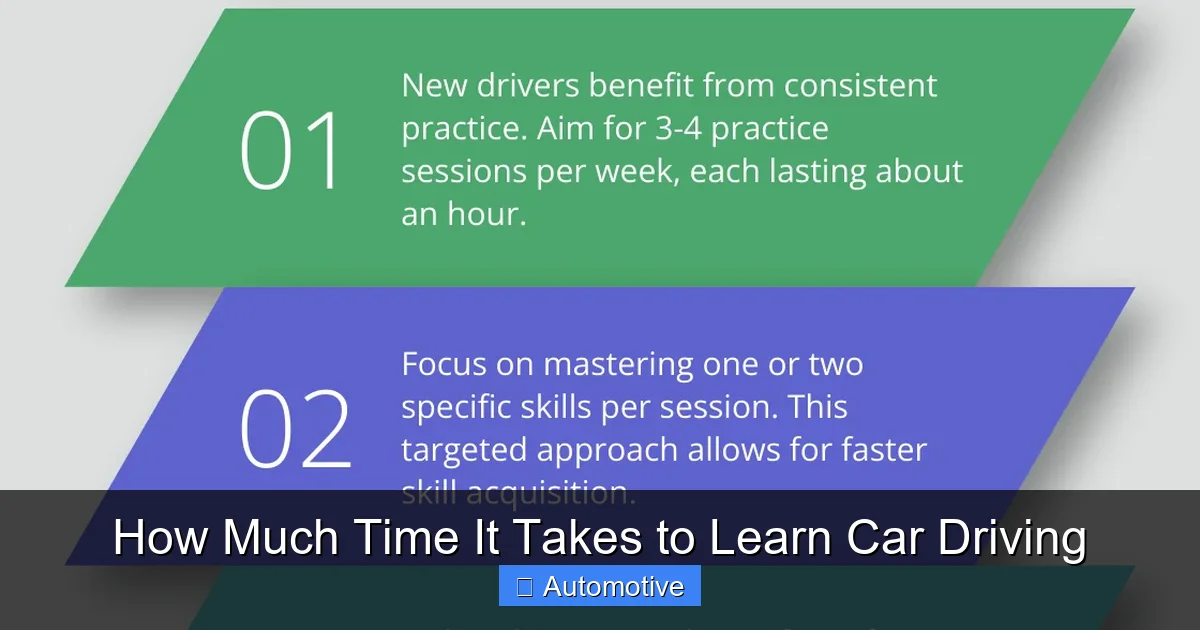
How Much Time It Takes to Learn Car Driving
The typical time to learn car driving is around 20–30 hours of practice. This estimate can vary depending on factors such as prior experience, traffic conditions, and the quality of instruction.
# How Much Time It Takes to Learn Car Driving
Learning to drive is one of life’s most exciting milestones, but it’s also natural to wonder about the time commitment involved. If you’re reading this, you’re probably asking the big question: “How much time it takes to learn car driving?” The answer isn’t the same for everyone, as it depends on various factors like your prior experience, learning style, and how often you practice. In this post, I’ll break down the typical timelines, share practical tips, and help you set realistic expectations for your driving journey.
The truth is, there’s no magic number that applies to everyone. Some people feel comfortable behind the wheel after just a few weeks, while others take several months to gain full confidence. What matters most is understanding the factors that influence your progress and focusing on consistent improvement rather than comparing your journey to others’. Let’s dive into what you can expect as you embark on this exciting new chapter.
## Factors That Shape Your Driving Learning Journey
When wondering “how much time it takes to learn car driving,” several key factors come into play. Your personal circumstances, the quality of instruction, and your own learning pace all contribute to the overall timeline.
**Instructor Quality and Teaching Style**
The person guiding you makes a significant difference. A patient, experienced instructor who adapts to your learning style can accelerate your progress considerably. Some driving schools offer structured curricula with clear milestones, while others provide more flexible, personalized instruction. Finding the right match for your personality and needs is worth the effort.
**Access to Practice Vehicles**
Having regular opportunities to practice between formal lessons greatly impacts your learning speed. Learners who can practice with family or friends in between professional lessons often develop muscle memory and confidence faster than those who only drive during scheduled sessions. The more varied your driving experiences, the more comfortable you’ll become with different road conditions and situations.
**Geographic and Environmental Factors**
Where you learn to drive matters too. Urban environments with heavy traffic, complex intersections, and frequent pedestrians present different challenges than rural areas with less congestion but potentially hazardous road conditions. Your comfort level with the specific type of driving you’ll be doing most often should guide your learning approach.
## Typical Timeline: From First Lesson to Independent Driving
So, how much time it takes to learn car driving in a practical sense? While experiences vary, here’s a general breakdown of what many learners experience:
**The Learning Milestones Breakdown**
Most driving educators agree that the journey from complete beginner to confident independent driver typically involves these phases:
– **Weeks 1-2: Getting Comfortable** – Initial lessons focus on vehicle familiarization, basic controls, and understanding road signs. You’ll learn how to start and stop smoothly, adjust mirrors, and perform simple maneuvers in quiet areas.
– **Weeks 3-6: Building Core Skills** – This phase introduces more complex tasks like turning, lane changes, and navigating intersections. You’ll practice parking, including parallel parking, and begin driving on busier roads under supervision.
– **Weeks 7-12: Developing Confidence** – By this point, many learners can handle most driving scenarios independently. You’ll refine your speed management, learn to anticipate other drivers’ actions, and develop your personal driving style. Some may still need focused practice on specific skills.
– **Months 3-6: Mastery and Refinement** – Even after obtaining a license, continued practice helps solidify skills and address any remaining weak areas. Many drivers find their first few months of independent driving are when they truly feel “at one” with the vehicle and road.
**Average Hour Requirements**
Research and driving school data suggest that the average learner needs between 40 to 60 hours of combined professional instruction and personal practice to reach test-standard competency. However, this range is broad because it depends heavily on individual aptitude, practice frequency, and the complexity of the driving environment.
## Choosing the Right Learning Method for You
The approach you take to learning driving significantly influences both the time investment and the quality of your experience. Let’s explore the main options:
**Professional Driving Schools**
Enrolling in a certified driving school offers structured learning with qualified instructors. Pros include dual-controlled vehicles for safety, comprehensive curriculum coverage, and often included test preparation. Cons involve higher upfront costs and potentially less flexible scheduling. Many schools offer package deals that can make per-lesson costs more predictable.
**Private Instruction with Family or Friends**
Learning from a trusted family member or friend can reduce costs and provide more flexible scheduling. The intimate setting allows for personalized pacing and the comfort of making mistakes without judgment. However, this method requires the supervisor to have good teaching skills and patience, and it may lack the structured curriculum of a professional school.
**Hybrid Approach**
Many successful learners combine both methods. Starting with professional lessons to build a solid foundation, then supplementing with personal practice sessions, often provides the best of both worlds. This approach ensures you learn correct techniques from the start while getting ample practice time to reinforce those skills.
## Practical Tips to Master Driving Faster
Regardless of which learning path you choose, these strategies can help you progress more efficiently:
**Consistent Practice Schedule**
Frequency matters more than duration when it comes to learning driving skills. Two hour-long practice sessions per week typically yield better results than one marathon four-hour session. Regular practice helps build muscle memory and keeps skills fresh between lessons. Even 15-20 minutes of focused practice on specific skills like parking or merging can be valuable.
**Focused Skill Development**
Instead of trying to master everything at once, identify specific areas to improve each practice session. One day might focus on smooth acceleration and braking, while another concentrates on mirror checks and blind spot awareness. This targeted approach prevents feeling overwhelmed and ensures steady progress across all skill areas.
**Reflective Learning**
After each driving session, take a few minutes to reflect on what went well and what could improve. This mental review reinforces learning and helps you articulate specific goals for your next practice. Many experienced drivers find that this habit accelerates their development more than simply accumulating hours without reflection.
**Managing Nerves and Anxiety**
It’s completely normal to feel anxious when learning to drive. Acknowledging these feelings rather than fighting them can reduce their power. Deep breathing, positive self-talk, and remembering that mistakes are part of the learning process help maintain a healthy mindset. Many driving schools now incorporate mental skills training alongside technical instruction.
## Overcoming Common Hurdles New Drivers Face
Even with dedicated practice, most learners encounter specific challenges along the way. Here’s how to address them:
**Test Anxiety**
The driving test represents a significant milestone, and pressure to perform can interfere with skill demonstration. Thorough preparation, including mock tests under realistic conditions, builds confidence. Remember that examiners want to see safe, competent driving, not perfection. Many learners benefit from focusing on the examiner’s instructions rather than worrying about the outcome.
**Specific Skill Gaps**
Some skills, like parallel parking or merging onto highways, may take longer to master than others. Don’t get discouraged if progress feels uneven. Extra practice sessions focused specifically on trouble areas, combined with patient instruction, typically lead to breakthrough moments. Celebrate small victories along the way.
**Transition to Independent Driving**
Moving from supervised lessons to driving alone is a significant transition. Starting with short, familiar routes and gradually expanding your range helps build confidence. Many new drivers find it helpful to have a more experienced driver accompany them for the first few independent trips, then gradually reduce that support as comfort increases.
## Data Table: Learning Time Expectations
| Learning Phase | Estimated Hours | Typical Duration |
|—————|—————–|——————|
| Initial Familiarization | 5-10 hours | 1-2 weeks |
| Core Skill Development | 20-30 hours | 4-6 weeks |
| Confidence Building | 30-40 hours | 2-3 months |
| Test Preparation | 10-20 hours | 1-2 months |
| Post-License Refinement | Variable | Ongoing |
*Note: These figures represent averages and individual timelines may vary significantly based on practice frequency, learning environment, and personal aptitude.*
## Conclusion: Your Unique Driving Journey
So, how much time it takes to learn car driving really depends on your personal circumstances, but understanding the typical frameworks helps set realistic expectations. Most learners achieve basic competency within 2-4 months of consistent practice, with full confidence developing over 6-12 months. The key is to focus on your progress rather than comparing timelines with others.
Remember that learning to drive is a journey, not a race. Some days will feel like breakthroughs, while others might feel like setbacks—both are normal parts of the process. The skills you develop, the confidence you build, and the independence you gain are well worth the time investment. Whether you choose professional instruction, private practice, or a combination of both, what matters most is your commitment to learning safely and responsibly.
As you move forward, consider what type of driver you want to become rather than just how quickly you can check “learning to drive” off your list. The most skilled drivers are those who continue learning and improving throughout their driving lives, long after they’ve passed their initial tests. Embrace the process, be patient with yourself, and soon enough, you’ll be navigating roads with the confidence and competence that comes from genuine mastery.
—
**Internal Links:**
– Understanding car insurance costs is essential for new drivers, so check out this guide on car insurance costs to budget appropriately for your driving journey.
– Learning basic car maintenance, like checking brake pads, will serve you well as a new driver, and here’s how to check brake pads in your car.
– Protecting your car’s interior from scratches is something every careful driver should consider, and these tips on protecting car interior from scratches will help keep your vehicle looking its best.
Key Takeaways
- Most learners need 20-50 hours: Professional lessons plus practice build competence.
- Consistent practice accelerates learning: Drive 2-3 times weekly for steady progress.
- Automatic transmission is faster: Master basics in 15-20 hours vs. 30+ for manual.
- Age affects learning speed: Younger drivers typically learn faster than older beginners.
- Defensive driving takes extra time: Add 10+ hours for hazard perception skills.
- Test readiness varies individually: Schedule exam only after consistent mock test passes.
- Post-license practice is crucial: First 1,000 miles build real-world confidence.
Frequently Asked Questions
How much time it takes to learn car driving for a complete beginner?
Typically, a beginner who attends regular lessons can expect to need about 2 to 3 months to feel confident behind the wheel. This timeline assumes consistent practice, usually 2–3 sessions per week, and varies with individual aptitude and the quality of instruction.
What factors can affect the time needed to learn car driving?
The amount of practice, the learner’s prior experience, the frequency of lessons, and the instructor’s teaching style all play a role. Additionally, traffic conditions and the type of vehicle (manual vs. automatic) can influence how quickly progress is made.
Can I learn car driving in a week, or does it take longer?
Learning to drive safely in just one week is possible only with an intensive crash course, but most people need several weeks of practice to master basic maneuvers. A realistic timeframe for a beginner is at least 20–30 hours of combined lesson and practice time.
How many hours of practice are required to become proficient at driving?
Most driving schools recommend around 40–50 hours of behind‑the‑wheel practice, including at least 10–15 hours of night driving, to achieve proficiency. This number can vary based on the learner’s confidence and the complexity of the routes they practice.
Does the type of car (manual vs. automatic) change the time it takes to learn car driving?
Yes; mastering a manual transmission generally requires more time because of the added coordination needed for gear changes. Learners who start with an automatic often progress faster, though the overall time to become fully competent remains similar.
Can I speed up the learning process by taking intensive driving courses?
Intensive courses that offer longer daily sessions can reduce the total time needed, sometimes compressing a three‑month program into a few weeks. However, it’s important to balance speed with thorough practice to ensure safety and confidence on the road.