How Much Does a Toyota Tundra Weigh
The Toyota Tundra is a heavy-duty pickup truck that typically weighs between 4,800 to 5,500 pounds depending on the model year and trim level. Understanding the weight of your Tundra is crucial for towing, payload capacity, and overall vehicle performance. Whether you’re comparing models or planning to tow heavy loads, knowing the exact weight helps you make informed decisions.
Key Takeaways
- Curb Weight Range: The Toyota Tundra’s curb weight varies from approximately 4,800 to 5,500 pounds depending on the model year and trim level.
- GVWR Matters: Gross Vehicle Weight Rating (GVWR) indicates the maximum loaded weight, typically ranging from 6,500 to 7,000+ pounds for most Tundra models.
- Payload Capacity: Payload varies by configuration but generally ranges from 1,200 to 2,000+ pounds, affecting how much cargo you can safely carry.
- Model Year Differences: Weight specifications change with redesigns, particularly notable in the 2022+ generation which introduced new engine options and frame designs.
- Towing Impact: Heavier configurations often offer better towing stability but may reduce fuel efficiency compared to lighter setups.
- Trim Level Effects: Higher trim levels with additional features, larger engines, and enhanced suspension systems contribute to increased overall weight.
- Safety Considerations: Proper weight distribution and understanding your vehicle’s limits are essential for safe operation, especially when towing or hauling heavy loads.
📑 Table of Contents
- Understanding Your Toyota Tundra’s Weight Specifications
- Key Weight Measurements Explained
- Toyota Tundra Weight by Model Year
- Weight Variations by Trim Level
- Configuration Factors That Affect Weight
- Practical Implications of Tundra Weight
- Checking Your Tundra’s Weight
- Comparing Tundra Weight to Competitors
- Making Informed Decisions About Your Tundra
- Conclusion
Understanding Your Toyota Tundra’s Weight Specifications
When you’re behind the wheel of a Toyota Tundra, you’re driving one of the most capable full-size pickup trucks on the market. But have you ever stopped to wonder exactly how much your Tundra weighs? Understanding your truck’s weight isn’t just about satisfying curiosity – it’s crucial information that affects everything from towing capacity to fuel economy.
The Toyota Tundra’s weight can vary significantly depending on several factors, including the model year, trim level, cab style, bed length, and even the engine choice. For instance, a base model 2021 Tundra SR5 might weigh considerably less than a loaded 2023 Tundra Platinum with all the premium features. This variation means that when someone asks “how much does a Toyota Tundra weigh,” there isn’t a single definitive answer.
In this comprehensive guide, we’ll break down all the different weight measurements you should know about your Tundra, explain why they matter, and help you understand how various configurations impact the overall weight of your vehicle. Whether you’re shopping for a new Tundra, planning to tow a heavy trailer, or simply want to better understand your truck’s capabilities, this information will prove invaluable.
Key Weight Measurements Explained
Before diving into specific numbers, it’s important to understand the different types of weight measurements used for vehicles like the Toyota Tundra. Each measurement serves a different purpose and tells you something unique about your truck’s capabilities and limitations.
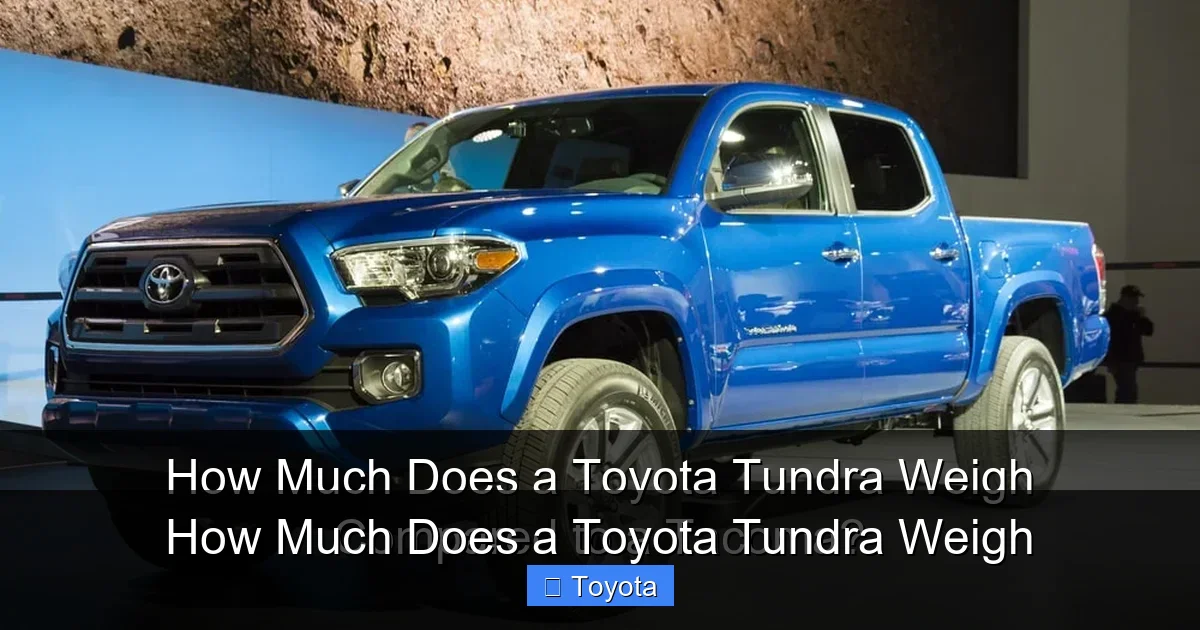
Visual guide about How Much Does a Toyota Tundra Weigh
Image source: aautomotives.com
Curb Weight vs. Gross Vehicle Weight Rating
Curb weight refers to the total weight of your vehicle when it’s empty but ready to drive. This includes all standard equipment, fluids, and a full tank of fuel, but excludes passengers and cargo. For the Toyota Tundra, curb weight typically ranges from about 4,800 to 5,500 pounds depending on the configuration.
Gross Vehicle Weight Rating (GVWR), on the other hand, represents the maximum total weight your vehicle can safely carry when fully loaded. This includes the curb weight plus passengers, cargo, and any additional equipment. Tundra’s GVWR generally falls between 6,500 and 7,000 pounds for most model years.
Payload Capacity and Its Importance
Payload capacity is calculated by subtracting the curb weight from the GVWR. This gives you the maximum weight of passengers and cargo your Tundra can safely carry. Most Tundras offer payload capacities ranging from 1,200 to 2,000+ pounds. Understanding your payload capacity is crucial when determining how much gear you can load into your truck bed or how many passengers you can safely transport.
Why These Numbers Matter
These weight measurements aren’t just academic – they directly impact your Tundra’s performance, safety, and capability. Knowing your payload capacity prevents overloading, which can lead to premature wear, handling issues, and even safety hazards. Similarly, understanding your GVWR is essential when towing, as it affects brake performance, suspension behavior, and overall vehicle stability.
Toyota Tundra Weight by Model Year
The Toyota Tundra has undergone significant changes over the years, particularly with the major redesign that launched for the 2022 model year. These changes have had a direct impact on the vehicle’s weight specifications.
Visual guide about How Much Does a Toyota Tundra Weigh
Image source: aautomotives.com
2022 and Newer Models
The completely redesigned 2022 Toyota Tundra introduced a new generation with updated styling, advanced technology, and crucially, a new engine lineup. The base model now features a twin-turbo V6 engine instead of the previous V8, which has affected the overall weight distribution of the vehicle.
For the 2022+ Tundra models, curb weights typically range from approximately 4,900 to 5,600 pounds depending on the trim level and configuration. The SR and SR5 trims tend to be on the lighter end of this spectrum, while the more premium trims like the Limited, Platinum, and 1794 Edition weigh more due to additional features and equipment.
2021 and Earlier Models
The previous generation Tundra (2007-2021) had different weight characteristics. These models generally weighed between 4,800 to 5,400 pounds in curb weight. The V8-powered models naturally weighed more than those with smaller engines, and the long-wheelbase versions were heavier than their short-wheelbase counterparts.
If you’re comparing your older Tundra to newer models, you might notice some differences in weight that could affect towing performance and fuel economy. The newer generation was designed with improved weight distribution and materials to enhance capability while maintaining structural integrity.
Weight Variations by Trim Level
One of the most significant factors affecting a Toyota Tundra’s weight is the trim level. Toyota offers several different trims, each with varying levels of equipment, features, and capabilities. As you move up the trim ladder, the weight tends to increase due to additional standard features.

Visual guide about How Much Does a Toyota Tundra Weigh
Image source: aautomotives.com
Base Models: SR and SR5
The SR and SR5 trims represent the most basic configurations of the Toyota Tundra. These models are designed to be work trucks, focusing on functionality rather than luxury. As a result, they typically have the lowest curb weights in the Tundra lineup, usually ranging from 4,800 to 5,100 pounds depending on the model year and configuration.
These base models come with essential features but lack many of the comfort and convenience upgrades found in higher trims. This makes them lighter but also means they may not offer the same level of capability as more equipped models.
Mid-Level Trims: Limited and Platinum
The Limited and Platinum trims add significant luxury features, advanced technology, and enhanced comfort amenities. These additions naturally increase the vehicle’s weight. Curb weights for these trims typically fall in the 5,200 to 5,500-pound range.
Features like leather seating, premium audio systems, advanced driver assistance systems, and enhanced suspension components all contribute to the increased weight. While heavier, these models often provide better towing stability and ride quality due to their more substantial build.
Premium Trims: 1794 Edition and TRD Pro
At the top of the Tundra lineup, the 1794 Edition and TRD Pro trims represent the pinnacle of luxury and off-road capability respectively. These models are the heaviest in the lineup, with curb weights often exceeding 5,500 pounds.
The 1794 Edition focuses on luxury and comfort, adding premium materials throughout the cabin and advanced technology features. The TRD Pro, meanwhile, is built for serious off-road performance with specialized suspension, skid plates, and rugged tires that add considerable weight.
Configuration Factors That Affect Weight
Beyond trim level, several other configuration choices can significantly impact your Toyota Tundra’s weight. Understanding these factors helps you make informed decisions when selecting your ideal truck setup.
Cab Style and Bed Length
The Tundra is available in multiple cab styles and bed lengths. Extended cabs generally weigh less than crew cabs due to having fewer doors and less interior space. Similarly, shorter bed lengths typically result in lighter vehicles compared to long-bed configurations.
For example, a Tundra Double Cab with a 6.5-foot bed will weigh less than a CrewMax with an 8-foot bed. These differences might seem minor individually, but they can add up to significant variations in overall vehicle weight.
Engine Options and Drivetrain
Different engine options naturally affect weight, as do 4×2 versus 4×4 drivetrain configurations. The 4×4 models are typically heavier due to the additional components required for the transfer case and front differential.
In the newer Tundra generation, the standard twin-turbo V6 is lighter than the previous V8 engine, but when equipped with the optional hybrid powertrain, the weight increases again due to the battery pack and electric motor components.
Additional Equipment and Packages
Factory-installed packages like the towing package, off-road packages, and appearance packages all add weight to your Tundra. These packages often include heavy-duty components like upgraded suspensions, additional cooling systems, and reinforced frames.
When considering how much your Tundra weighs, it’s important to account for any dealer-installed accessories or aftermarket modifications, as these can significantly alter the vehicle’s weight specifications and affect its performance characteristics.
Practical Implications of Tundra Weight
Understanding your Toyota Tundra’s weight isn’t just about satisfying curiosity – it has real-world implications for how you use and maintain your vehicle. From towing capacity to fuel economy, weight plays a crucial role in your truck’s overall performance.
Towing and Hauling Considerations
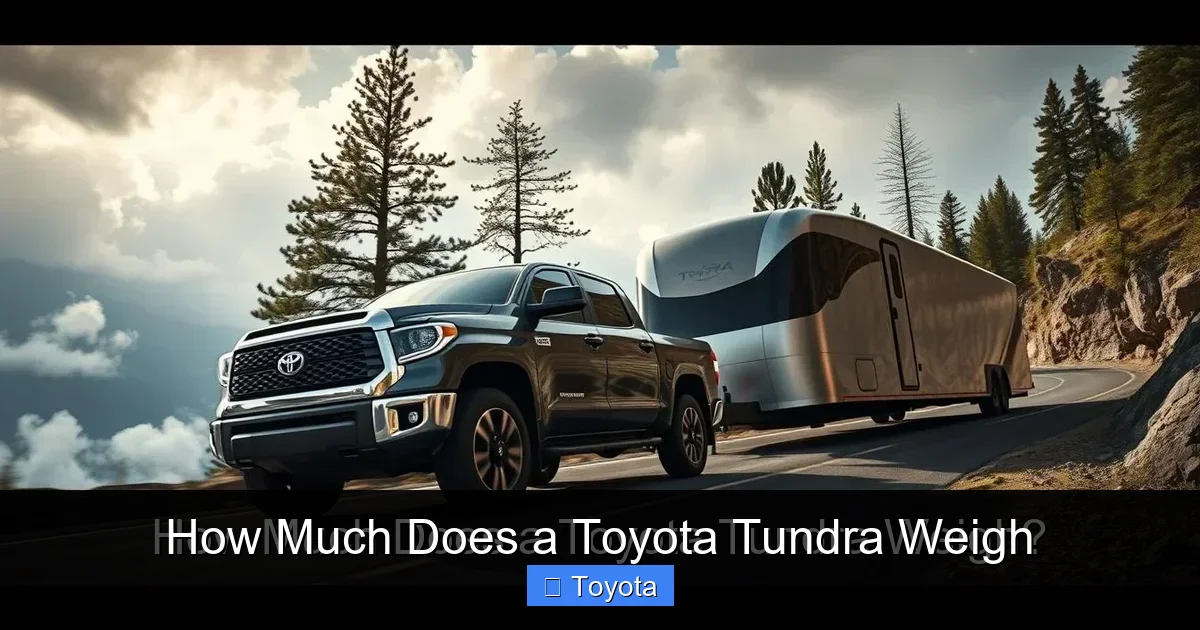
When towing a trailer, your Tundra’s weight becomes even more critical. The combined weight of your truck and trailer must stay within safe limits to ensure proper braking performance and vehicle stability. Heavier Tundras often provide better towing stability due to their increased mass, but they also consume more fuel.
It’s also important to consider weight distribution when towing. Proper weight distribution hitch systems help transfer some of the trailer’s tongue weight to the tow vehicle, improving handling and reducing strain on the suspension system.
Fuel Economy Impact
As with any vehicle, heavier Tundras generally achieve lower fuel economy ratings. The additional weight requires more energy to move the vehicle, resulting in increased fuel consumption. This is particularly noticeable when comparing base model Tundras to fully-loaded premium trims.
Safety and Maintenance
Vehicle weight also affects safety and maintenance requirements. Heavier vehicles generally provide better protection in collisions but require more robust braking systems and suspension components. Regular maintenance becomes even more critical as weight increases stress on all vehicle systems.
Checking Your Tundra’s Weight
While manufacturer specifications provide general weight information, the actual weight of your specific Tundra can vary based on installed options, accessories, and modifications. For the most accurate measurement, consider visiting a weigh station or automotive scale facility.
Finding Official Specifications
Toyota provides official weight specifications in the owner’s manual and through their customer service channels. These specifications are based on standard equipment and may not reflect the actual weight of your specific vehicle if you’ve added accessories or modifications.
You can also find weight information on the driver’s door jamb sticker, which lists the vehicle’s GVWR and sometimes other relevant weight specifications. However, this sticker shows maximum ratings rather than actual vehicle weight.
When to Weigh Your Vehicle
Consider weighing your Tundra if you frequently tow heavy loads, haul significant cargo, or have made substantial modifications. Knowing your actual vehicle weight helps you calculate remaining payload capacity and ensures you’re operating within safe limits.
This is particularly important for commercial applications where overloading violations can result in significant fines and safety risks. Even for personal use, accurate weight information helps optimize performance and safety.
Comparing Tundra Weight to Competitors
The Toyota Tundra competes in the full-size pickup truck segment alongside vehicles like the Ford F-150, Chevrolet Silverado, and Ram 1500. Each manufacturer approaches weight differently, with varying consequences for performance and capability.
Compared to some competitors, the Tundra tends to be on the heavier side, which can contribute to better towing stability but potentially lower fuel economy. However, the 2022+ redesign addressed many of these concerns with improved materials and engineering.
Making Informed Decisions About Your Tundra
Armed with knowledge about your Toyota Tundra’s weight specifications, you can make better decisions about configuration choices, towing setup, and maintenance schedules. Whether you’re shopping for a new Tundra or optimizing your current truck’s performance, understanding these weight factors is key to getting the most from your investment.
Remember that the “how much does a Toyota Tundra weigh” question doesn’t have a simple answer because so many variables affect the final number. By considering your specific needs, intended use, and desired features, you can select the right configuration that balances capability, comfort, and efficiency for your particular situation.
Regular monitoring of your vehicle’s actual weight, especially after modifications or when heavily loaded, ensures you’re operating safely and within recommended parameters. This attention to detail will serve you well whether you’re using your Tundra for daily commuting, weekend adventures, or heavy-duty work applications.
Conclusion
The Toyota Tundra’s weight varies significantly depending on model year, trim level, configuration, and equipment. Generally speaking, expect curb weights to range from approximately 4,800 to 5,600 pounds for most Tundra models. Understanding these weight specifications is crucial for safe operation, optimal performance, and informed decision-making.
Whether you’re determining towing capacity, calculating payload limits, or simply trying to understand your truck’s capabilities, knowing how much your Tundra weighs provides valuable insight into its performance characteristics. This information becomes particularly important when making modifications, adding accessories, or preparing for heavy towing or hauling tasks.
As automotive technology continues to evolve, manufacturers like Toyota are finding ways to reduce weight while maintaining strength and capability. The latest Tundra generation exemplifies this trend with improved materials and engineering that enhance performance without sacrificing the ruggedness expected from a full-size pickup truck.
By understanding your Tundra’s weight specifications and how various factors influence them, you’ll be better equipped to maximize your truck’s potential while ensuring safe and efficient operation. Whether you’re a seasoned truck owner or new to the Tundra family, this knowledge forms the foundation for responsible vehicle ownership and optimal performance.
Frequently Asked Questions
How much does a 2023 Toyota Tundra weigh?
The 2023 Toyota Tundra’s curb weight varies by trim level and configuration, typically ranging from approximately 4,900 to 5,600 pounds. Base models like the SR and SR5 are lighter, while premium trims such as the Platinum and 1794 Edition weigh more due to additional standard features and equipment.
What is the GVWR of a Toyota Tundra?
The Gross Vehicle Weight Rating (GVWR) for most Toyota Tundra models ranges from 6,500 to 7,000+ pounds depending on the model year and configuration. This represents the maximum weight your Tundra can safely carry when fully loaded with passengers, cargo, and equipment.
How does Tundra weight affect towing capacity?
A heavier Tundra generally provides better towing stability due to increased mass, but it also consumes more fuel. The actual towing capacity depends on your specific configuration and is determined by subtracting the truck’s weight from its maximum rating. Proper weight distribution is crucial for safe towing regardless of your Tundra’s weight.
Can I check my Tundra’s actual weight?
For the most accurate measurement of your Tundra’s actual weight, visit a weigh station or automotive scale facility. Manufacturer specifications provide general information, but your specific vehicle’s weight may vary based on installed options, accessories, and modifications. The driver’s door jamb sticker shows GVWR but not actual vehicle weight.
Does the engine type affect Tundra weight?
Yes, different engine options and drivetrain configurations affect your Tundra’s weight. The 2022+ models feature a lighter twin-turbo V6 compared to previous V8 engines, but 4×4 models are heavier than 4×2 due to additional components. The optional hybrid powertrain adds weight from the battery pack and electric motor.
How much payload can a Toyota Tundra handle?
Payload capacity varies by Tundra configuration but generally ranges from 1,200 to 2,000+ pounds. This is calculated by subtracting the vehicle’s curb weight from its GVWR. Higher trim levels and 4×4 models typically have slightly lower payload ratings due to increased curb weight, while base models often maximize available payload capacity.