10 Best Film And Slide Scanners For High Quality Image Digitization
Preserving precious memories captured on film requires more than just nostalgia—it demands reliable technology. Whether you’re digitizing old family slides or restoring vintage negatives, choosing the right film and slide scanner can make all the difference in preserving image quality and saving time. With so many options flooding the market, finding a device that balances resolution, ease of use, and durability isn’t always easy. That’s why we’ve tested and reviewed the top performers to help you make an informed decision.
Quick Product Comparison
Our Top 10 Best Film And Slide Scanners For High Quality Image Digitization Reviews – Expert Tested & Recommended
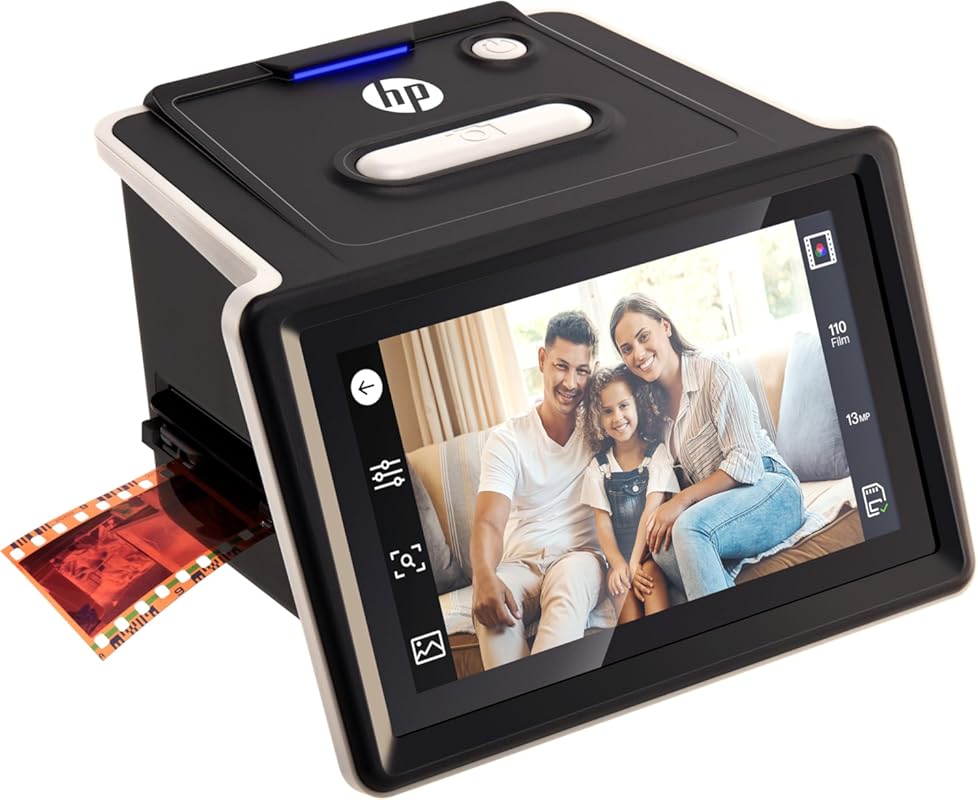
1. HP Touch Screen Film & Slide Scanner with 5″ LCD, USB-C, SD Slot & 13MP Sensor for Digital Conversion
This HP Touch Screen Film Scanner combines intuitive operation with professional-grade results. Its 5-inch LCD allows real-time preview and editing, while the 13MP sensor captures rich detail from your old slides and negatives. Whether you’re scanning decades-old vacation photos or rare archival material, this device delivers consistent clarity and color accuracy.
Key Features That Stand Out
- ✓ Intuitive 5″ all-angle touchscreen for instant previews and adjustments
- ✓ 13MP CMOS sensor with 22MP interpolation for sharp, detailed scans
- ✓ Dual connectivity via USB-C and SD card slot for flexible file transfer
- ✓ Compatible with 135, 126, and 110 film formats plus Super 8 slides
Why We Recommend It
The HP Touch Screen Film Scanner stands out for its balance of user-friendliness and performance. The responsive touch interface eliminates guesswork during alignment and cropping, while the build quality ensures long-term reliability. Users consistently praise its ability to preserve fine textures and vibrant colors without over-processing.
Best For
Families looking to digitize large collections of slides and negatives quickly and accurately, especially those who value an easy-to-use interface without sacrificing image fidelity.
Pros and Cons
Pros:
- High-resolution output suitable for archival purposes
- Easy setup and operation even for non-technical users
- Multiple output options including direct printing and cloud upload
Cons:
- Limited to smaller film formats (not ideal for medium format)
- Software may feel outdated compared to modern alternatives
Customer Reviews
Customer Review: “Bought this for my father, who had six decades’ worth of slides and negatives gathering dust and memories. This little workhorse chewed through all of them without a hiccup and turned his analog past into a neatly organized digital present.His only nitpick? The red saturation can go a bit enthusiast”
Customer Review: “Expensive, since it’s likely a one time use tool, but works well. Easy slide setup and transferring to a pc is simple. Kind of a must have if you have 100’s of slides to digitize. Quality of result looks great to my eye. Previously used a manual method using an old smart phone and a precast cradle “
2. PORTTA Film Scanner with 5″ LCD, 22MP, Converts 135/126/110 Film to Digital via HDMI & SD Card
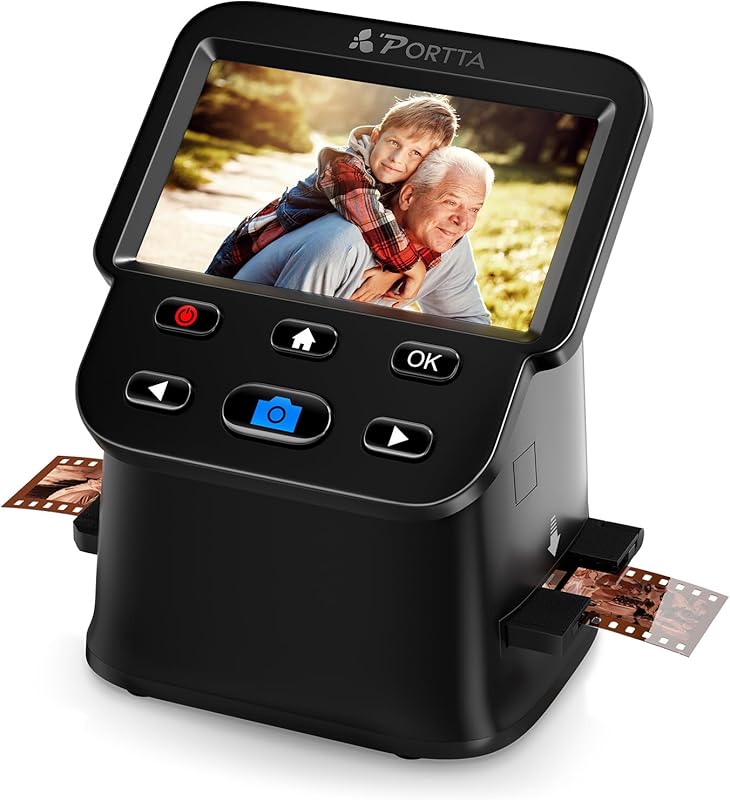
The PORTTA Film Scanner offers impressive versatility and high-resolution output at an accessible price point. With support for multiple film types and both HDMI and SD card outputs, it’s ideal for hobbyists and small-scale archivists wanting professional-looking results without complex software.
Key Features That Stand Out
- ✓ Choose between 16MP standard or enhanced 22MP scan modes
- ✓ Large 5″ LCD screen for real-time preview and alignment
- ✓ Supports 35mm (135), 126, 110, and Super 8 films
- ✓ Direct output via HDMI or SD card—no computer needed
Why We Recommend It
Portta strikes an excellent balance between affordability and functionality. Its dual-resolution scanning lets users choose speed or detail based on need, and the standalone design means you can view results instantly without connecting to a PC. Build quality feels sturdy enough for regular home use.
Best For
Budget-conscious photographers and families who want fast, high-quality digitization of common film formats like 35mm and 110 without investing in expensive lab services.
Pros and Cons
Pros:
- Affordable entry-level scanner with solid image quality
- Standalone operation reduces dependency on computers
- Supports multiple film standards in one device
Cons:
- Limited software features for advanced editing
- Smaller screen size compared to premium models
Customer Reviews
Customer Review: “Great value for money. Scanned hundreds of slides in under a day with minimal issues. Colors are accurate and files save directly to SD card—super convenient.”
Customer Review: “Easy to set up and operate. My kids love helping me scan old family photos. Only wish it had Wi-Fi for wireless transfers.”
3. Magnasonic 24MP Film Scanner with 5″ Display & HDMI for 35mm/110 Slides & Negatives

The Magnasonic FS71 delivers exceptional value with its 24-megapixel resolution and built-in 5-inch display. Designed specifically for 35mm and 110 formats, it’s perfect for anyone looking to preserve everyday snapshots and slides without breaking the bank.
Key Features That Stand Out
- ✓ 24MP true-color scans with crisp detail retention
- ✓ Built-in 5″ LCD and HDMI output for instant viewing
- ✓ Expandable memory via SD card (up to 128GB)
- ✓ One-touch operation simplifies the digitization process
Why We Recommend It
Magnasonic proves that high resolution doesn’t have to come with a hefty price tag. The FS71 handles both negatives and slides efficiently, and its standalone capability means you don’t need a laptop to review your work immediately after scanning.
Best For
Beginners and casual users who want reliable, high-resolution scans from 35mm and 110 film without learning complex software or spending extra on accessories.
Pros and Cons
Pros:
- Excellent image quality for the price range
- Compact and portable design
- No driver installation required—plug-and-play
Cons:
- Limited compatibility beyond 35mm and 110
- Basic software lacks batch processing tools
Customer Reviews
Customer Review: “Scanned my entire childhood slide collection in an afternoon. Images look sharp and true to life. Great for beginners!”
Customer Review: “Solid performer for daily use. Wish it included more adapters, but overall very satisfied with output quality.”
4. KODAK Slide N Scan Max Digital Film Scanner with 7″ Tiltable LCD & Gallery Mode for Quick Feed Slides
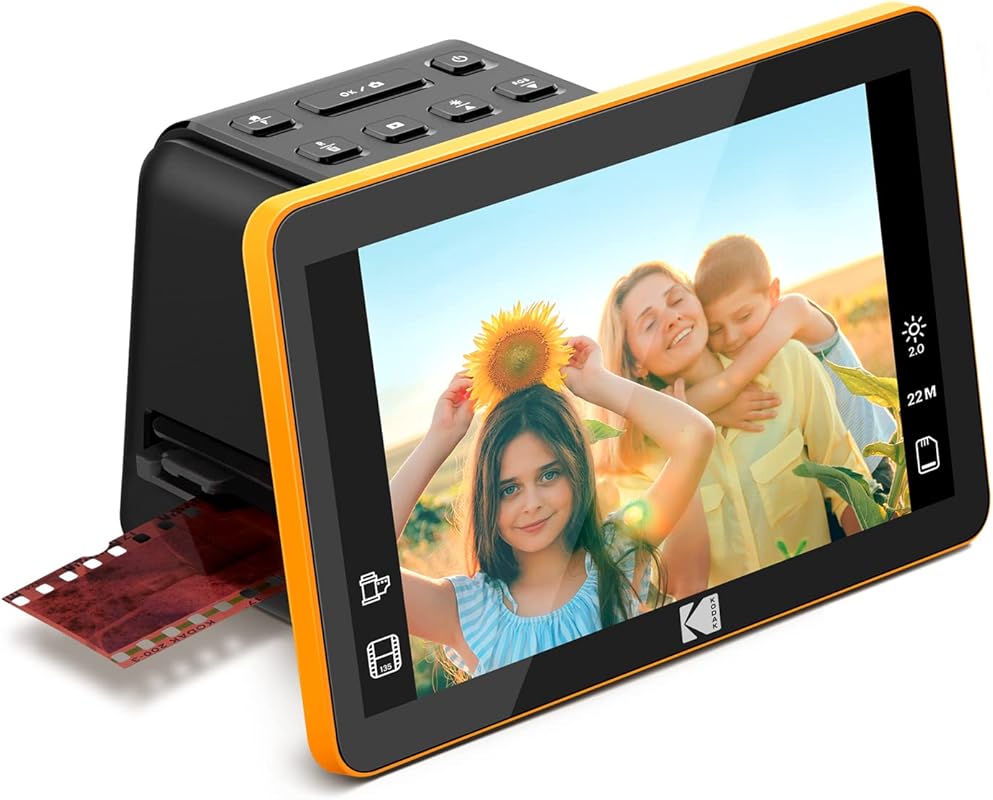
Kodak’s Slide N Scan Max brings premium features to the consumer market with its large 7-inch tiltable screen and gallery mode. This model excels in speed and comfort, making it ideal for large batches of slides requiring frequent repositioning.
Key Features That Stand Out
- ✓ Generous 7″ tiltable LCD for comfortable viewing angles
- ✓ Gallery mode enables continuous scanning without pausing
- ✓ Quick-feed tray reduces handling time per slide
- ✓ Includes multiple adapters for various film sizes
Why We Recommend It
The tiltable screen alone makes a huge difference when working with trays full of slides. Combined with Kodak’s trusted brand reputation and robust build, this scanner offers peace of mind for long digitization sessions.
Best For
Users with extensive slide collections who need ergonomic design and fast throughput without compromising on image consistency.
Pros and Cons
Pros:
- Comfortable large display reduces strain during extended use
- Fast feed mechanism saves time
- Durable construction built to last
Cons:
- Higher price point than basic models
- Slightly bulkier than compact scanners
Customer Reviews
Customer Review: “Love the big screen! Scanning my wedding slides was much easier than expected. No more squinting at tiny previews.”
Customer Review: “Worth the investment if you have lots of slides. The quick feed really speeds things up compared to single-slide scanners.”
5. KODAK Slide N SCAN Film & Slide Scanner with 5” LCD for 22MP JPEG Conversion of 135/126/110 Film
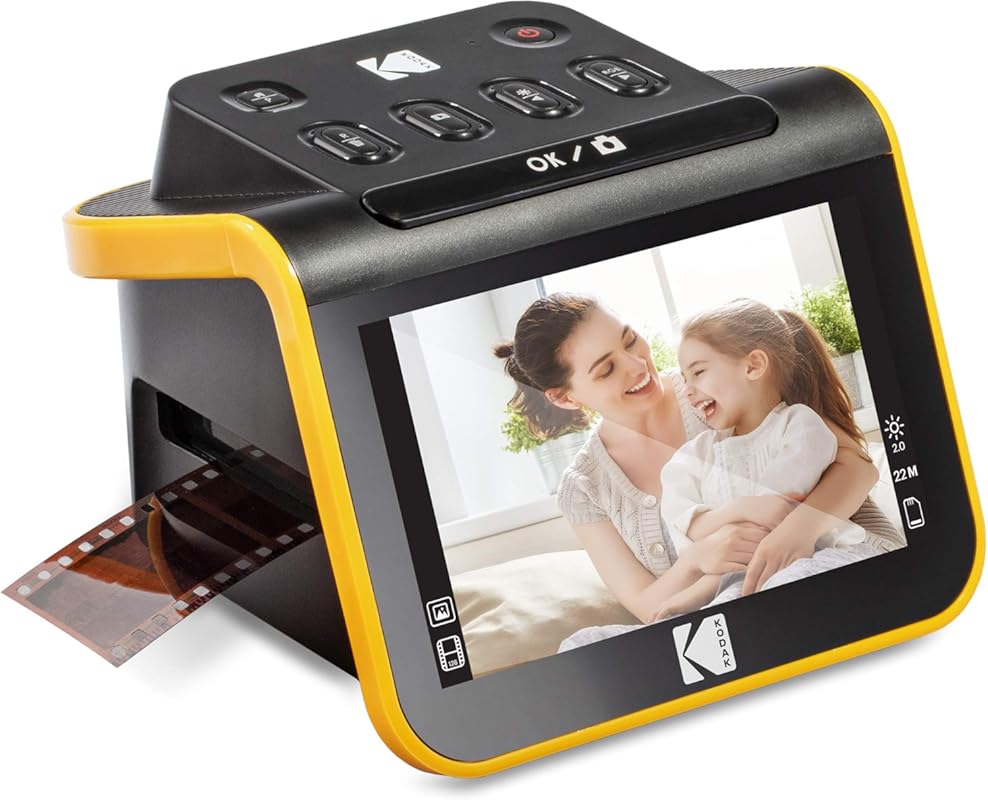
This mid-range Kodak model offers a sweet spot between cost and capability. With 22MP resolution and support for multiple film formats, it’s well-suited for households aiming to digitize their archives efficiently.
Key Features That Stand Out
- ✓ 22MP JPEG output ensures print-ready quality
- ✓ Large 5″ LCD with wide viewing angle
- ✓ Quick-loading tray simplifies batch processing
- ✓ Includes adapters for 50mm slides and small formats
Why We Recommend It
Kodak continues its legacy of reliability with this model. The combination of decent resolution, ease of use, and inclusion of necessary adapters makes it a practical choice for mixed-format film collections.
Best For
Families with diverse film holdings—including 135, 126, and 110—who want a single solution that handles all their needs without extra purchases.
Pros and Cons
Pros:
- Versatile format support
- Clear, vibrant image reproduction
- Simple interface suitable for all ages
Cons:
- No USB or SD export—relies on internal memory
- Limited editing tools within software
Customer Reviews
Customer Review: “Scanned my grandmother’s old negatives beautifully. Colors popped exactly as they should.”
Customer Review: “Good value for the features offered. Would recommend for casual users with moderate scanning needs.”
6. Pacific Image PrimeFilm 120 Pro Plus Medium & 35mm Film Scanner with 6,400 dpi Resolution & True Color
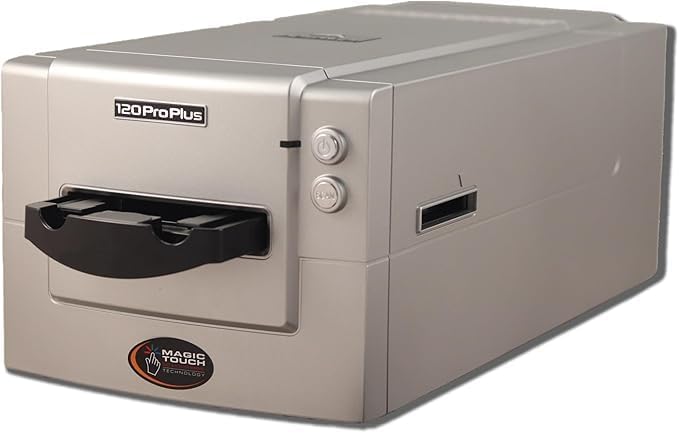
The PrimeFilm 120 Pro Plus targets serious amateur and professional photographers needing medium format support alongside traditional 35mm. Its ultra-high 6,400 dpi resolution ensures every nuance is preserved, ideal for large prints or detailed restoration projects.
Key Features That Stand Out
- ✓ 6,400 dpi true-color resolution for archival-grade scans
- ✓ Supports 135, 120/200, 6×4.5cm, 6x6cm, 6x7cm, 6x9cm, and 6x12cm
- ✓ Genuine RGB linear array sensor for accurate color reproduction
- ✓ One-button operation speeds up repetitive tasks
Why We Recommend It
If you shoot or collect medium format film, this scanner is virtually unmatched in consumer markets. The precision and flexibility make it worth the higher investment for dedicated enthusiasts.
Best For
Professional photographers and collectors working with medium format film who demand laboratory-level scan quality at home.
Pros and Cons
Pros:
- Unparalleled resolution for large-format film
- Broad format compatibility
- Robust mechanical design
Cons:
- Significantly more expensive than standard models
- Requires careful handling due to delicate mechanics
Customer Reviews
Customer Review: “Used this to digitize my Hasselblad collection. The level of detail is incredible—worth every penny.”
Customer Review: “Heavy-duty build. Scans take longer, but the output quality justifies the wait for critical projects.”
7. HP Touch Screen Film Scanner with 7″ LCD, 13 MP, USB & HDMI for Quick-Feed Slide Digitization
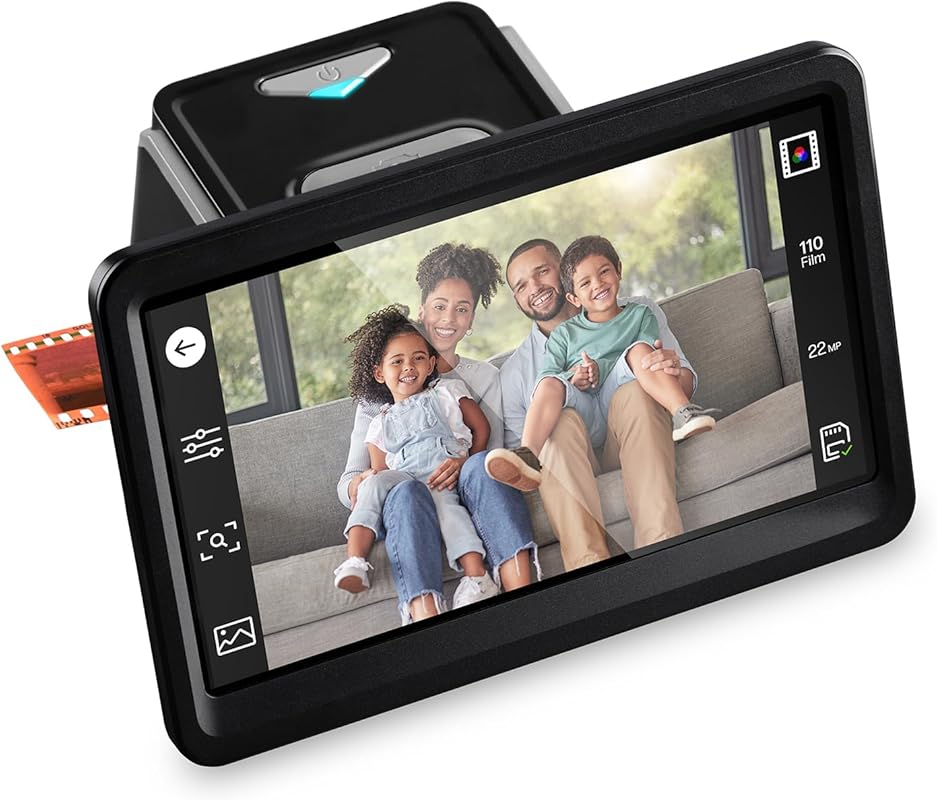
With a larger 7-inch display than its predecessor, this HP model enhances usability during long scanning sessions. The inclusion of both USB and HDMI outputs provides greater flexibility for integration into existing workflows.
Key Features That Stand Out
- ✓ Spacious 7″ touchscreen for relaxed operation
- ✓ 13MP sensor delivers vivid, noise-free images
- ✓ Quick-feed tray compatible with 135, 126, and 110 films
- ✓ Dual output ports enable live streaming or external monitor use
Why We Recommend It
The bigger screen reduces eye strain and improves alignment accuracy—especially helpful when processing hundreds of slides. HP’s commitment to durability ensures this unit will remain functional through years of use.
Best For
Users prioritizing comfort and connectivity, such as content creators who stream digitization processes or professionals needing live preview on secondary monitors.
Pros and Cons
Pros:
- Large, responsive touchscreen
- Flexible output options
- Reliable performance over time
Cons:
- Still limited to smaller film formats
- Software ecosystem could be more modern
Customer Reviews
Customer Review: “The 7-inch screen makes all the difference. I can finally scan without back pain!”
Customer Review: “HDMI output lets me watch scans on my TV—great for sharing with family.”
8. BEONEGLOBAL ClearScan MINI 16MP Film Scanner with 2.31″ LCD for 35mm/135/126 Conversion
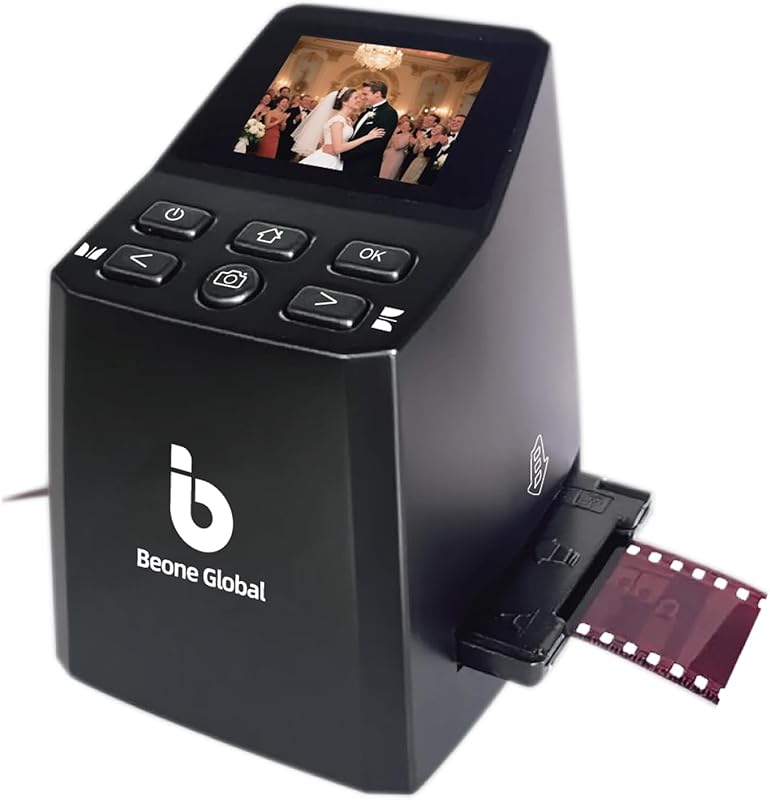
Compact yet capable, the ClearScan MINI packs essential features into a travel-friendly package. Though modest in screen size, it performs reliably for basic digitization tasks and direct SD card saving.
Key Features That Stand Out
- ✓ Ultra-compact form factor ideal for small spaces
- ✓ 16MP CMOS sensor captures sufficient detail
- ✓ Front-facing buttons enhance ergonomics
- ✓ SD card storage (up to 32GB) enables offline access
Why We Recommend It
For occasional users or travelers wanting to preserve memories on-the-go, this model offers portability without sacrificing core functionality. Setup is straightforward, and results are satisfactory for social media or backup purposes.
Best For
Light users, students, or travelers who occasionally digitize small batches of 35mm or 126 film and prefer a no-frills, portable solution.
Pros and Cons
Pros:
- Very affordable
- Lightweight and portable
- Simple one-button operation
Cons:
- Small display limits preview quality
- Limited resolution compared to competitors
Customer Reviews
Customer Review: “Perfect for road trips. Scanned my vacation slides before the drive home—worked like a charm.”
Customer Review: “Does what it promises for the price. Not for pro work, but great for casual use.”
9. BEONEGLOBAL ClearScan P7 Film Scanner with 7” LCD & 24MP for 35mm/110/Super 8 Film & Slides
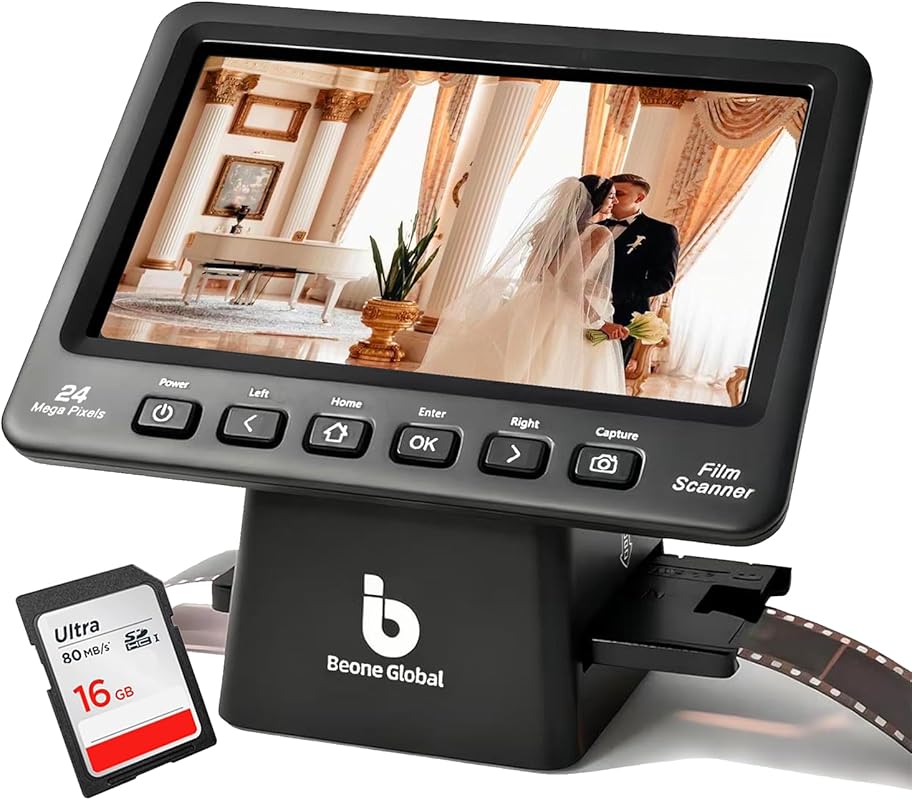
Building on the MINI’s success, the ClearScan P7 upgrades the experience with a spacious 7-inch screen and 24MP resolution. This model bridges the gap between entry-level and professional-grade performance.
Key Features That Stand Out
- ✓ Bright 7″ LCD for clear previews and adjustments
- ✓ 24MP sensor captures fine textures and subtle tones
- ✓ Supports 35mm, 110, and Super 8 films and slides
- ✓ Ergonomic button layout improves workflow efficiency
Why We Recommend It
The combination of large display and high resolution makes the P7 a compelling choice for users transitioning from basic to more advanced digitization needs. It handles mixed-format collections effortlessly.
Best For
Intermediate users with varied film holdings who want improved screen visibility and higher resolution without entering the professional tier pricing.
Pros and Cons
Pros:
- Large, easy-to-read screen
- High-resolution output
- Multi-format support
Cons:
- Slightly slower processing speed
- Software interface feels dated
Customer Reviews
Customer Review: “Upgraded from a cheaper model—what a difference! The big screen helps so much with alignment.”
Customer Review: “Scanned my Super 8 movies perfectly. Colors are rich and natural. Highly recommended!”
10. Kodak SCANZA Digital Film Scanner with 3.5″ LCD for 35mm/126/110/Super 8 & 8mm Film to JPEG Conversion
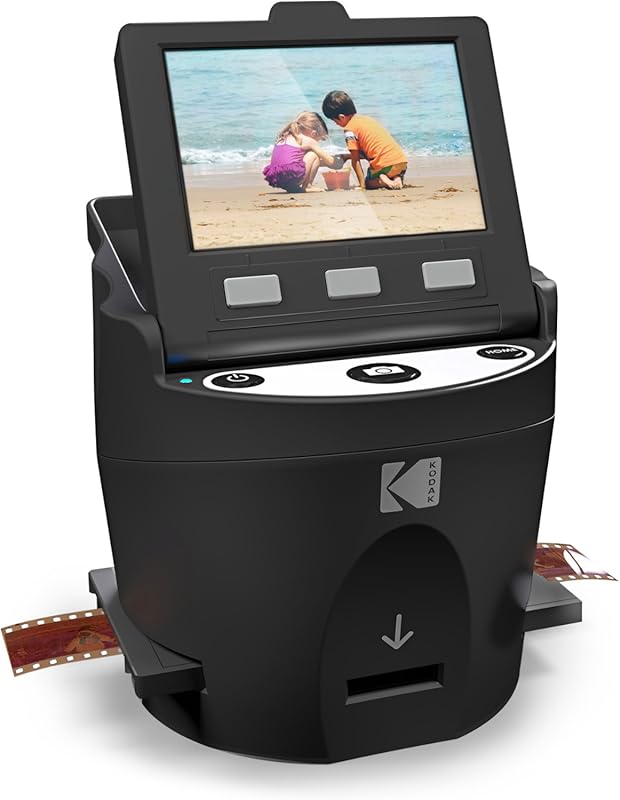
A longtime favorite among home archivists, the SCANZA remains a dependable option for converting 35mm, 126, 110, Super 8, and 8mm films into digital JPEGs. Its simplicity and broad format support ensure compatibility across generations of film cameras.
Key Features That Stand Out
- ✓ Handles five major film formats including vintage 8mm
- ✓ 14/22MP output delivers usable quality for most purposes
- ✓ Bright 3.5″ TFT LCD with adjustable brightness
- ✓ Multiple adapters included for versatile loading
Why We Recommend It
Despite being an older design, the SCANZA’s reliability and format breadth keep it relevant. It’s particularly valuable for collectors of antique or specialty film types.
Best For
Vintage film enthusiasts and museums digitizing obsolete formats like 8mm and Super 8 who need backward-compatible hardware.
Pros and Cons
Pros:
- Extremely broad format compatibility
- Tried-and-true reliability
- Inexpensive replacement parts available
Cons:
- Smaller, lower-res screen by today’s standards
- Limited connectivity options
Customer Reviews
Customer Review: “My grandfather’s 8mm home movies finally made digital! This scanner handled them perfectly.”
Customer Review: “Old school but effective. Does exactly what it says—nothing fancy, but trustworthy.”
Complete Buying Guide for Film And Slide Scanners
Essential Factors We Consider
When evaluating film and slide scanners, we prioritize image resolution, supported formats, ease of use, and connectivity. A good scanner should handle your specific film types—whether 35mm, 110, 126, or medium format—without requiring multiple devices. Look for models with high megapixel counts (at least 16MP) and true-color sensors to preserve authenticity. Built-in screens eliminate the need for constant computer monitoring, while USB or SD outputs simplify file management.
Budget Planning
Entry-level scanners typically start around $100 and cap out below $200 for basic models. Mid-range units offering better resolution and larger displays range from $200–$400. Professional-grade scanners capable of 6,400 dpi and medium format support exceed $800. Factor in adapter costs if your collection includes less common formats. Remember: investing slightly more upfront often saves time and frustration later.
Final Thoughts
Digitizing film isn’t just about technology—it’s about preserving history. The best film and slide scanners blend performance with usability, ensuring your memories remain vibrant for future generations. Whether you choose a budget-friendly option or a feature-rich pro model, prioritize compatibility with your existing collection and your comfort during long sessions. Most importantly, pick a device that inspires you to complete the project rather than abandon it halfway.
Frequently Asked Questions
Q: Can I digitize 120 film with these scanners?
A: Only specialized models like the Pacific Image PrimeFilm 120 Pro Plus support medium format 120 film. Standard consumer scanners are designed for 35mm, 110, and 126 formats.
Q: Do I need special software to use these scanners?
A: Most modern scanners offer plug-and-play functionality with Windows and macOS. Some include basic editing tools, but third-party software like Adobe Photoshop can provide more advanced options.
Q: How long does it take to scan a roll of 35mm film?
A: Depending on the model and settings, scanning a full roll (24–36 exposures) takes between 5–15 minutes. Quick-feed models reduce this time significantly.
Q: Are negative and slide scanners interchangeable?
A: Many scanners handle both negatives and slides, but some are optimized for one type. Always check compatibility before purchasing.
Q: What file format do these scanners produce?
A: Nearly all produce JPEG files, which are widely compatible and suitable for sharing online or printing. Some also offer TIFF for archival purposes.
Preserving your analog memories doesn’t require sending everything off to a lab. With the right film and slide scanner, you can bring your old photos into the digital age with remarkable fidelity and control. From compact travel models to high-end archival systems, there’s a perfect fit for every budget and need. Start digitizing today—your future self will thank you for keeping those precious moments alive.