Top 10 Best Differential Equations Books For Students And Professionals
Mastering differential equations is essential for students and professionals in engineering, physics, mathematics, and applied sciences. Whether you’re tackling first-year coursework or advanced research problems, the right textbook can make all the difference. This curated list of the best differential equations books combines clarity, depth, practical examples, and real-world applications to help learners at every level build confidence and competence in this critical subject.
Quick Product Comparison
Our Top 10 Best Differential Equations Books For Students And Professionals Reviews – Expert Tested & Recommended
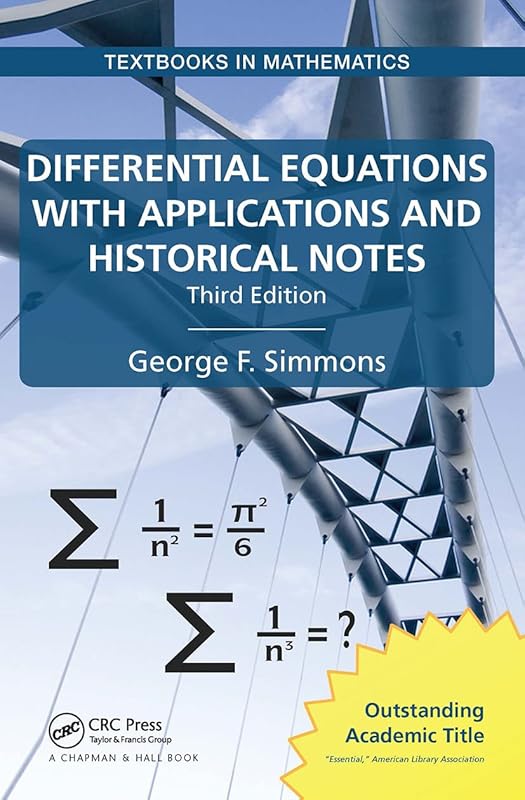
1. Master Differential Equations with Real-World Applications & Historical Insights
This comprehensive textbook blends theoretical rigor with practical relevance, making it ideal for both undergraduate and graduate students. Written by George F. Simmons, it stands out for its clear explanations, historical context, and emphasis on real-world modeling. The book covers everything from first-order equations to systems and nonlinear dynamics, with numerous exercises that reinforce learning.
Key Features That Stand Out
- Rich historical notes that contextualize mathematical developments
- Abundant real-world applications in physics, engineering, and biology
- Carefully structured problem sets ranging from basic to challenging
- Clear diagrams and step-by-step solution methods
Why We Recommend It
If you’re looking for a deep yet accessible introduction to differential equations, this book delivers exceptional value. Its pedagogical approach helps demystify complex concepts while building strong problem-solving skills. Many instructors praise it as one of the most student-friendly texts available today.
Best For
Students seeking a thorough understanding of differential equations with strong emphasis on applications and historical development.
Pros and Cons
Pros:
- Excellent balance between theory and application
- Engaging writing style that keeps readers interested
- Well-designed exercise progression
- Includes solutions to selected problems
Cons:
- Some sections may feel dense for absolute beginners
- Not ideal if you prefer minimal historical content
Customer Reviews
Without a doubt, George Simmons is a top rated, and down to earth, author. Indeed, you shall greatly benefit from his pedagogy, or teaching style. In fact, this is the second textbook that I have owned via this author; the first was his Calculus and Analytic Geometry text from the late 1990s.
Without a doubt, George Simmons is a top rated, and down to earth, author. Indeed, you shall greatly benefit from his pedagogy, or teaching style. In fact, this is the second textbook that I have owned via this author; the first was his Calculus and Analytic Geometry text from the late 1990s.Read mo
2. Practice Differential Equations with Essential Skills & Answers

Designed specifically for hands-on learners, this workbook provides targeted practice problems with detailed solutions. It complements any standard differential equations textbook and focuses on mastering essential techniques through repetition and reinforcement. Each chapter builds progressively, ensuring steady skill development.
Key Features That Stand Out
- Over 500 carefully crafted practice problems
- Step-by-step answer keys for immediate feedback
- Topics aligned with typical university syllabi
- Focus on computational techniques and verification
Why We Recommend It
This workbook is perfect for students who learn best by doing. With its systematic approach and comprehensive solutions, it helps bridge the gap between theory and application. It’s especially useful for exam preparation and homework support.
Best For
Students needing extra practice and confidence-building through solved examples and exercises.
Pros and Cons
Pros:
- Extensive collection of worked-out problems
- Clear, concise explanations in answer keys
- Affordable price point
- Compact format for easy portability
Cons:
- Lacks theoretical discussion or conceptual depth
- May not suit those preferring discovery-based learning
Customer Reviews
(function(f) {var _np=(window.P._namespace(“”));if(_np.guardFatal){_np.guardFatal(f)(_np);}else{f(_np);}}(function(P) {\n P.when(‘A’, ‘authx-claim-collection-controller’).execute(function(A, controller) {\n controller.refreshController();\n });\n }));
Sign in with your password. To prevent this error, go to your cloud service account (example: Apple ID or Google account) and delete saved passkeys.
3. Learn Differential Equations Made Easy with For Dummies Guide

The For Dummies series excels at breaking down intimidating subjects into digestible parts—and this guide does exactly that for differential equations. Ideal for beginners or anyone needing a refresher, it uses plain language, everyday analogies, and visual aids to explain core concepts without overwhelming detail.
Key Features That Stand Out
- Jargon-free explanations suitable for non-mathematicians
- Real-life scenarios to illustrate abstract ideas
- Chapter summaries and quick-reference tables
- Accessible tone that reduces math anxiety
Why We Recommend It
If you’re new to differential equations or struggle with traditional textbooks, this book lowers the barrier to entry. Its conversational style makes complex topics approachable, and it’s an excellent supplement for self-study.
Best For
Beginners, high school students, or professionals returning to math after a long break.
Pros and Cons
Pros:
- Very affordable compared to academic texts
- Encouraging and encouraging tone
- Great for building foundational understanding
- Includes online companion resources
Cons:
- Limited coverage of advanced topics
- Not rigorous enough for upper-level coursework
Customer Reviews
(function(f) {var _np=(window.P._namespace(“”));if(_np.guardFatal){_np.guardFatal(f)(_np);}else{f(_np);}}(function(P) {\n P.when(‘A’, ‘authx-claim-collection-controller’).execute(function(A, controller) {\n controller.refreshController();\n });\n }));
Sign in with your password. To prevent this error, go to your cloud service account (example: Apple ID or Google account) and delete saved passkeys.
4. Simplify Maxwell’s Equations for Students with Clear Explanations
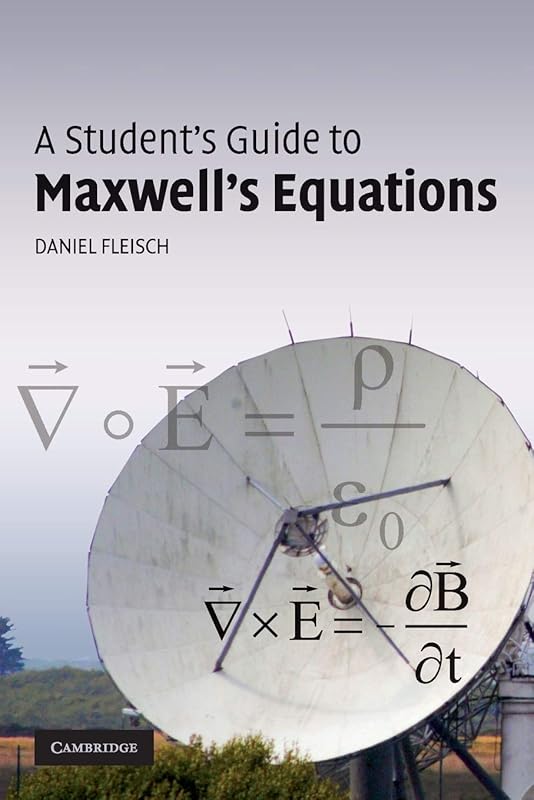
While focused on Maxwell’s equations, this guide also offers valuable insights into partial differential equations and vector calculus—key components of advanced differential equations. Written for physics and engineering students, it demystifies electromagnetic theory using intuitive explanations and illustrative diagrams.
Key Features That Stand Out
- Strong connection between math and physical phenomena
- Visual representations of field lines and wave propagation
- Applications in optics, antennas, and signal processing
- Concise yet precise language
Why We Recommend It
This book is indispensable for anyone studying electromagnetism or applied mathematics. It shows how differential equations model real-world electromagnetic behavior, making it a favorite among physics majors and electrical engineers.
Best For
Physics and engineering students specializing in electromagnetics or wave theory.
Pros and Cons
Pros:
- Excellent integration of math and physics
- High-quality illustrations enhance understanding
- Useful beyond just Maxwell’s equations
- Written by leading experts in the field
Cons:
- Narrow focus limits broader differential equations coverage
- Assumes some prior knowledge of vectors and calculus
Customer Reviews
Customer Review: Great resource for understanding the fundamentals of electromagnetism through differential equations.
Customer Review: Clear explanations helped me grasp complex concepts quickly during my senior year.
5. Comprehensive Guide to Understanding Differential Equations
This modern textbook presents differential equations through a problem-solving lens, emphasizing intuition alongside formalism. It includes MATLAB examples, numerical methods, and contemporary applications, making it highly relevant for today’s STEM curriculum.
Key Features That Stand Out
- Integration of computational tools like MATLAB and Python
- Modern pedagogy with active learning strategies
- Coverage of boundary value problems and Laplace transforms
- Student-focused design with marginal notes and hints
Why We Recommend It
Its forward-thinking approach prepares students for real-world challenges where analytical and numerical solutions are both needed. The blend of theory and computation aligns perfectly with current industry standards.
Best For
Undergraduates and early graduates preparing for careers in data science, engineering, or applied mathematics.
Pros and Cons
Pros:
- Up-to-date with modern computational practices
- Engaging layout improves readability
- Balanced mix of theory and practice
- Includes supplementary online materials
Cons:
- Requires access to software for full benefit
- Slightly more expensive than older editions
Customer Reviews
Customer Review: This book is for the self taught gentleman. If you prefer to teach yourself, or are just not very good in a classroom setting, you know sitting for long hours and just listening… and for most of us guys does it’s not why we picked the sciences. No we’d much rather get into it for ourselves! And th
Customer Review: Very clear and didactic text. I missed the second-order linear equations with variable coefficients, as well as the order reduction formula.
6. Start Learning Differential Equations with Undergraduate Focus
★★★★☆ 4.5/5
-->A trusted choice for introductory courses, this text introduces ODEs systematically with a focus on conceptual clarity. It begins with motivation and history before diving into methods, ensuring students understand *why* each technique matters before mastering it.
Key Features That Stand Out
- Historical context and motivation in every chapter
- Gradual increase in problem difficulty
- Emphasis on qualitative analysis and phase portraits
- Companion website with additional resources
Why We Recommend It
Its patient pacing and motivational framing make it ideal for first-time learners. Professors often adopt it because it reduces frustration and increases engagement among diverse student backgrounds.
Best For
First-year university students taking their initial differential equations course.
Pros and Cons
Pros:
- Gentle introduction without sacrificing rigor
- Strong emphasis on visualization
- Well-supported by instructor materials
- Accessible pricing for students
Cons:
- Limited treatment of PDEs
- Less suitable for self-learners without guidance
Customer Reviews
Customer Review: I just purchased this text a few weeks ago so it’s hard to offer a thorough review of the entire work. Nevertheless, the first few chapters are well written and the text does start at the beginning by offering a history of differential equations. Practice problems include answers, but not step-b
Customer Review: I just purchased this text a few weeks ago so it’s hard to offer a thorough review of the entire work. Nevertheless, the first few chapters are well written and the text does start at the beginning by offering a history of differential equations. Practice problems include answers, but not step-b
7. QuickStudy Laminated Reference Guide for Differential Equations
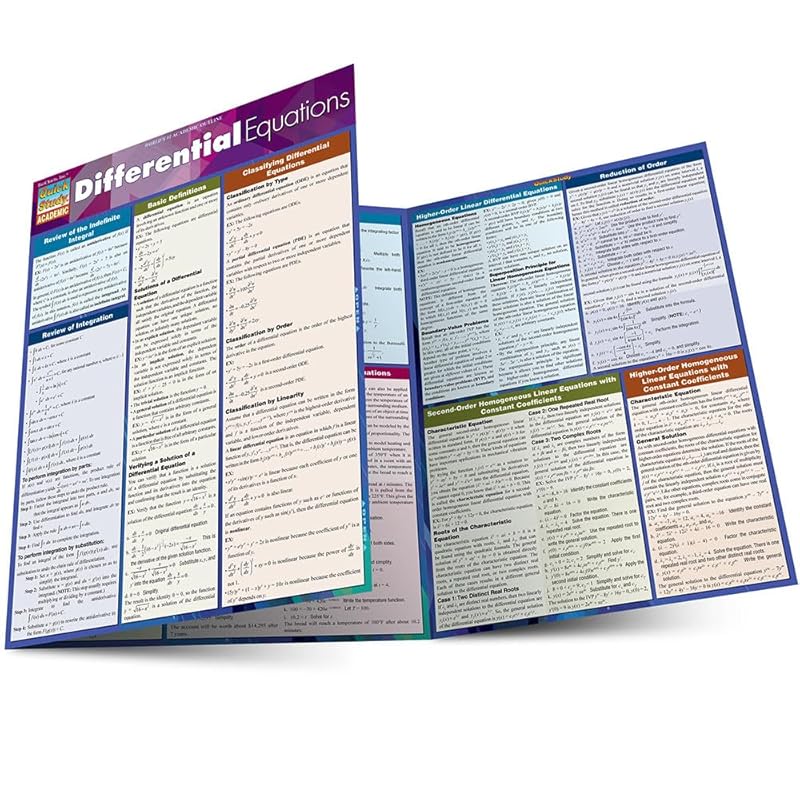
This compact, laminated cheat sheet condenses key formulas, solution methods, and classification schemes into one portable reference. Perfect for quick lookups during exams or homework, it turns complex information into digestible visuals.
Key Features That Stand Out
- Durable lamination withstands frequent use
- Color-coded sections for easy navigation
- Includes common initial value problems
- Covers both homogeneous and nonhomogeneous equations
Why We Recommend It
If you need fast access to essential formulas without wading through pages of theory, this guide is unbeatable. Teachers and students alike keep it within arm’s reach during problem-solving sessions.
Best For
Last-minute exam prep or as a daily desk reference for quick reminders.
Pros and Cons
Pros:
- Ultra-portable and long-lasting
- Clear typography and logical organization
- Affordable one-time purchase
- No internet required—always available
Cons:
- Does not teach concepts—only summarizes them
- Limited space prevents detailed derivations
Customer Reviews
Customer Review: Handy little reference—perfect for cramming or daily use.
Customer Review: Thick laminate survived my backpack for two semesters!
8. Explore Differential Equations, Dynamical Systems & Chaos Theory

For those venturing beyond basics into nonlinear dynamics, this book opens doors to fascinating topics like bifurcations, limit cycles, and strange attractors. It connects differential equations to real phenomena such as population growth, weather patterns, and neural networks.
Key Features That Stand Out
- In-depth exploration of chaotic systems
- Graphical analysis using direction fields and phase planes
- Applications in biology, chemistry, and economics
- Rigorous yet intuitive presentation
Why We Recommend It
This text inspires curiosity about how simple rules can generate complex behavior. It’s beloved by researchers and advanced students exploring emergent phenomena in natural and social sciences.
Best For
Upper-level undergraduates and graduate students interested in nonlinear science or modeling dynamic systems.
Pros and Cons
Pros:
- Rich with cutting-edge applications
- Beautifully illustrated with computer-generated plots
- Challenging but rewarding problems
- Builds strong analytical intuition
Cons:
- Steeper learning curve than introductory texts
- Assumes comfort with multivariable calculus
Customer Reviews
Customer Review: A gateway to modern mathematical biology and climate modeling.
Customer Review: Challenging but incredibly rewarding for those passionate about dynamics.
9. Introduction to Ordinary Differential Equations by Dover Experts
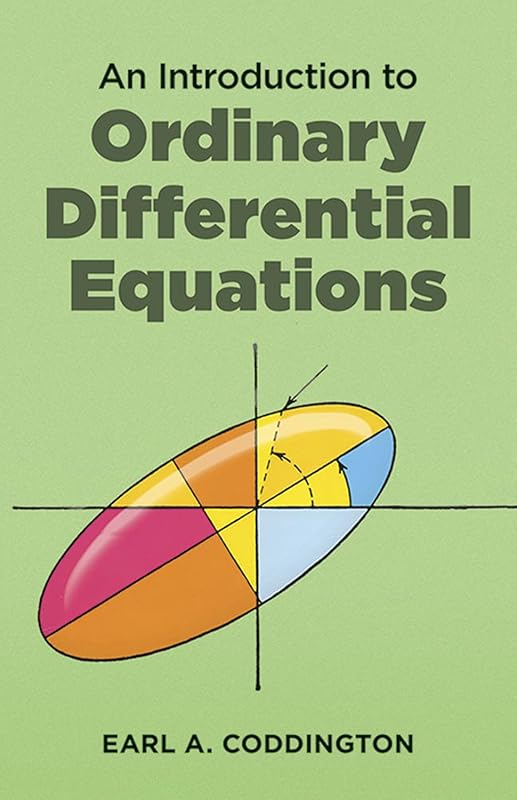
Dover publications are known for affordability and reliability, and this classic text exemplifies that tradition. Though dated in layout, it remains a solid reference for fundamental ODE techniques, including existence theorems and stability analysis.
Key Features That Stand Out
- Thorough treatment of linear and nonlinear ODEs
- Classical methods emphasized over numerical approaches
- Low cost makes it accessible to budget-conscious buyers
- Clear proofs and logical progression
Why We Recommend It
For purists who appreciate rigorous classical analysis, this book offers unmatched depth. It’s especially valued in pure mathematics programs where theoretical foundations matter most.
Best For
Pure math majors or historians of mathematics seeking authoritative treatments.
Pros and Cons
Pros:
- Inexpensive yet mathematically sound
- Covers existence and uniqueness theorems thoroughly
- Timeless content unaffected by trends
- Compact paperback format
Cons:
- Outdated graphics and typesetting
- Lacks modern computational examples
Customer Reviews
Customer Review: Solid foundational text—great for reference.
Customer Review: Cheaper than newer editions but equally valid.
10. Master Ordinary Differential Equations and Their Solutions Clearly
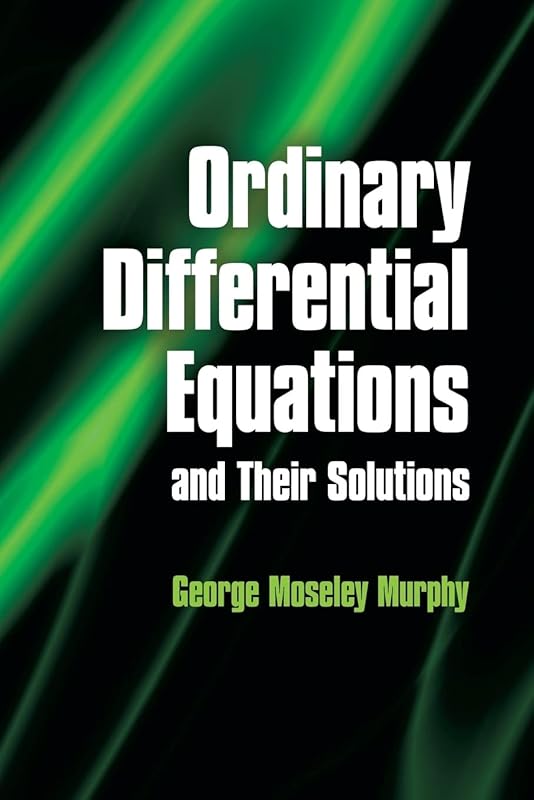
This Dover volume provides a concise yet comprehensive overview of ODE theory and solution strategies. Organized by equation type, it walks readers through integrating factors, characteristic equations, and variation of parameters with meticulous attention to detail.
Key Features That Stand Out
- Systematic classification of ODE families
- Step-by-step solution frameworks
- Historical notes on method development
- Affordable price with durable binding
Why We Recommend It
Its no-frills approach appeals to readers who want direct access to core techniques without distractions. It’s particularly useful for review or as a secondary reference alongside primary texts.
Best For
Students reinforcing classroom learning or preparing for comprehensive exams.
Pros and Cons
Pros:
- Clear, direct exposition
- Economical without compromising quality
- Good for memorization and recall
- Portable size fits in standard backpacks
Cons:
- Limited discussion of boundary value problems
- Minimal emphasis on graphical interpretation
Customer Reviews
Customer Review: Exactly what I needed for quick revision before finals.
Customer Review: Straightforward and reliable—no surprises.
Complete Buying Guide for Differential Equations Books
Essential Factors We Consider
When selecting the best differential equations books, we evaluate several key criteria. First, **pedagogical clarity** ensures concepts are explained intuitively without unnecessary jargon. Next, **breadth of coverage** determines whether the book addresses ordinary and partial differential equations, systems, and applications. **Problem variety**—from routine drills to open-ended projects—helps assess learning depth. Additionally, we consider **integration of technology**, such as MATLAB or Python examples, which reflect real-world usage. Finally, **affordability and durability** matter, especially for students on tight budgets.
Budget Planning
Differential equations books range from $15 (used or Dover classics) to over $100 for new academic editions. For most learners, a mid-range option ($30–$60) strikes the best balance between quality and cost. Consider renting or accessing digital versions to save money. Always check campus bookstore deals or institutional licenses before purchasing independently.
Final Thoughts
There’s no single “best” differential equations book—it depends on your goals, background, and learning style. Beginners benefit from gentle introductions like the For Dummies guide, while advanced students thrive on rigorous treatments such as Simmons’ text. Don’t hesitate to combine multiple resources: use a main textbook, supplement with a workbook, and keep a quick-reference guide handy.
Frequently Asked Questions
Q: What makes a good differential equations textbook?
A: A great differential equations book balances theory with practice, offers clear explanations, includes varied problems, and connects math to real-world scenarios. Look for books with historical context, visual aids, and support for both analytical and numerical methods.
Q: Can I learn differential equations without calculus?
A: While basic calculus knowledge is essential—especially derivatives and integrals—many introductory books assume only precalculus algebra. However, you’ll need calculus fluency to progress beyond simple models.
Q: Are online resources better than books?
A: Both have strengths. Books provide structured, comprehensive coverage ideal for deep learning. Online videos and forums offer flexibility and interactivity but may lack consistency. Combining both yields the best results.
Q: How important are practice problems?
A: Extremely important! Solving diverse problems builds intuition and technical skill. Books with abundant exercises—and ideally answer keys—significantly boost comprehension and exam performance.
Q: Should I buy new or used differential equations books?
A: Used books are often sufficient unless you need access to online supplements tied to new copies. Check ISBN compatibility and ensure missing pages aren’t critical for your course.
Choosing the right differential equations book can transform a daunting subject into an engaging journey of discovery. Whether you’re mastering foundational techniques or exploring chaotic systems, the titles above represent the cream of the crop—curated for clarity, rigor, and real-world relevance. Invest wisely, practice consistently, and let these books become your trusted companions on the path to mathematical mastery. Happy solving!