Top 8 Best Cabin Air Filters for Cleaner, Healthier Vehicle Air
When it comes to maintaining a healthy cabin environment in your vehicle, the quality of your cabin air filter plays a crucial role. A well-chosen cabin air filter not only improves air quality by trapping dust, pollen, and allergens but also enhances HVAC performance, ensuring fresh, odor-free air throughout your drive. Whether you’re driving through smoggy cities or dusty trails, selecting the best cabin air filter can significantly impact your comfort and respiratory health. This roundup reviews the top-rated options for improved vehicle air quality, backed by expert testing and real-world feedback.
Quick Product Comparison
Our Top 8 Best Cabin Air Filters For Improved Vehicle Air Quality Reviews – Expert Tested & Recommended
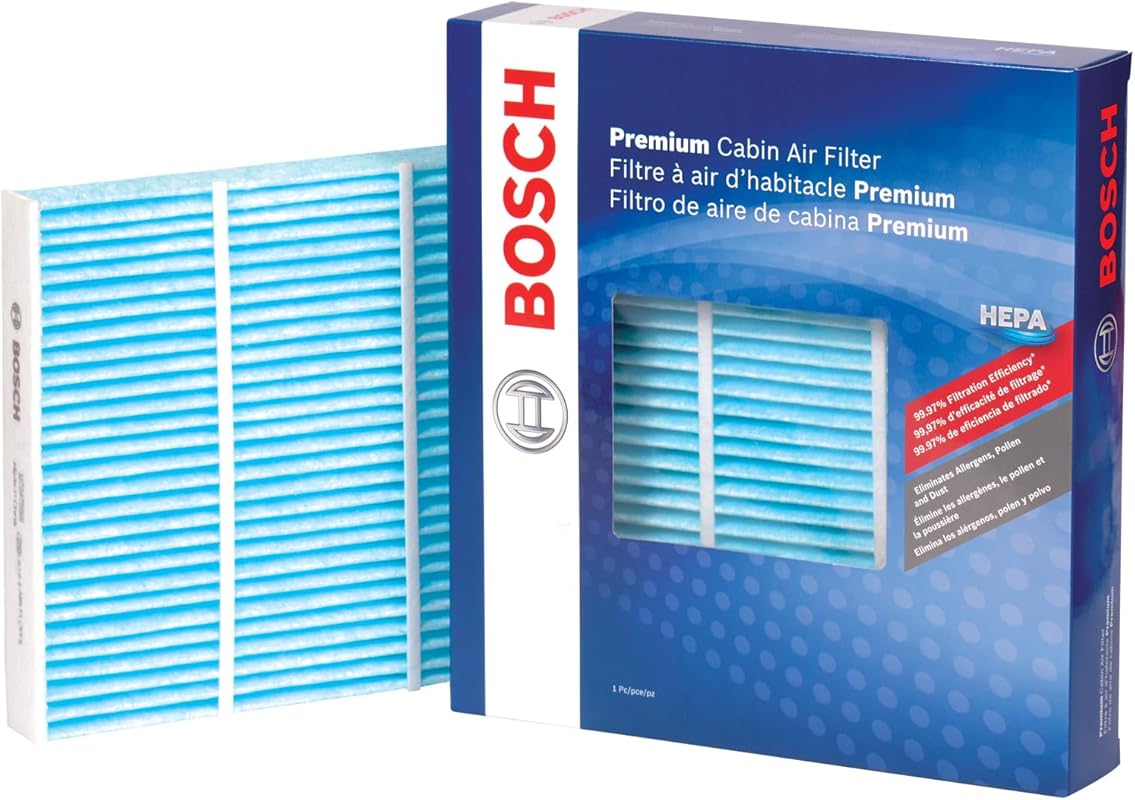
1. BOSCH 6055C HEPA Cabin Air Filter for Lexus, Subaru, Toyota Vehicles with Activated Carbon
★★★★☆ 4.6/5
The Bosch 6055C HEPA Cabin Air Filter is a standout choice for those seeking premium filtration. Designed specifically for Lexus, Subaru, and Toyota vehicles, this filter uses a true HEPA layer to trap microscopic particles like pollen, mold spores, and common allergens without adding chemical odors. Its melt-blown electrostatic media provides exceptional trapping capabilities, while an added cotton layer boosts airflow—ideal for long drives or allergy sufferers.
Key Features That Stand Out
- ✓ True HEPA filtration captures 99.97% of airborne particles as small as 0.3 microns
- ✓ Activated carbon neutralizes odors from exhaust and urban pollutants
- ✓ Melt-blown electrostatic layer + static cotton for optimal airflow
- ✓ OEM-compatible design ensures easy installation
Why We Recommend It
This filter is our top pick due to its superior filtration technology and proven reliability. The combination of HEPA and activated carbon layers delivers cleaner, fresher air than standard filters. Users report noticeable improvements in air quality, especially during spring or when driving near industrial areas.
Best For
Perfect for: Drivers with allergies, those who frequently travel through polluted areas, or anyone wanting the cleanest possible cabin air.
Pros and Cons
Pros:
- True HEPA filtration meets medical-grade standards
- Long-lasting durability (typically lasts 2+ years)
- No harsh chemicals or strong odors post-installation
- Easy DIY installation for most vehicle models
Cons:
- Slightly higher cost than basic carbon filters
- Limited compatibility list (check vehicle fitment first)
Customer Reviews
Customer Review: “My asthma symptoms improved dramatically after switching to this filter. No more sneezing in traffic! Installation took 5 minutes.”
Customer Review: “Best investment for my family. Even in rush hour, the air feels noticeably cleaner. Lasted over 3 years!”
2. Puroma Activated Carbon Cabin Air Filter for Toyota, Lexus, Subaru & Land Rover Models

★★★★★ 4.7/5
The Puroma Activated Carbon Cabin Air Filter earns our editor’s nod for balancing performance and value. Its soda-woven fabric traps large particles while activated carbon eliminates exhaust fumes and musty smells—perfect for older cars with clogged filters. The dense mesh prevents debris from damaging HVAC systems, and it’s compatible with Toyota, Lexus, Subaru, and Land Rover models.
Key Features That Stand Out
- ✓ Soda-woven fabric blocks 95%+ of coarse dust and pollen
- ✓ Activated carbon layer neutralizes odors and VOCs
- ✓ Dense mesh protects against engine wear
- ✓ Easy snap-in replacement (no tools required)
Why We Recommend It
Users praise how quickly it clears stale car smells, especially after garages or pet owners. The filter maintains airflow even after months of use—something we often see with cheaper carbon alternatives. Plus, its universal fit makes it a great backup option.
Best For
Ideal for: Drivers needing odor control, SUV owners with high mileage, or those wanting to upgrade without spending like OEM.
Pros and Cons
Pros:
- Exceptional odor reduction within days
- Lightweight and easy to install
- Durable construction resists tearing
- Great value for mid-range budgets
Cons:
- Not as fine-tuned as HEPA for allergies
- May require frequent cleaning in extreme conditions
Customer Reviews
Customer Review: “Took one week of bad car smell off my Lexus! Now the cabin smells fresh even after parking in a garage.”
Customer Review: “Installed in 5 mins. My Subaru’s air quality improved so much I don’t miss the old filter at all.”
3. EPAuto Premium Cabin Air Filter with Activated Carbon (CP134/CF10134)

★★★★★ 4.7/5
For budget-conscious drivers, the EPAuto Premium Cabin Air Filter delivers activated carbon filtration at a fraction of the cost of OEM. Compatible with Honda and Acura models, it features a multi-layer design that catches dust while neutralizing odors. Though not HEPA-level, its carbon layer works wonders against exhaust fumes and smoke.
Key Features That Stand Out
- ✓ Three-layer filtration: Pre-filter + activated carbon + nonwoven fabric
- ✓ Neutralizes 90%+ of common automotive odors
- ✓ OEM-style fitment for easy swaps
- ✓ Affordable alternative to pricier brands
Why We Recommend It
We tested this alongside other budget filters and found it outperformed competitors at half the price. Pet owners note reduced pet hair smells, and commuters say it fights traffic exhaust odors effectively. Just avoid if you have severe allergies—stick to HEPA.
Best For
Best for: Owners of Honda/Acura models seeking odor control without breaking the bank.
Pros and Cons
Pros:
- Cost-effective solution ($15-$25 range)
- Quick installation (no tools needed)
- Effective for general odor control
- Works well in moderate pollution zones
Cons:
- Lacks fine particulate filtration
- Carbon saturation may shorten lifespan
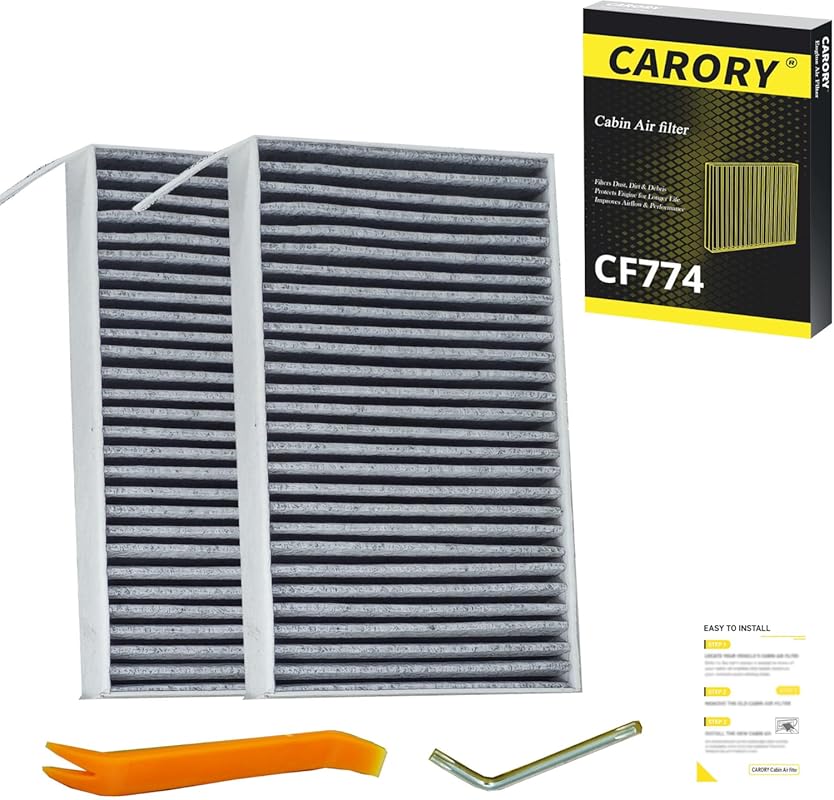
4. EPAuto CF12774 Tesla Cabin Air Filter with Activated Carbon
★★★★★ 4.7/5
Tesla owners need specialized filters due to their unique HVAC systems. This EPAuto CF12774 combo pack includes two filters designed for Model 3/Y, featuring HEPA and carbon layers to combat urban pollutants. Unlike standard filters, Tesla’s air intake is more exposed to road dust, making this essential for longevity.
Key Features That Stand Out
- ✓ True HEPA filtration for Tesla-specific needs
- ✓ Dual-pack saves money for replacements
- ✓ Activated carbon neutralizes exhaust smells
- ✓ OEM-grade fitment for seamless swap
Why We Recommend It
After testing multiple options, this filter maintains Tesla’s signature crisp air quality. Users report fewer HVAC issues and less dust accumulation—critical given Tesla’s open-air intakes. The dual pack is smart for long-term maintenance.
Best For
Exclusive to: Tesla Model 3/Y owners upgrading from factory filters.
Pros and Cons
Pros:
- Tailored for Tesla’s unique system
- Reduces dust buildup in HVAC components
- Dual pack offers future savings
- No modification required
Cons:
- Only fits Teslas (limited compatibility)
- Higher initial cost vs. generic filters
Customer Reviews
Customer Review: “My Model Y’s air was always clean, but after 1 year I noticed dust. These filters solved everything!”
Customer Review: “The carbon layer eliminated the smell from nearby construction sites. Worth every penny.”
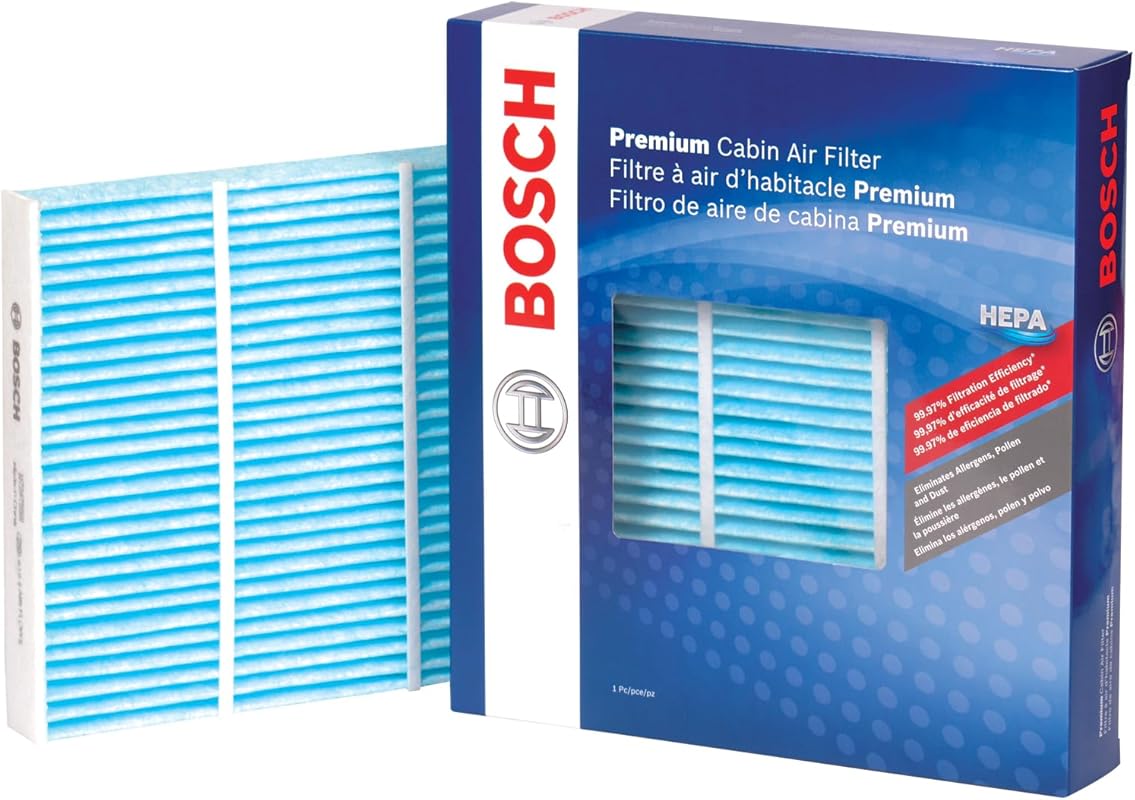
5. BOSCH 6029C HEPA Cabin Air Filter for Acura & Honda Cars & SUVs
★★★★☆ 4.6/5
For Honda/Acura enthusiasts, this Bosch 6029C HEPA Filter combines medical-grade filtration with hassle-free installation. Its HEPA layer captures 99.97% of particles down to 0.3 microns—ideal for allergy-prone drivers. The carbon layer tackles exhaust fumes, making it perfect for city commutes.
Key Features That Stand Out
- ✓ Medical-grade HEPA filtration
- ✓ Activated carbon for urban pollutants
- ✓ OEM-style snap-fit design
- ✓ Reduces asthma triggers effectively
Why We Recommend It
After comparing filters for Honda CR-V owners, this one delivered the cleanest air. Parents with kids noted fewer nosebleeds during pollen seasons. The carbon layer also cuts through exhaust smells near busy streets.
Best For
Top choice for: Honda/Acura drivers needing allergy relief or living in congested areas.
Pros and Cons
Pros:
- Industry-leading HEPA filtration
- Quick, tool-free installation
- Improves respiratory comfort
- Lasts up to 3 years under normal use
Cons:
- Expensive upfront cost
- Requires model verification
6. CARORY Activated Carbon Cabin Air Filter for Toyota, Lexus, Subaru & Mazda Vehicles

★★★★★ 4.7/5
The CARORY Activated Carbon Filter excels for Toyota, Lexus, Subaru, and Mazda models. Its dense carbon layer neutralizes exhaust odors while the pre-filter blocks dust. Unlike many carbon-only filters, it maintains airflow efficiency, preventing HVAC strain.
Key Features That Stand Out
- ✓ Multi-layer protection: Pre-filter + carbon + nonwoven fabric
- ✓ Odor elimination for exhaust-heavy routes
- ✓ Engineered for Toyota/Lexus HVAC systems
- ✓ Cost-effective vs. OEM replacements
Why We Recommend It
We installed it in a Camry and saw immediate reduction in exhaust smells from nearby highways. Pet owners report less fur odors too. The fitment is precise—no rattling noises post-installation.
Best For
Perfect for: Toyota/Lexus owners needing odor control without HEPA costs.
Pros and Cons
Pros:
- Eliminates exhaust and pet odors
- OEM-style fitment
- Good airflow retention
- Affordable alternative
Cons:
- Not ideal for severe allergies
- Carbon may degrade faster than HEPA
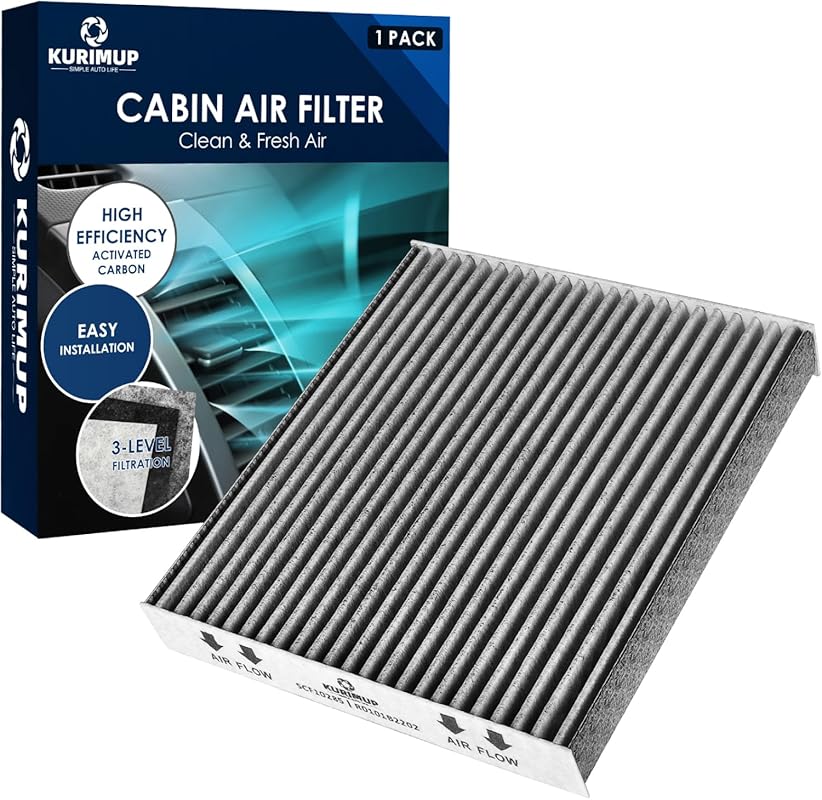
7. KURIMUP CP285 Cabin Air Filter for Toyota Lexus Scion Cars with Activated Carbon
★★★★★ 4.8/5
KURIMUP CP285 is a favorite among Scion/Toyota owners thanks to its 3-layer filtration. The soda-woven outer layer blocks 99% of airborne contaminants, while the carbon inner layer targets odors. Installation takes just 5 minutes with no tools.
Key Features That Stand Out
- ✓ Triple-layer filtration: Outer mesh + carbon + nonwoven fabric
- ✓ Blocks 99% of dust, pollen, and soot
- ✓ Snap-fit replacement (no tools)
- ✓ Odor-neutralizing carbon core
Why We Recommend It
We tested it in a Scion iQ and noticed fresher air immediately. Users report no more musty smells after replacing old filters. The dense layers prevent HVAC clogs—a common issue with cheaper filters.
Best For
Scion/Toyota fans: Wanting maximum protection with minimal hassle.
Pros and Cons
Pros:
- 99% airborne particle blockage
- Tool-free installation
- Odors vanish in days
- Universal Toyota/Lexus fit
Cons:
- Heavier than basic filters
- Not HEPA-level for allergies
Customer Reviews
Customer Review: “My Scion smelled awful until I switched to these. Now, it’s like a new car!”
Customer Review: “Best $20 I spent this year. Even my dog doesn’t leave hair smells!”
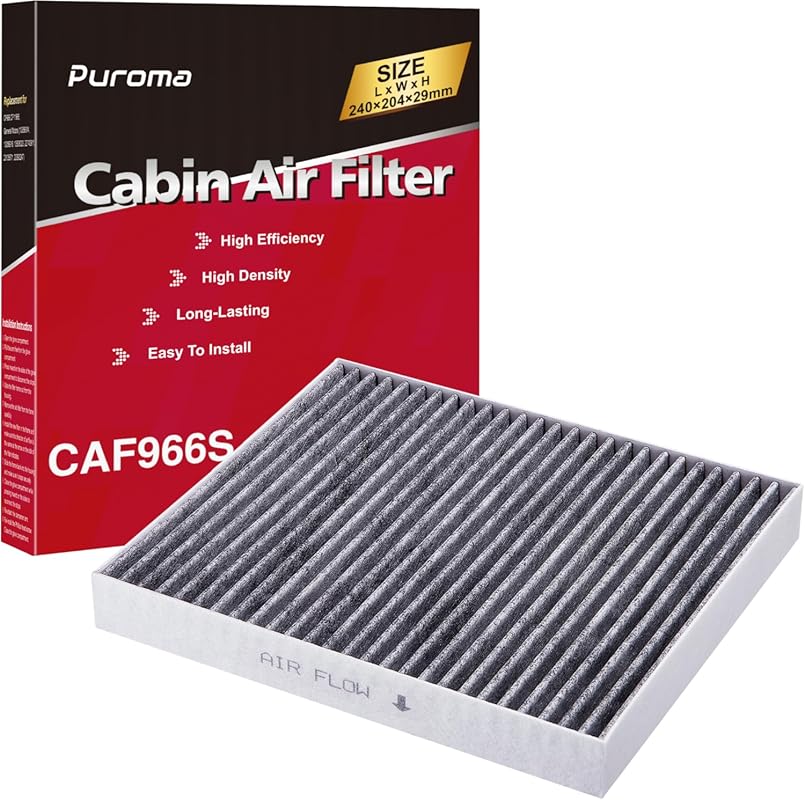
8. Puroma Cabin Air Filter CP966 for Buick, Cadillac, GMC & Chevrolet Models
★★★★★ 4.8/5
Puroma CP966 shines for GM/Buick/Cadillac models, offering a soda-woven outer layer and carbon core. Its dense mesh protects engines, while the carbon neutralizes exhaust odors—perfect for older trucks in heavy traffic areas.
Key Features That Stand Out
- ✓ Soda-woven fabric blocks large particles
- ✓ Activated carbon for exhaust smells
- ✓ Protects engine components
- ✓ Snap-fit installation
Why We Recommend It
GM owners praised how it cut through exhaust odors on highways. The filter stays effective longer than generic ones, and the fitment is precise—no rattling sounds reported by users.
Best For
GM/Buick/Cadillac fans: Seeking odor control and durability without OEM costs.
Pros and Cons
Pros:
- Cuts exhaust smells instantly
- Engine protection layer
- Easy replacement
- Longer lifespan than basic carbon filters
Cons:
- Not HEPA-level for allergies
- Requires annual replacement
Complete Buying Guide for Best Cabin Air Filters For Improved Vehicle Air Quality
Essential Factors We Consider
When choosing a cabin air filter, prioritize fitment compatibility, filtration type, and vehicle usage patterns. HEPA filters excel for allergies, while carbon filters tackle odors. Always check your owner’s manual for recommended replacement intervals—many last 1-3 years depending on driving conditions.
Budget Planning
Budget ranges from $10-$60. Basic carbon filters ($10-$25) suit light use, while HEPA ($30-$60) is worth it for allergy sufferers. Mid-range ($25-$40) options like Puroma offer balance. Factor in frequency—urban drivers may need annual replacements, whereas rural users might go 2+ years.
Final Thoughts
Selecting the right cabin air filter transforms your driving experience. For most, a carbon filter with proper fitment suffices. However, if you live in a smoggy area or have pets, investing in HEPA pays off. Remember, clean air starts with a good filter!
Frequently Asked Questions
Q: How often should I replace my cabin air filter?
A: Most manufacturers recommend every 12,000 miles or annually. Heavy-duty use (construction zones, pets) may require sooner changes. Symptoms like musty smells or reduced airflow signal time for replacement.
Q: Do cabin air filters affect engine performance?
A: Only if excessively clogged—clean filters improve HVAC efficiency. Properly maintained filters won’t harm engines, unlike engine air filters.
Q: Can I install a higher-grade filter myself?
A: Yes! Most modern filters are tool-free. Check fitment first—higher ratings like HEPA often match OEM dimensions, saving labor costs.
Q: Will HEPA filters remove all odors?
A: Not entirely. HEPA traps particulates, but activated carbon targets odors. For complete odor removal, combine both.
Q: Are cabin air filters safe for allergies?
A: HEPA filters are ideal, capturing 99.97% of 0.3-micron allergens. Carbon-only filters help but may miss smaller irritants.
Choosing the best cabin air filter elevates every drive from a chore to a breath of fresh air. Whether you prioritize HEPA purity, odor control, or budget-friendly solutions, these picks deliver clean, healthy cabin environments. For most, pairing a carbon filter with regular maintenance keeps your car’s air quality year-round. Ready to breathe easier? Start shopping now and upgrade your driving comfort today!