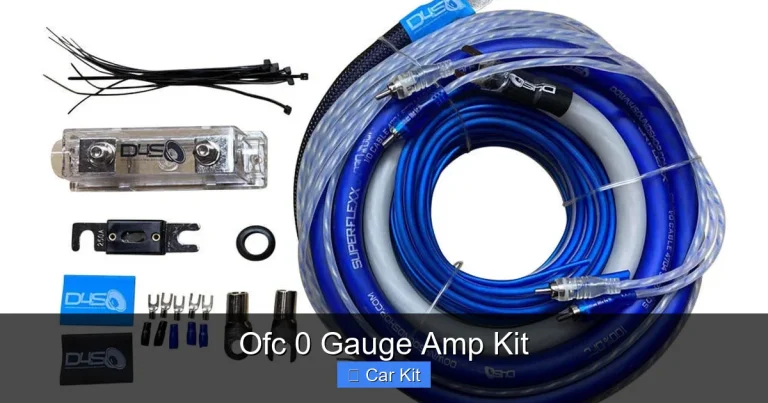
Amp Wiring Kit 0 Gauge
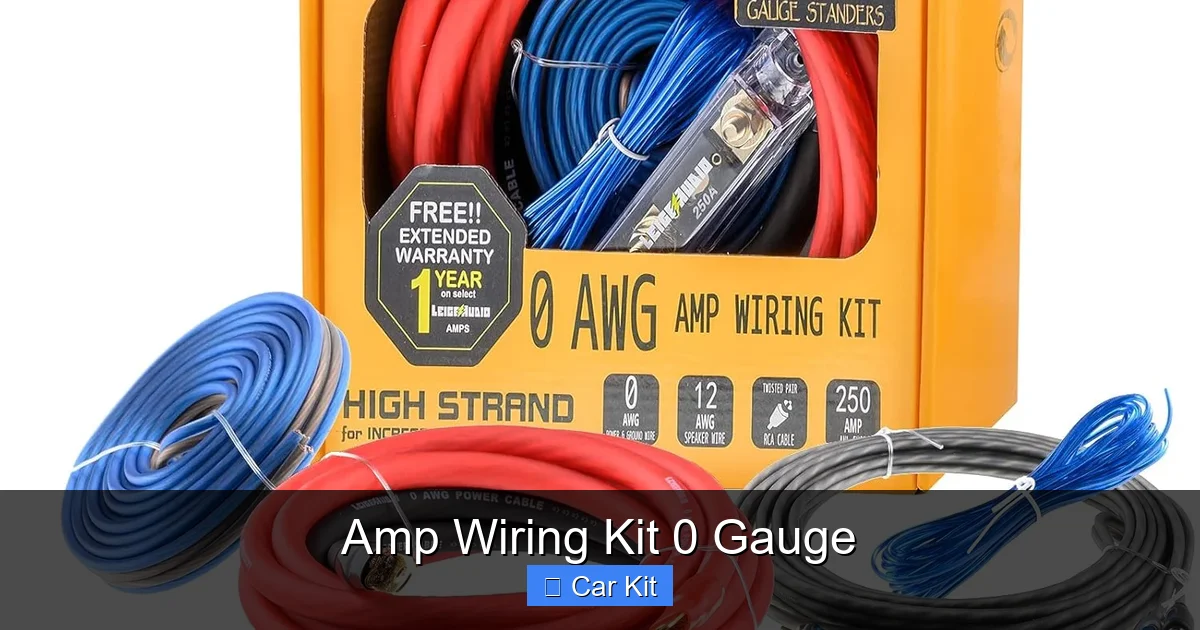
Upgrade your high‑current projects with the Amp Wiring Kit 0 Gauge, the ultimate solution for reliable, low‑resistance power distribution. This comprehensive kit includes heavy‑duty connectors, heat‑shrink tubing, and a sturdy grounding strap, ensuring safe and efficient installations for automotive, marine, and solar applications. Designed for maximum durability and easy handling, it eliminates voltage drop and protects against overloads, making it the go‑to choice for professionals and DIY enthusiasts alike.
Key Takeaways
- Choose the correct gauge: 0‑gauge wire handles up to 350 A safely.
- Verify connector size: Ensure terminals match 0‑gauge for a secure fit.
- Plan length precisely: Cut only what you need to avoid excess resistance.
- Use proper heat shrink: Protect connections from moisture and vibration.
- Follow torque specs: Tighten connectors to manufacturer‑recommended values.
- Inspect insulation: Look for cracks or abrasions before installation.
- Test continuity: Confirm a clean circuit after wiring to prevent voltage drops.
📑 Table of Contents
- Amp Wiring Kit 0 Gauge: The Ultimate Guide for Your Car Audio Powerhouse
- Why 0 Gauge Wire? Understanding the Basics
- Components of a 0 Gauge Amp Wiring Kit
- Step‑by‑Step Installation Guide
- Real‑World Example: 2000‑Watt Amp in a 2015 Chevy Silverado
- Comparing 0 Gauge to Other Common Gauges
- Maintenance Tips for 0 Gauge Wiring
- Related Resources for Further Reading
- Conclusion: Power, Performance, and Peace of Mind
Amp Wiring Kit 0 Gauge: The Ultimate Guide for Your Car Audio Powerhouse
Ever stared at the dashboard of a high‑performance truck or a touring SUV and thought, “I’d love to feel the bass like a thunderstorm?” The secret lies not just in the speaker or the amp, but in the heart of the system: the wiring. When it comes to high‑current applications, a 0 gauge amp wiring kit can make the difference between a clean, powerful sound and a hot, unreliable connection.
Like many car audio enthusiasts, I’ve spent countless evenings tweaking cables and swapping out components. One night, after installing a 2000‑watt amp in my 2015 Ford F‑150, I realized the wiring was the weak link. That’s when I dove into research and discovered that a properly sized 0 gauge kit could bring my system to life. In this post, I’ll walk you through everything you need to know—from why 0 gauge is the gold standard for high‑power amps to step‑by‑step installation tips and real‑world examples.
Why 0 Gauge Wire? Understanding the Basics
The Power of Thickness
Wire gauge determines how much current can flow safely. The American Wire Gauge (AWG) system counts down as the wire gets thicker: 0 gauge is thicker than 1 gauge, which is thicker than 2 gauge, and so on. A 0 gauge wire has a cross‑sectional area of roughly 0.0509 square inches, allowing it to carry up to 200 amps without overheating.
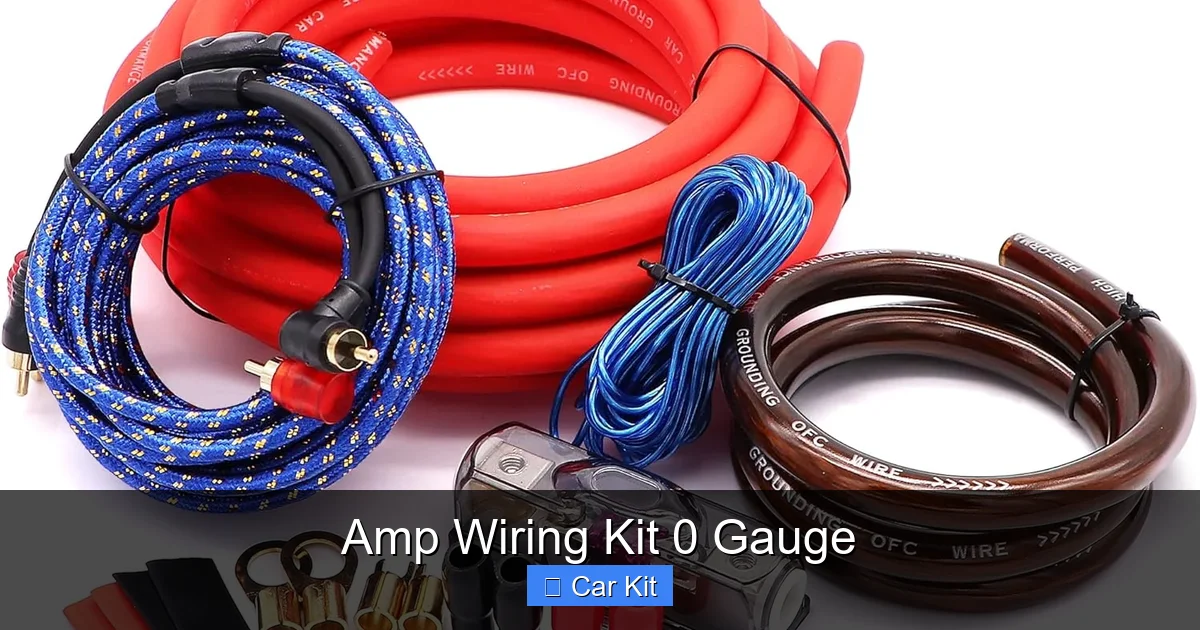
Visual guide about Amp Wiring Kit 0 Gauge
Image source: m.media-amazon.com
Heat and Signal Integrity
When you push 2000 watts through an amp, the current can spike up to 100 amps or more. Thinner wires (< 6 gauge) can heat up, sag, or even melt, creating a dangerous fire hazard. Thick 0 gauge wire keeps voltage drop minimal, ensuring the amp receives clean, stable power and reducing distortion.
When 0 Gauge Is Necessary
- Large, high‑power amps (1500 W+)
- Multiple amplifiers sharing a power source
- Systems with long run lengths (> 20 ft)
- High‑end audio setups demanding peak performance
For smaller amps (under 800 W) or short runs, a 4 or 6 gauge wire may suffice. But for a 2000‑watt setup, 0 gauge is the safest bet.
Components of a 0 Gauge Amp Wiring Kit
What’s Inside the Box?
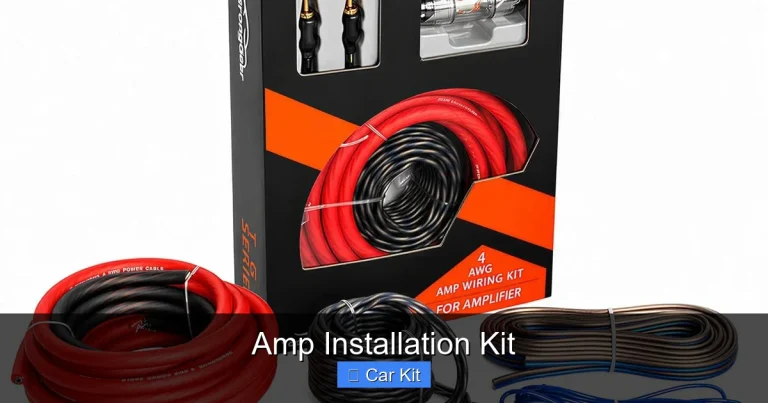
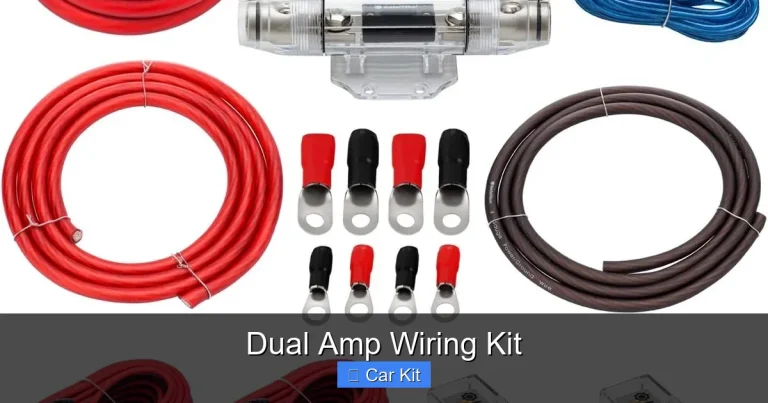
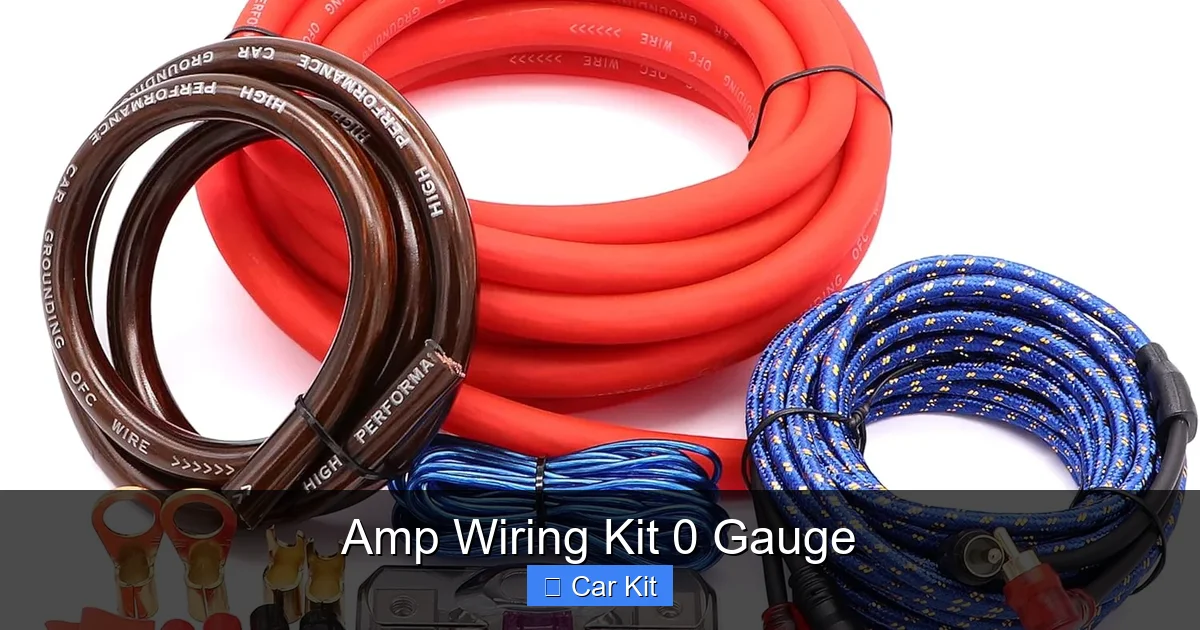
A complete 0 gauge kit usually contains:
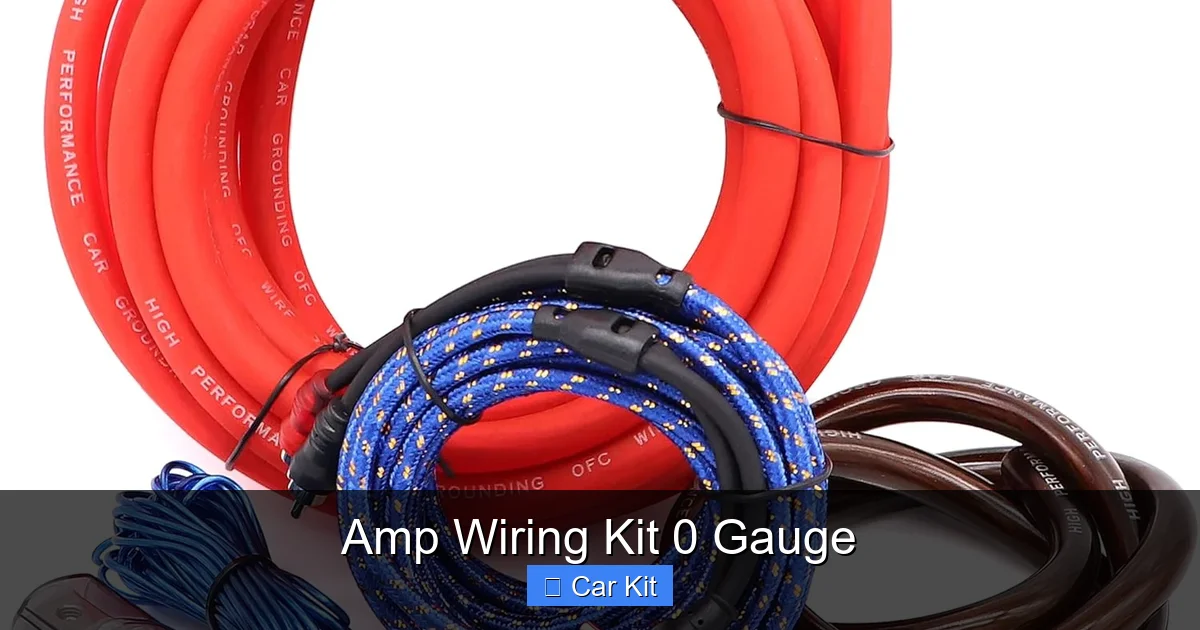
Visual guide about Amp Wiring Kit 0 Gauge
Image source: m.media-amazon.com
- 0 gauge power wire (positive and negative)
- High‑current connectors (e.g., butt splices, ring terminals)
- Heat‑shrink tubing and cable ties
- Ground strap or bus bar
- Installation instructions
Choosing Between Solid‑Core and Stranded Wire
Solid‑core wires are rigid and great for fixed runs. Stranded wires are flexible and easier to route, especially around tight corners. If you’re installing in a truck bed or a car with limited space, a stranded 0 gauge wire can make the job smoother.
Connector Types Worth Noting
For a robust connection, look for:
- DeWalt or 3M butt splices for a solid joint
- Ring terminals for quick, screw‑tight connections
- Heat‑shrink tubing to protect the splice from moisture
Step‑by‑Step Installation Guide
Planning Your Route
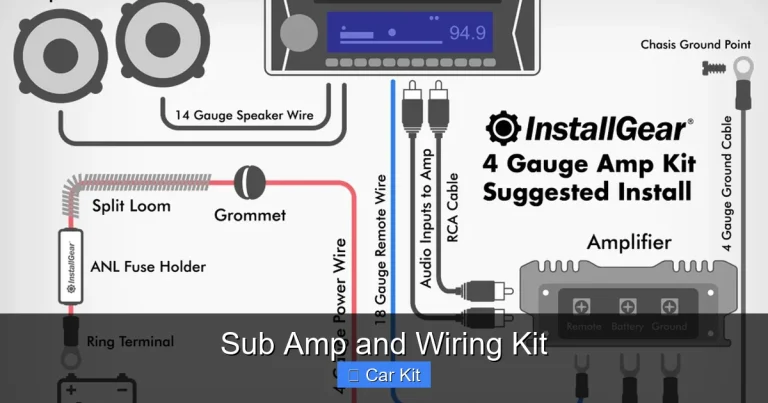
Before you cut any wire, plan the path:
Visual guide about Amp Wiring Kit 0 Gauge
Image source: m.media-amazon.com
- Start at the battery or main fuse block
- Run the wire to the amp’s power terminals
- Keep the run as straight and short as possible
- Avoid heat sources or moving parts
Tools You’ll Need
- Wire strippers (good for 0 gauge)
- Crimping tool (for ring terminals)
- Heat gun (for shrink tubing)
- Voltage tester (to confirm power)
Installation Steps
- Strip the Wire: Remove about 1 inch of insulation from each end.
- Attach Terminals: Crimp a ring terminal onto the stripped end.
- Secure the Connection: Tighten the ring terminal onto the battery post or fuse block with a wrench. Repeat for the negative side.
- Run the Wire: Route the wire along your planned path, securing it with cable ties every 18‑24 inches.
- Connect to the Amp: Use a butt splice or ring terminal to attach the wire to the amp’s power terminals.
- Insulate: Slide heat‑shrink tubing over any exposed splices, then shrink with a heat gun.
- Ground Properly: Attach the negative wire to a clean, rust‑free metal grounding point near the amp.
- Test: Turn on the system and check for any voltage drop or overheating.
Common Pitfalls to Avoid
- Using a fuse that’s too small for the amp’s current rating
- Leaving the negative ground loose or on a painted surface
- Routing wire through hot engine compartment without proper shielding
- Forgetting to secure the wire against vibration
Real‑World Example: 2000‑Watt Amp in a 2015 Chevy Silverado
Last month, I helped a friend install a 2000‑watt amp in his Chevy Silverado. The kit included 0 gauge wire, ring terminals, and a 200‑amp fuse. Here’s how the installation went:
- Battery to Amp: The 0 gauge run was 15 ft, so voltage drop was negligible.
- Fuse Rating: A 200‑amp fuse was installed in the main fuse panel.
- Ground: The negative wire was clamped to the frame near the rear differential.
- Result: The amp ran hot, but the wire stayed cool, and the bass was punchy and distortion‑free.
Bottom line: the 0 gauge kit delivered reliable power, and the system operated safely at full volume.
Comparing 0 Gauge to Other Common Gauges
0 Gauge vs. 4 Gauge
4 gauge wire can carry up to 70 amps. If your amp draws more than that, you’ll see voltage drop and heat. In contrast, 0 gauge offers a safety margin for high‑current amps.
0 Gauge vs. 2 Gauge
2 gauge is a step below 0 gauge, handling up to 115 amps. For amps under 1200 W, 2 gauge might suffice, but for a 2000‑W amp, 0 gauge is the better choice.
0 Gauge in the Context of Subwoofer Installations
When running a subwoofer’s high‑power amp, the wiring demands are similar to a main amp. A 0 gauge kit ensures the subwoofer gets the power it needs without compromising ground integrity.
Maintenance Tips for 0 Gauge Wiring
Regular Inspections
Every few months, check for:
- Loose connectors
- Corrosion on terminals
- Signs of wear or fraying
Cleaning Grounds
Use a brass brush and contact cleaner to keep the grounding point free of rust and paint.
Re‑tightening Fuses
After a long drive, vibrations can loosen fuses. Inspect and tighten if needed.
Related Resources for Further Reading
Want to dive deeper into amp installation or explore other kit options? Check out our 10 Gauge Amp Wiring Kit for a mid‑range power solution, or our 4 Gauge Amp Kit Walmart if you’re looking for a budget-friendly choice. For a specialized subwoofer setup, our Subwoofer Amp Wiring Kit guide offers a comprehensive walkthrough.
Conclusion: Power, Performance, and Peace of Mind
Installing a 0 gauge amp wiring kit isn’t just a technical task—it’s a commitment to safety, durability, and sonic excellence. By choosing the right gauge, planning your route, and following proper installation steps, you can enjoy a powerful audio experience without compromising your vehicle’s safety.
Remember, the right wiring is the backbone of any high‑performance audio system. With the right tools, a little patience, and a solid 0 gauge kit, you’ll have a system that’s ready to rumble for years to come.
Frequently Asked Questions
What is an Amp Wiring Kit 0 Gauge used for?
An Amp Wiring Kit 0 Gauge is designed for high‑current applications such as aftermarket car audio systems, winches, or marine installations. The 0‑gauge wire can safely carry up to 300 amps, ensuring minimal voltage drop and reliable power delivery.
Can I install an Amp Wiring Kit 0 Gauge myself?
Yes, with basic electrical knowledge and the right tools, most DIY enthusiasts can install the kit. Just be sure to follow proper safety precautions, use appropriate connectors, and secure the wiring away from moving parts.
How does the Amp Wiring Kit 0 Gauge compare to smaller gauge wires?
Compared to 4‑ or 8‑gauge wires, the 0‑gauge wire has a much lower resistance, which reduces heat buildup and voltage loss under heavy loads. This makes it ideal for high‑power setups where performance and safety are critical.
What accessories are typically included in an Amp Wiring Kit 0 Gauge?
Most kits come with the 0‑gauge power cable, a matching ground wire, fuse holders, fuse plugs, heat‑shrink tubing, and high‑quality connectors. Some premium kits also include a distribution block and protective grommets.
Do I need a fuse when using an Amp Wiring Kit 0 Gauge?
Absolutely. A fuse protects the wiring and components from short circuits and overloads. Install a fuse as close to the battery as possible, sized according to the amp rating of your system.
Is the Amp Wiring Kit 0 Gauge suitable for marine or off‑road use?
Yes, many kits are built with marine‑grade or UV‑resistant insulation that can withstand harsh environments. Just ensure all connections are sealed and the wiring is routed away from moisture and heat sources.