Car Parking Allotment Letter Builder Format
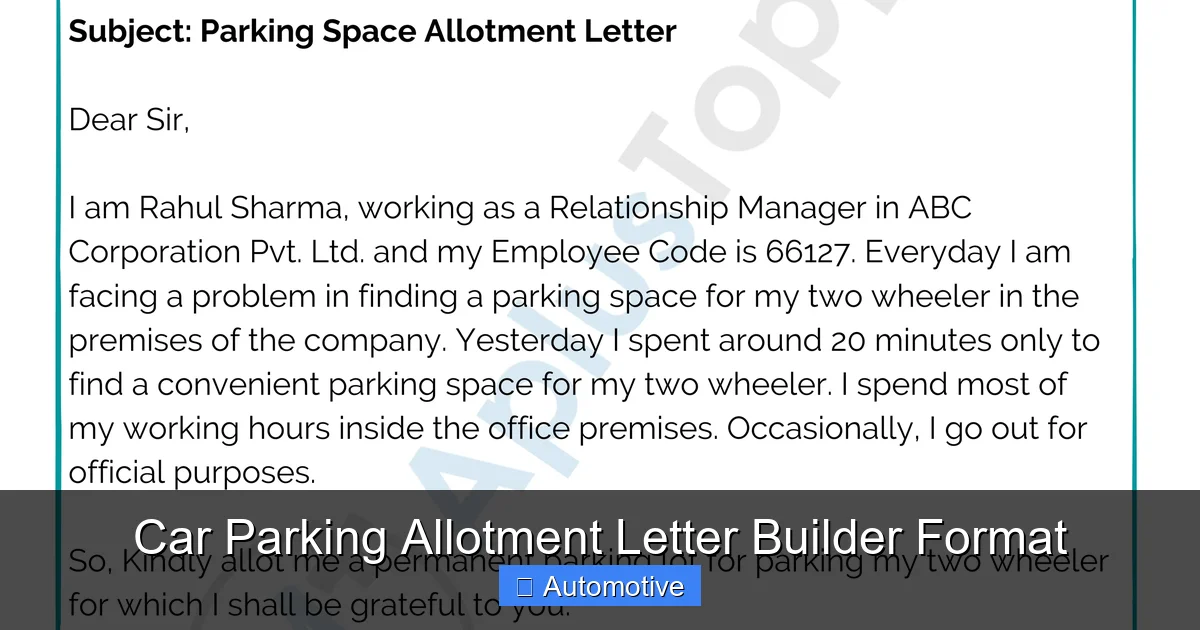
Writing a car parking allotment letter doesn’t have to be a headache. Our step‑by‑step builder format helps you craft clear, professional letters that assign parking spots efficiently. Follow our simple guide, avoid common mistakes, and keep your parking records organized with confidence. Start building your letter today and enjoy stress‑free parking management.
Key Takeaways
- Understand the purpose: Learn why a car parking allotment letter matters for clarity and legal protection.
- Know the core elements: Discover the essential sections every builder format should include.
- Follow a simple process: Use our step‑by‑step guide to gather info, pick a template, and personalize your letter.
- Write with clarity: Choose the right tone, keep sentences short, and provide precise details.
- Avoid common errors: Spot missing data, ambiguous language, and formatting slips before you send it out.
- Use practical examples: Review real‑world templates for employee and visitor parking assignments.
📑 Table of Contents
Understanding Car Parking Allotment Letters
When you manage a workplace, a residential complex, or even a private garage, assigning a specific spot to a driver can feel like a small administrative puzzle. A car parking allotment letter is the formal document that confirms who can park where, for how long, and under what rules. Think of it as the “receipt” for a parking space—just like a lease agreement for a car spot.
Why does this matter? First, it prevents confusion. Without a written record, employees or residents might claim a different space, leading to disputes. Second, it offers legal protection. If a vehicle is damaged or towed, the letter serves as proof of assignment. Finally, a well‑crafted letter shows professionalism and helps property managers keep track of limited resources efficiently.
Why These Letters Matter
Clear communication is the backbone of any successful parking program. A concise letter eliminates guesswork, sets expectations, and reduces the chance of accidental violations. It also streamlines the process for facilities teams, who can quickly verify who owns which spot during audits or emergencies.
Legal protection cannot be overstated. In many jurisdictions, a written allotment is required for insurance claims related to parking incidents. It also helps you enforce rules like visitor hours, disabled spot usage,, or electric vehicle charging privileges without fear of misinterpretation.
Key Components of an Allotment Letter
Every effective car parking allotment letter builder format includes several core sections. Start with the header: your company or organization’s logo, address, and the date. Follow with a subject line that clearly states “Car Parking Allotment Letter – [Employee Name] – Space #123.” The body should contain the recipient’s details, the description of the assigned spot (location, size, any special restrictions), and the terms and conditions governing use.
Don’t forget the signature block for both parties and a footer with contact information. Including a brief clause about modifications and a notice period for revocation adds depth and protects both sides. All of these pieces fit together in a logical flow that a builder format template can guide you through.
The Car Parking Allotment Letter Builder Format Overview
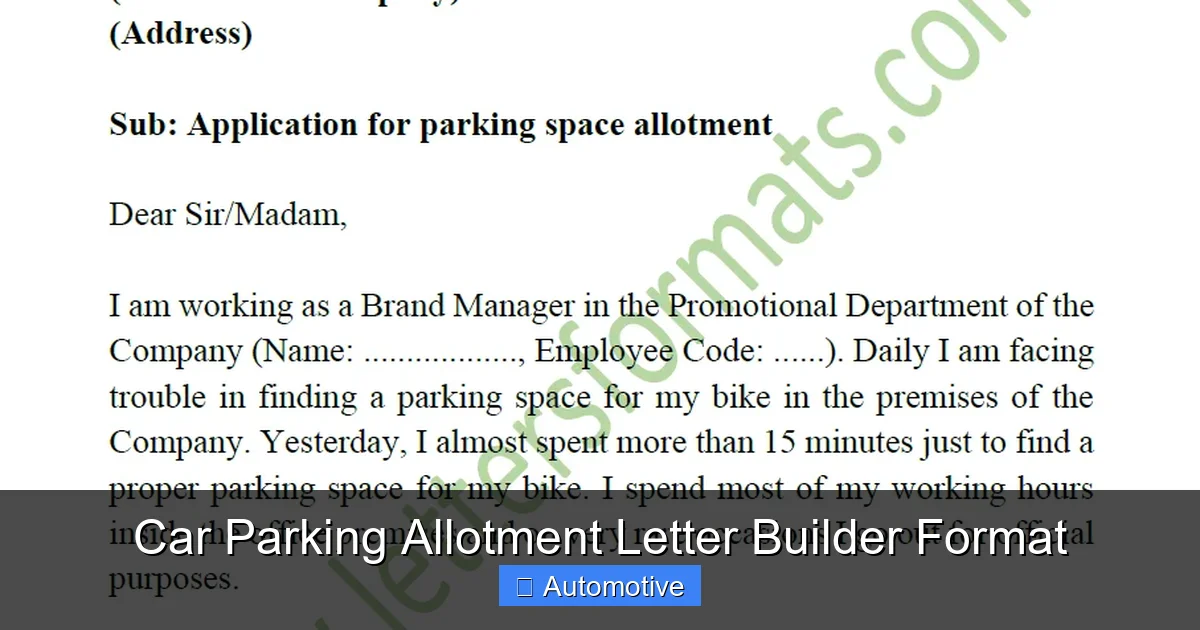
Before you start typing, it’s helpful to understand the overall layout of a builder format. Visual hierarchy matters: headings, bullet points, and whitespace guide the reader’s eye and make the document easy to scan. Most templates use a clean, professional font (like Arial or Times New Roman, 11‑12 pt) and maintain consistent margins (typically one inch on all sides).
Visual guide about Car Parking Allotment Letter Builder Format
Image source: 1.bp.blogspot.com
Within the builder format, sections are separated by clear line breaks and sometimes light shading or a simple border. This structure not only looks polished but also ensures that every required piece of information finds its place. A well‑designed template can also include placeholders for dynamic data—like the employee’s name or the exact spot number—so you can generate multiple letters quickly.
Structure and Layout
Begin with a top‑aligned header that includes your brand’s visual identity. Directly beneath, insert a bold, centered title: “Car Parking Allotment Letter.” The left side of the page usually holds the recipient’s address and contact details, while the right side can display the date. The body flows left‑to‑right, with each paragraph addressing a specific aspect: identification, assignment details, rules, and signatures.
Use bullet points for lists such as prohibited behaviors or required amenities (e.g., “No oversized vehicles,” “Electric charging permitted”). Keep paragraphs short—two to three sentences each—to maintain readability. Finally, end with a signature block that leaves space for the manager’s handwritten signature and printed name, plus a digital timestamp if you prefer electronic records.
Legal Considerations
Even a simple parking assignment can have legal ramifications. Make sure your builder format includes a clause that states the letter does not constitute a lease but rather a revocable permission. Mention any applicable laws, such as local parking ordinances or disability accessibility requirements (ADA compliance). If your organization uses parking permits, reference the permit number and expiration date.
Consider adding a dispute resolution section that outlines how conflicts will be handled—whether through mediation, arbitration, or a direct appeal to management. Including a governing law clause (e.g., “This agreement shall be governed by the laws of the State of [Your State]”) further strengthens the document’s enforceability.
Step‑by‑Step Guide to Building Your Letter
Now that you understand the why and the how, let’s walk through the actual creation process. Think of it as assembling a puzzle where each piece has a clear purpose. This guide will help you use a car parking allotment letter builder format efficiently, whether you’re using an online tool or a pre‑made Word template.
Visual guide about Car Parking Allotment Letter Builder Format
Image source: letterseasy.com
Gather Required Information
Before you open a template, collect all necessary data. You’ll need the employee’s full name, department, and employee ID. Identify the exact parking space—often noted on a site map or in a spreadsheet. Also note any special conditions: visitor hours, disabled spot requirements, or electric vehicle charging access. Having this information ready prevents back‑and‑forth edits later on.
Additionally, decide on the start date of the allotment and any renewal terms. If the organization maintains a parking policy manual, reference its section numbers in the letter to provide context. Having these details in a central place also helps you generate multiple letters for a whole team without errors.
Choose the Right Template
Look for a template that matches your organization’s branding and includes all mandatory sections we discussed. Many websites offer free downloadable Word documents specifically labeled “Car Parking Allotment Letter Builder Format.” When selecting one, check that it has placeholders for dynamic fields, clear headings, and space for signatures.
If you have a preferred style guide, ensure the template follows it. For example, some companies require a corporate logo at the top left, while others prefer a minimalist design. A good template will also include footnotes or help text that explain each field, making the process smoother for anyone filling it out.
Personalize and Review
Open the template and replace the placeholders with your gathered information. Double‑check spelling, grammar, and the accuracy of names and spot numbers. Remember to insert the correct date and ensure the formatting looks uniform across all pages.
Now read the letter from start to finish. Does it flow logically? Are all terms clearly defined? Have you included any necessary attachments, such as a site map or a copy of the parking policy? If you’re unsure, a quick read‑aloud can reveal awkward phrasing or missing pieces.
Practical Tips for Effective Communication
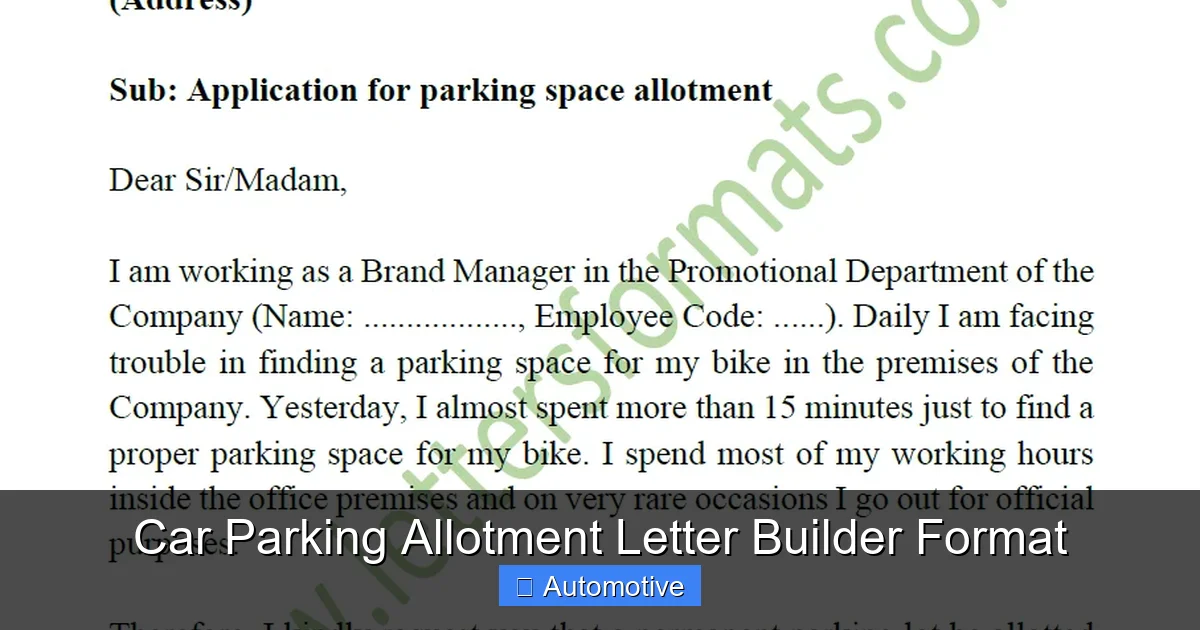
Even the best‑formatted letter can fall flat if the tone or language isn’t right. Parking assignments are often taken seriously, so clarity and professionalism go a long way. Use a friendly yet authoritative voice—think of a helpful colleague guiding a new teammate through a process.
Visual guide about Car Parking Allotment Letter Builder Format
Image source: 1.bp.blogspot.com
Keep sentences short and direct. Instead of “Please be advised that the designated parking space shall be utilized exclusively for the purposes outlined herein,” you might say, “Your assigned spot is for your use only. Follow the parking rules below.” Short sentences improve readability and reduce the chance of misinterpretation.
Tone and Language
When drafting the letter, avoid legal jargon unless you’re explicitly referencing policy documents. Use plain English, but still maintain a professional tone. Phrases like “We appreciate your cooperation” and “Thank you for your attention to these guidelines” soften the authoritative feel while reinforcing expectations.
Consider the audience. For a tech‑savvy team, you might include a brief note about an online parking management portal where they can view updates or request changes. For a more traditional environment, a handwritten signature and a printed copy may be preferred.
Clarity and Details
Every detail matters. Include the exact dimensions of the spot if it’s a compact or large space, as this prevents disputes about vehicle size. Mention any prohibited activities, such as blocking fire exits or using the space for storage. Providing a clear timeline for permit renewal helps everyone plan ahead.
Also, be explicit about consequences for non‑compliance. A simple line like “Repeated violations may result in revocation of parking privileges” sets clear expectations. Pairing this with a reference to the organization’s broader disciplinary policy adds weight without being overly punitive.
Common Pitfalls and How to Avoid Them
Even seasoned managers can slip up when creating parking allotment letters. The most frequent errors include missing information, vague language, and inconsistent formatting. Spotting these issues early can save time, money, and potential legal headaches.
One common mistake is forgetting to include the employee’s full legal name as it appears on official documents. Another is omitting the exact spot number or location, which can cause confusion when multiple spaces look similar. Inconsistent fonts, sizes, or margins can also make the document look unprofessional and may be flagged by automated compliance checks.
Missing Information
Always run a checklist before sending the final letter. Verify that you have the recipient’s name, address, phone number, and email. Confirm the assigned spot number, start date, and any special conditions. If your organization uses a parking permit system, ensure the permit number and expiration date are present.
Consider using a digital checklist tool that highlights each required field. Many builder format tools include validation checks that alert you when a placeholder remains unfilled. This simple step can eliminate the majority of missing data issues.
Ambiguous Terms
Vague wording invites misinterpretation. Phrases like “reasonable use” or “as needed” may be interpreted differently by each party. Replace them with specific, measurable language. For example, instead of “the space may be used for personal vehicles,” state “the space is designated for a single passenger vehicle not exceeding 6 feet in length.”
Also, clarify any time restrictions. Rather than “visitors may park for a limited time,” specify “visitors may park for up to 4 hours between 8 AM and 6 PM on weekdays.” Precise terms reduce the likelihood of disputes and make enforcement easier.
Frequently Used Examples and Templates
Seeing real‑world examples can make the abstract concept of a builder format concrete. Below are two common scenarios: an employee parking assignment and a visitor parking authorization. Feel free to adapt these templates to fit your organization’s needs.
Employee Parking Example
[Your Company Letterhead]
[Date]
[Employee Name]
[Employee ID: 12345]
[Department: Marketing]
Dear [Employee Name],
This letter confirms that you have been assigned Parking Space #42 in the main garage, effective [Start Date]. The space is designated for your personal use and is subject to the following rules:
- Only vehicles not exceeding 6 feet in length may occupy the spot.
- No tools, equipment, or storage items are allowed in the space.
- Visitors may park for a maximum of 4 hours per visit.
- Electric vehicles may use the spot if equipped with a Type 2 charger.
Please sign below to acknowledge receipt of this assignment. Your parking privileges will be reviewed annually.
_________________________
[Employee Signature]
_________________________
[Manager Signature]
_________________________
[Manager Name], [Title]
If you need to modify your assignment, contact facilities at [email] or call [phone number].
Visitor Parking Example
[Your Company Letterhead]
[Date]
[Visitor Name]
[Visiting Organization: XYZ Corp]
Dear [Visitor Name],
Based on your scheduled visit, we authorize parking in Visitor Lot B, Space V-09, from [Visit Date] to [Visit Date]. This authorization is valid only for the dates listed and for vehicles displaying the provided permit tag.
Rules:
- Parking is limited to 24 hours per stay.
- Do not block emergency access routes.
- Return the permit tag upon departure.
Thank you for your cooperation.
_________________________
[Facility Manager Signature]
[Facility Manager Name], [Title]
[Contact Information]
Conclusion
Creating a car parking allotment letter doesn’t have to be a daunting task. By following a reliable builder format, gathering the right information, and paying attention to detail, you can produce clear, professional letters that protect both you and your occupants. Whether you’re assigning a permanent spot to an employee or granting temporary visitor access, the steps outlined here will help you navigate the process smoothly.
Remember to keep the language simple, use consistent formatting, and always double‑check for missing details. If you ever feel uncertain about any clause, refer to your organization’s parking policy manual or consult a legal professional. With a solid template and a clear process, your parking management will become more organized, less error‑prone, and ultimately, more enjoyable for everyone involved.
Ready to start? Grab a template, fill in the blanks, and watch your parking assignments become a breeze. And while you’re at it, consider checking out our guide on best car jacks to ensure you can safely maneuver your vehicle into the newly allotted spot. For keeping the space spotless, explore our article on best car wash soaps to maintain that fresh‑look every day. And if you ever need a reliable power source for your electric ride while parked, take a look at the best car battery portable jump starter to stay prepared.
Frequently Asked Questions
What is a car parking allotment letter?
A car parking allotment letter is a formal document that assigns a specific parking space to an individual or organization. It outlines the rights, responsibilities, and rules governing the use of that spot.
Why do I need a builder format for this letter?
A builder format ensures consistency, completeness, and professionalism. It guides you through each required section, reducing the risk of missing critical information or legal elements.
How do I customize a template for my organization?
Start by gathering the necessary details (name, spot number, dates). Then replace placeholders in the template with your specific information, adjust any branding elements, and verify that all policy references are accurate.
What are common pitfalls to avoid?
Missing data, ambiguous language, and inconsistent formatting are frequent errors. Use a checklist, write in clear terms, and maintain uniform fonts and margins throughout the document.
Can I use the same format for visitor parking?
Yes. The core structure remains the same, but visitor letters typically include a limited date range, specific lot designation, and a permit tag instruction rather than a permanent assignment.
Is legal advice needed for this letter?
While a basic template covers most everyday needs, complex situations—such as disputes over disabled spots or long‑term leases—may benefit from legal review to ensure full compliance with local regulations.