Is Toyota Ae86 a Good Car?
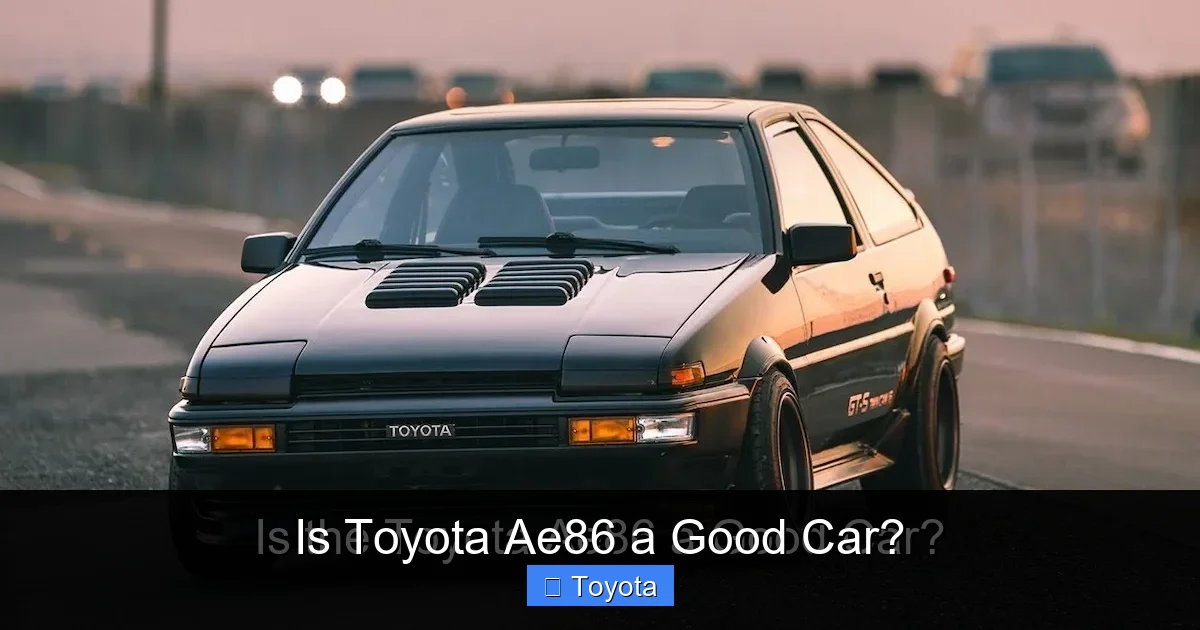
The Toyota AE86 is an exceptional car that has earned its legendary status through decades of motorsport heritage and pop culture fame. With its lightweight rear-wheel-drive chassis, balanced handling characteristics, and the iconic 4A-GE engine, it delivers an engaging driving experience that modern sports cars often struggle to match. Affordable, reliable, and endlessly tunable, the AE86 remains one of the best enthusiast cars available, making it a fantastic choice for anyone seeking pure driving enjoyment.
“`html
If you’ve spent any time around car enthusiasts, you’ve probably heard the name AE86 whispered with reverence. Maybe you saw it in Initial D, or maybe a friend won’t stop talking about their “hachiroku.” But beyond the pop culture fame and drift scene legacy, you might be wondering: is the Toyota AE86 actually a good car for everyday use? Is it reliable? Practical? Worth the money today? Let’s dive in and figure out if this rear-wheel-drive legend earns a spot in your garage—or if it’s better left as a weekend toy.
I still remember the first time I slid behind the wheel of an AE86. The engine sang, the short shifter felt perfect in my hand, and suddenly every on-ramp looked like a playground. But I also noticed the lack of power steering at low speeds, the cramped back seat, and how every little noise seemed to demand attention. That’s the AE86 experience in a nutshell—thrilling, engaging, and occasionally demanding. If you’re looking for a comfortable cruiser that silently devours highways, this might not be your match. But if you crave connection, simplicity, and a car that makes you feel like a driver rather than a passenger, the AE86 could be your perfect match.
Key Takeaways
- Excellent handling: The AE86’s lightweight, rear-wheel-drive setup delivers a thrilling, engaging driving experience.
- Affordable classic: Rising popularity hasn’t yet made it unattainable, offering good value for enthusiasts seeking iconic JDM cars.
- Maintenance is key: Parts availability is decent, but sourcing quality components and regular upkeep require dedication and budget.
- Not for daily use: Lacks modern comfort, safety features, and practicality, making it better suited as a weekend or project car.
- Investment potential: Well-maintained, original examples are appreciating steadily, particularly in markets like the US and Japan.
- Beginner-friendly tuning: Simple mechanics and a strong aftermarket make it an ideal platform for learning performance modifications.
- Cult following matters: Owning an AE86 connects you to a passionate community, enhancing the overall ownership experience.
📑 Table of Contents
The Heritage Behind the Hachiroku
To understand if the AE86 is a good car, you have to understand where it came from. Introduced in 1983, the AE86 was part of Toyota’s fifth-generation Corolla lineup. “AE86” refers to the chassis code, and “hachiroku” is Japanese for “eight-six.” Toyota built this car during a time when they were focusing on efficiency and reliability, yet they somehow crafted a machine that would become a driver’s dream.
The AE86 was unique because it combined a lightweight body with rear-wheel drive and a modest but rev-happy 1.6-liter engine. In an era when many cars were front-wheel-drive and increasingly front-heavy, the AE86 stood out as a balanced, nimble alternative. It was sold as both a coupe and a sedan, with the coupe becoming the iconic version we remember today. Toyota’s philosophy was simple: give the driver a pure, unfiltered experience without unnecessary electronic nannies or power-boosting gimmicks.
This heritage is exactly why the AE86 has such a cult following. It wasn’t trying to be the fastest car on the street; it was trying to be the most fun. And in that mission, it absolutely succeeded. But does that old-school charm translate to a good daily driver in 2024? Let’s look at the specifics.
Engine and Performance Specs
Under the hood of the AE86 sits the 4A-GE engine, a 1.6-liter inline-four that produces around 128 horsepower. On paper, those numbers might sound modest, but this engine is legendary for its rev-happy nature. It can rev up to 8,000 RPM or more, delivering power smoothly as you climb the tachometer. The “GE” version featured a dual overhead camshaft and was built with precision that enthusiasts still admire today.
Paired with a close-ratio 5-speed manual transmission, the AE86 feels eager to shift and eager to drive. The rear-wheel-drive layout means you can drift it, powerslide it, or simply enjoy the balanced feel through corners. It’s not about straight-line speed—it’s about how the car feels when you’re attacking a twisty road. The engine might not win drag races, but in the right hands, it’s more than capable of putting a smile on your face.
Design That Ages Like Fine Wine
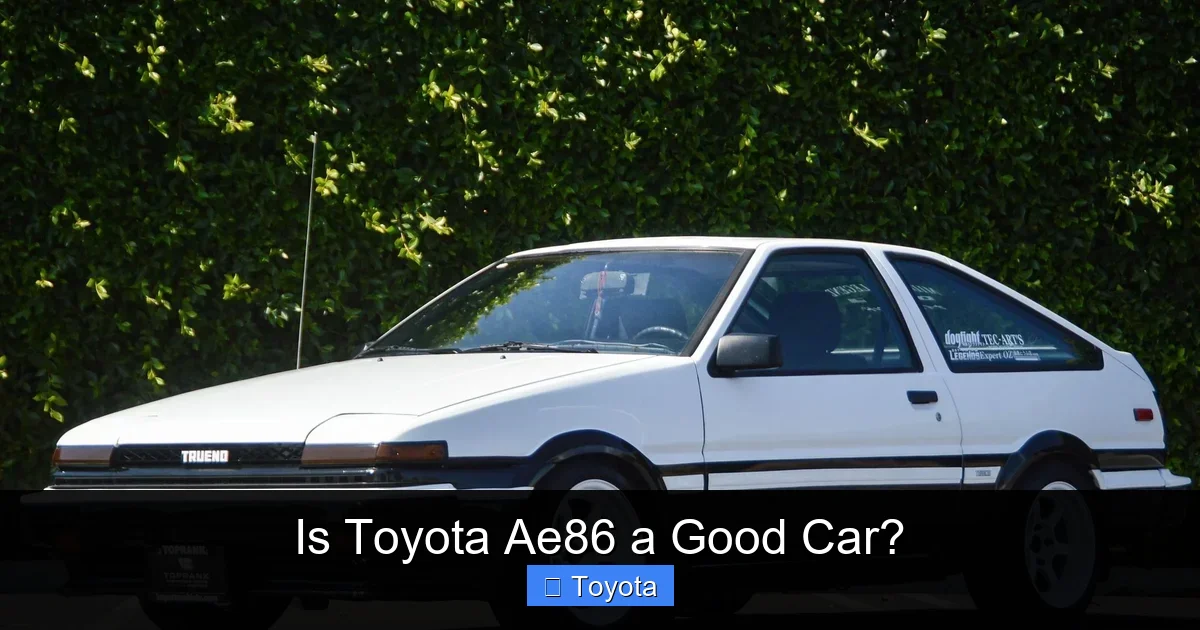
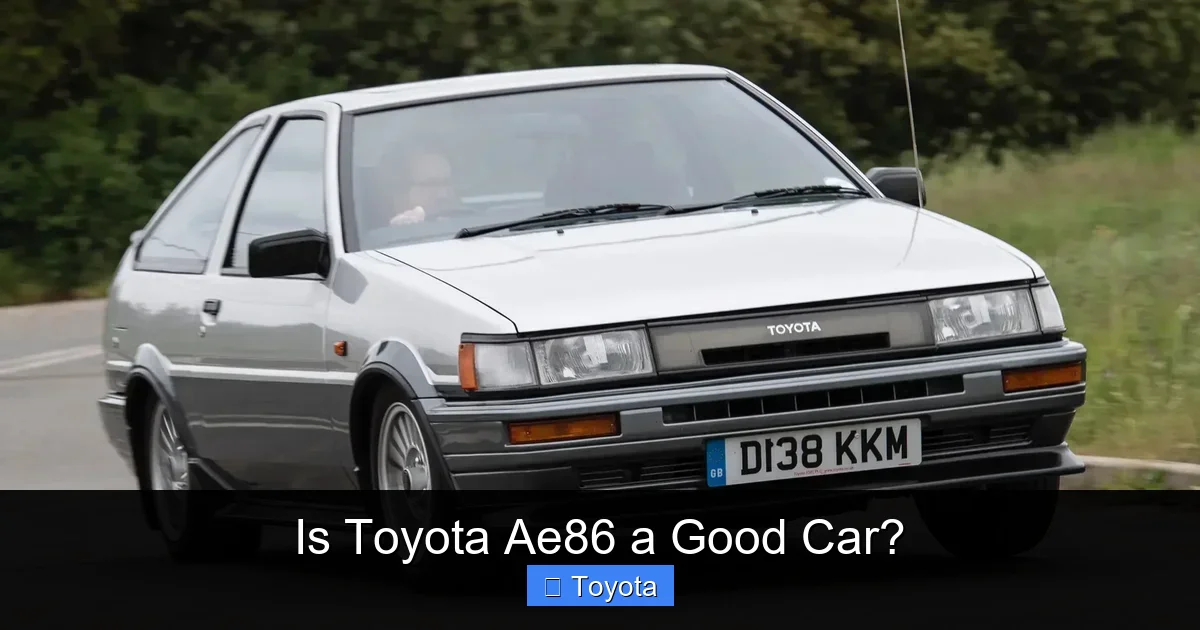
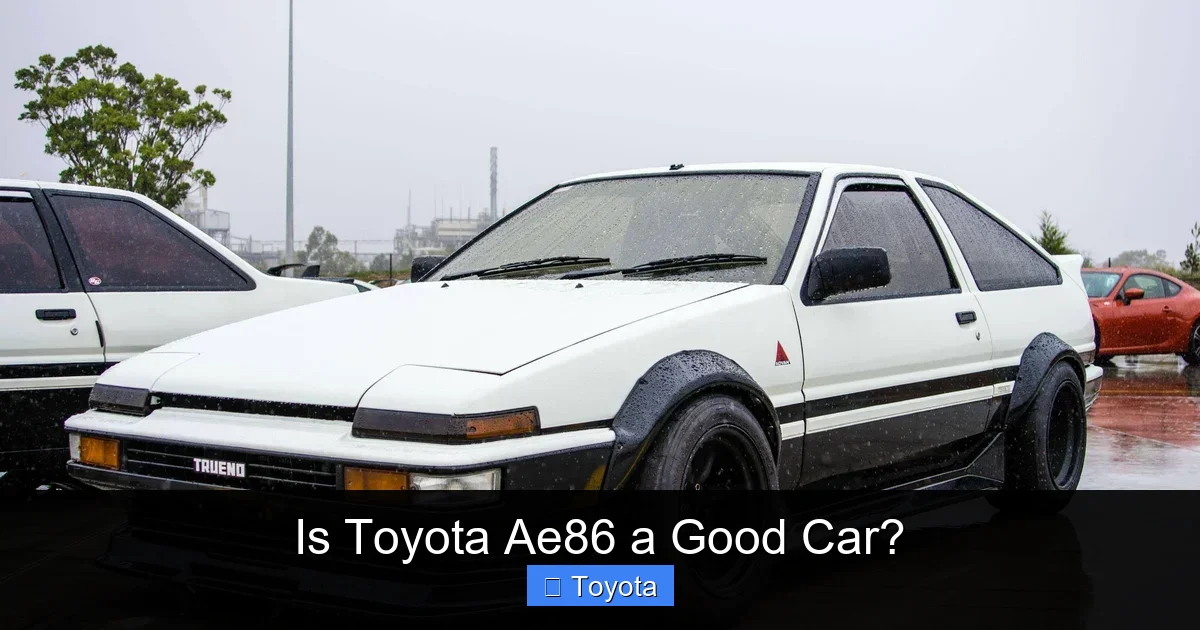
One look at the AE86 and you can see why it still turns heads today. The boxy, slightly aggressive stance, the pop-up headlights, and the clean lines give it a timeless appeal. Toyota didn’t overdesign this car; they kept it simple and functional. That simplicity is part of its charm.
Visual guide about Is Toyota Ae86 a Good Car?
Image source: aautomotives.com
The interior is driver-focused rather than passenger-focused. You’ll find a straightforward dashboard, comfortable bucket seats in the coupe version, and a layout that puts all the essential controls within easy reach. Rear seat room is limited, but that’s expected for a car of this size and era. The trunk is decent for groceries or a weekend bag, making it surprisingly practical for a sports coupe.
One thing I love about the AE86’s design is its proportions. The long hood, short overhangs, and balanced stance make it look fast even when it’s standing still. And because so many were built, finding one in good condition is possible, though rust can be a concern in regions with heavy salt use during winter.
Driving Dynamics: Why Enthusiasts Adore It
If you ask an AE86 owner why they love the car, they’ll likely talk about the feeling of connection. There’s something special about a car that doesn’t try to isolate you from the road. The steering is direct, the pedals are well-placed, and the gearshift has a mechanical feel that many modern cars lack. You feel every bit of road surface, every change in grip, and every moment of balance.
Visual guide about Is Toyota Ae86 a Good Car?
Image source: aautomotives.com
The suspension setup, while not sophisticated by today’s standards, is tuneable and forgiving. Many owners choose to upgrade sway bars, struts, or bushings to sharpen the handling, but the stock setup is surprisingly capable. The weight distribution is nearly 50/50, which means the car rotates willingly when you lift off the throttle or add opposite lock. It’s a playground for learning car control, and many driving schools still use AE86s to teach fundamentals.
But let’s be real—driving an AE86 in modern traffic requires patience. The brakes are adequate for the era but may feel spongy compared to today’s four-piston setups. The lack of power steering can be a workout in parking lots. And the five-speed manual transmission, while delightful, requires precise shifting to keep the engine in its power band. If you’re willing to accept these quirks, the reward is a driving experience that’s becoming increasingly rare.
Practical Ownership: Pros and Cons
Owning an AE86 today is a bit like adopting a vintage guitar—it’s beautiful and sounds amazing, but it requires care and attention. Let’s break down what daily life with an AE86 actually looks like.
Visual guide about Is Toyota Ae86 a Good Car?
Image source: aautomotives.com
Pros
- Reliability: Toyota built the AE86 to last. The 4A-GE engine is known for durability when maintained properly. Many examples on the road today have over 200,000 miles on the original block.
- Community Support: The AE86 has one of the most passionate owner communities out there. Parts are still available, whether you need suspension components, engine rebuild parts, or cosmetic upgrades. Forums and meetups are plentiful, making it easy to find advice and friendship.
- Value Retention: Unlike many cars from the 1980s, the AE86 has held its value remarkably well. Clean, original examples often appreciate, and even rough drivers find a market among enthusiasts.
- Simplicity: There are no complex electronic systems to fail. No traction control, no complicated infotainment—just you, the driver, and the machine. When something breaks, it’s usually straightforward to diagnose and fix.
Cons
- Rust Issues: As with many Japanese cars of this era, rust can be a significant problem, especially in the wheel arches, floor pans, and rear subframe. A pre-purchase inspection is essential.
- Parts Cost: While availability is good, OEM parts can be pricey. Aftermarket support is strong, but high-quality components aren’t always cheap.
- Fuel Economy: Don’t buy an AE86 expecting great MPG. The 4A-GE engine is efficient for its performance, but you’ll likely see around 25-30 MPG mixed driving, which is respectable but not class-leading.
- Comfort Compromises: Firm suspension, manual steering, and a lack of modern noise insulation mean the AE86 can be tiring on long highway trips. It’s best suited for weekend jaunts and canyon carving.
One practical tip: if you’re considering an AE86 as a daily driver, budget for a thorough mechanical inspection before purchase. Check the cooling system (the 4A-GE can run hot in stop-and-go traffic), inspect for rust in hidden areas, and test the clutch feel. Many AE86s for sale have been modified, so look for a service history if you want a stock or gently used example.
AE86 vs. Modern Competitors
How does the AE86 stack up against cars you can buy new today? The honest answer: it depends on what you value. If you compare it to a modern Toyota GR86 or Subaru BRZ, the AE86 is lighter and more analog, but it lacks the refined power, safety features, and daily comfort of its descendants. The new GR86 has more horsepower, better fuel economy, and a warranty—things the AE86 can’t match.
But if you compare the AE86 to other enthusiast cars from the 1980s—like the Mazda RX-7, Nissan 240SX, or Volkswagen GTI—it holds its own remarkably well. The RX-7 might have rotary power, but it comes with fuel consumption and reliability concerns. The 240SX is similar in spirit but often lacks the AE86’s legendary engine reputation. The GTI offers more practicality and daily comfort, but it’s front-wheel-drive, which changes the driving feel entirely.
The AE86 occupies a unique niche: it’s a car that asks you to engage with the driving process. Modern cars are faster, more comfortable, and more capable, but they often numb the driver to the road. The AE86 does the opposite—it demands your attention and rewards your skill. If that sounds appealing, the AE86 is a fantastic choice. If you want a polished daily driver that does everything well, you might look elsewhere.
Is the AE86 a Good Investment?
Many people ask me if the AE86 is a smart financial move. The answer is: it can be, but it depends on what you’re looking for. As mentioned earlier, clean, low-mileage examples have been appreciating in value. However, not every AE86 will make you money. A rough driver that needs extensive rust repair might cost more to fix than it’s worth as an investment.
If you’re buying with an eye toward appreciation, focus on originality. Cars with stock engines, original paint (or quality restoration), and documented maintenance history tend to hold value best. Modified AE86s are fun to drive, but they appeal to a smaller subset of buyers, which can affect resale value.
That said, most AE86 owners don’t buy them as investments. They buy them because they love driving them. The joy of owning and driving an AE86 is priceless, and if that’s your motivation, the financial aspect becomes secondary. Just be prepared for the reality that maintaining a 40-year-old car requires both money and passion.
Maintenance Tips for AE86 Owners
- Change the coolant regularly—the 4A-GE engine can overheat if the system isn’t maintained.
- Inspect the rear subframe and control arms for rust; this is a common failure point.
- Use quality oil and stick to change intervals; the engine revs high and deserves good lubrication.
- Check the suspension bushings; many aftermarket polyurethane options improve response without sacrificing too much comfort.
- Keep the interior clean and protected from sun damage; original dashboards can crack over time.
Data: AE86 Market Values
To give you a better sense of the current market, here’s a snapshot of typical AE86 pricing based on condition and region. Prices fluctuate based on demand, but this should give you a baseline for negotiations.
| Condition | Price Range (USD) | Notes |
|---|---|---|
| Excellent/Clean | $15,000 – $25,000+ | Low mileage, original condition, documented history |
| Good/Driver Quality | $8,000 – $15,000 | Needs some work but safe to drive, may have minor modifications |
| Project/Restoration | $3,000 – $8,000 | Significant rust or mechanical issues, sold as-is |
As you can see, the AE86 market spans a wide range. If you’re patient and willing to do some wrenching, there are opportunities to find great deals. If you want a turnkey driver in pristine condition, expect to pay a premium.
Final Verdict: Should You Buy One?
So, is the Toyota AE86 a good car? The answer is: it depends entirely on what you’re looking for in a driving experience. If you value raw engagement, simplicity, and a car that makes you feel like a pilot rather than a passenger, the AE86 is an exceptional choice. It’s a vehicle that rewards skill, invites modification, and connects you to the road in a way few modern cars can match.
On the other hand, if you need a comfortable daily commuter with excellent fuel economy, advanced safety features, and a quiet highway manner, the AE86 will likely frustrate you. Its quirks are part of its charm, but they’re also precisely why it’s not for everyone.
My advice? If you find an AE86 that speaks to you, take the time to inspect it thoroughly, talk to current owners, and even spend a weekend driving one before committing. The AE86 isn’t just a car; it’s a personality. And when you find the right one, it becomes more than transportation—it becomes a source of daily joy.
Whether you end up buying one or simply appreciate it from afar, the AE86’s legacy as one of Toyota’s most beloved cars is secure. It proved that you don’t need massive horsepower or cutting-edge technology to create something special—sometimes, all you need is balance, a rev-happy engine, and a driver who knows how to have fun.
Related reading: 2016 Toyota Corolla value for comparison, or learn about tire rotation costs at Toyota for maintenance planning.
Frequently Asked Questions
Is the Toyota AE86 a reliable car?
Yes, the Toyota AE86 is generally reliable, thanks to its simple mechanical design and robust engine. However, as a 30‑year‑old vehicle, owners should watch for wear on suspension components and rust. Regular maintenance can keep it running smoothly for years.
What makes the Toyota AE86 popular among enthusiasts?
The Toyota AE86’s popularity stems from its lightweight chassis, rear‑wheel‑drive balance, and sharp handling that make it fun to drive. Its cultural fame from the anime Initial D also boosts enthusiast interest. Consequently, it remains a favorite in the tuner and drift scenes.
How does the performance of the Toyota AE86 compare to modern hatchbacks?
Compared to modern hatchbacks, the AE86 offers less horsepower but a more engaging, responsive driving feel thanks to its precise steering and low curb weight. Modern cars typically have higher power and advanced tech, yet the AE86’s simplicity is prized by purists. Overall, it may not be as fast, but it delivers a more connected driving experience.
Is the Toyota AE86 good for daily driving?
The Toyota AE86 can serve as a daily driver, especially for those who value a compact size and maneuverable nature. Its interior space is limited and comfort is modest, so long‑distance comfort may be lacking. If you enjoy a sporty feel and have short commutes, it works well as a daily car.
Does the Toyota AE86 have good fuel efficiency?
Fuel efficiency in the Toyota AE86 is decent, typically delivering around 30 mpg combined, which is respectable for a performance‑oriented vehicle of its era. The modest engine and lightweight body contribute to lower fuel consumption. However, it won’t match the efficiency of newer, more aerodynamic models.
Why do people consider the Toyota AE86 a good investment?
Many view the Toyota AE86 as a good investment because its values have been rising as the model becomes rarer. Low production numbers and strong enthusiast demand support its appreciation over time. Buying one now can potentially yield a profitable resale in the future.