Why Does My Toyota Camry Make a Whining Noise?
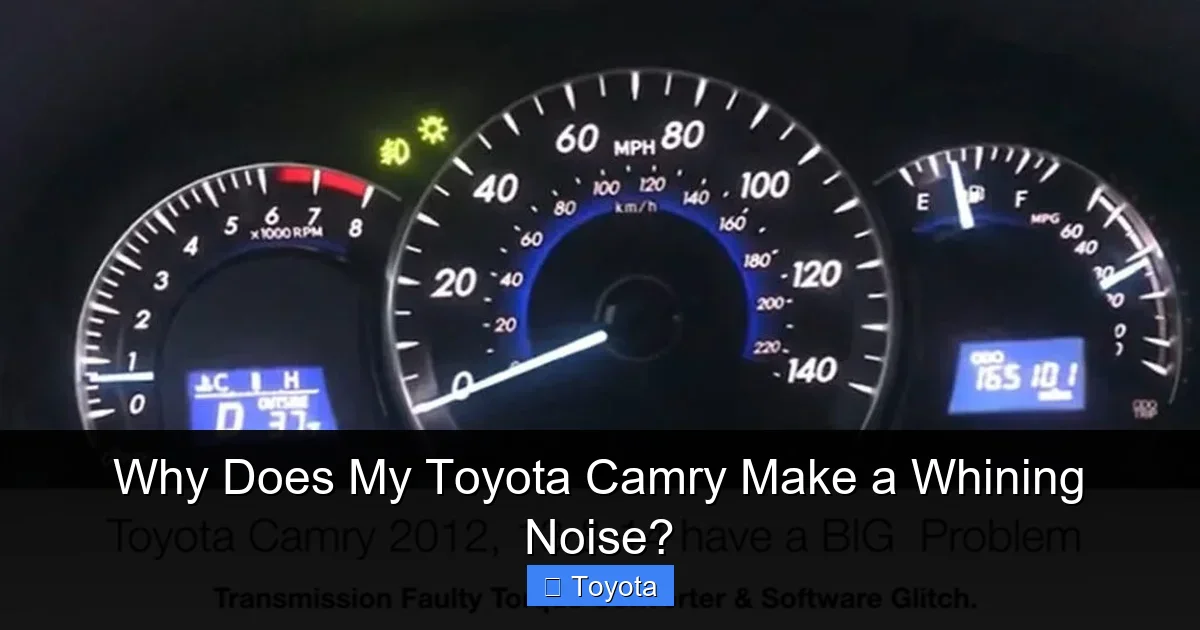
If your Toyota Camry is making a whining noise, it is usually a sign that a specific component is failing or needs maintenance. Common culprits include low power steering fluid, worn bearings, or transmission issues. Identifying the sound early can save you from expensive repairs.
There is nothing quite like the smooth, reliable ride of a Toyota Camry. For years, this car has been a staple for commuters and families alike because it just works. But what happens when that peaceful drive is interrupted by a strange, high-pitched whining noise? It can be incredibly unsettling. You might find yourself wondering if your engine is about to fail or if you are about to face a massive repair bill.
The first thing you should know is that not every noise is a death sentence for your car. Sometimes, a whine is just a simple fix, like topping off a fluid. Other times, it might indicate something more serious deep within the drivetrain. Because the Camry is such a precision-engineered vehicle, even a small change in sound can tell a story about what is happening under the hood.
In this guide, we are going to walk through the most common reasons why your Toyota Camry might be whining. We will look at different types of sounds, when they happen, and what you can do to address them. By the time you finish reading, you will have a much better idea of how to talk to your mechanic and what to watch out for.
Key Takeaways
- Listen to the timing: The moment the noise occurs (idling vs. accelerating) helps pinpoint the source.
- Check fluids: Low power steering fluid is a very common cause of whining during turns.
- Transmission alert: A whine that changes with vehicle speed often points to transmission fluid or internal gear issues.
- Act fast: Ignoring mechanical noises can turn a simple fix into a major engine or transmission overhaul.
li>Bearing wear: A high-pitched whine often indicates a failing alternator, water pump, or wheel bearing.
📑 Table of Contents
Common Causes of Whining Noises in a Toyota Camry
When you hear a whine, the first step is to pay attention to the “when.” Does it happen when you turn the steering wheel? Does it happen only when you are accelerating? Or does it happen while you are sitting at a red light? The timing of the sound is your biggest clue.
Power Steering Issues
One of the most frequent reasons for a whining noise in a Camry is the power steering system. If you notice the sound specifically when you are turning the steering wheel left or right, you likely have a power steering issue. This is often caused by low fluid levels or air trapped in the system. When the fluid is low, the pump has to work harder and pulls in air bubbles, which creates a distinct, annoying whine.
To fix this, you should check your power steering fluid reservoir. If the level is low, top it off with the specific fluid recommended in your owner’s manual. If the sound persists, you might have a leak in a hose or a failing power steering pump that needs professional attention.
Alternator and Belt Issues
If the whining noise is constant and seems to get higher in pitch as you rev the engine, you might be looking at an issue with the alternator or the serpentine belt. The alternator is responsible for keeping your battery charged while you drive. If the internal bearings of the alternator start to wear out, they will emit a loud, consistent whine.
Similarly, a worn or loose serpentine belt can cause various noises. If the belt is slipping or the tensioner is failing, it can create a squealing or whining sound. Since the Camry relies on a complex system of belts to power many components, keeping these in good shape is vital for the longevity of your vehicle.
Transmission-Related Whining
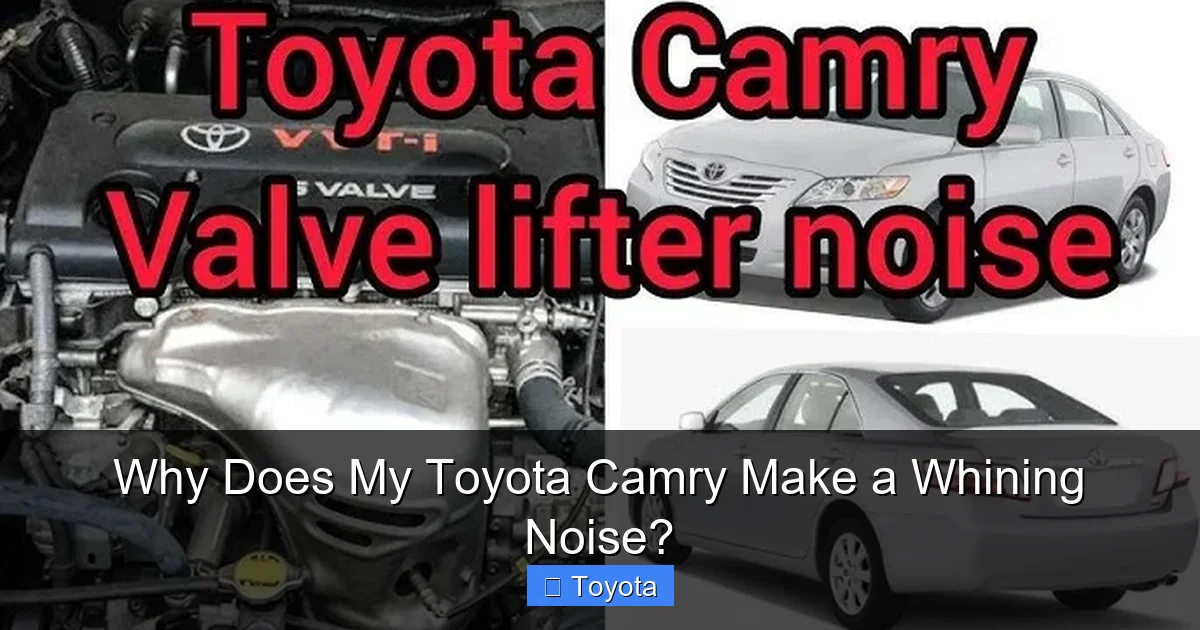
The transmission is the heart of your car’s movement. It takes the power from the engine and sends it to the wheels. Because it involves many gears and fluid, it is a prime suspect for unusual noises. If your Camry is whining, and the sound changes based on the speed of the car (rather than the RPM of the engine), the transmission is a likely culprit.
Visual guide about Why Does My Toyota Camry Make a Whining Noise?
Image source: automotivian.com
Low Transmission Fluid
Just like the power steering system, the transmission relies on fluid to keep everything moving smoothly. If the transmission fluid is low or old, the gears may not be properly lubricated. This lack of lubrication causes friction, which leads to a whining or humming sound. Regularly checking your transmission fluid is one of the best ways to prevent expensive repairs.
Internal Gear Wear
If your fluid levels are perfect, the noise might be coming from the gears themselves. Over time, the teeth on the gears inside the transmission can wear down. This is less common in a well-maintained Camry but can happen if the car has been driven hard or has high mileage. If you suspect internal gear damage, it is best to have a specialist look at it immediately to avoid a total transmission failure.
Engine and Accessory Component Failures
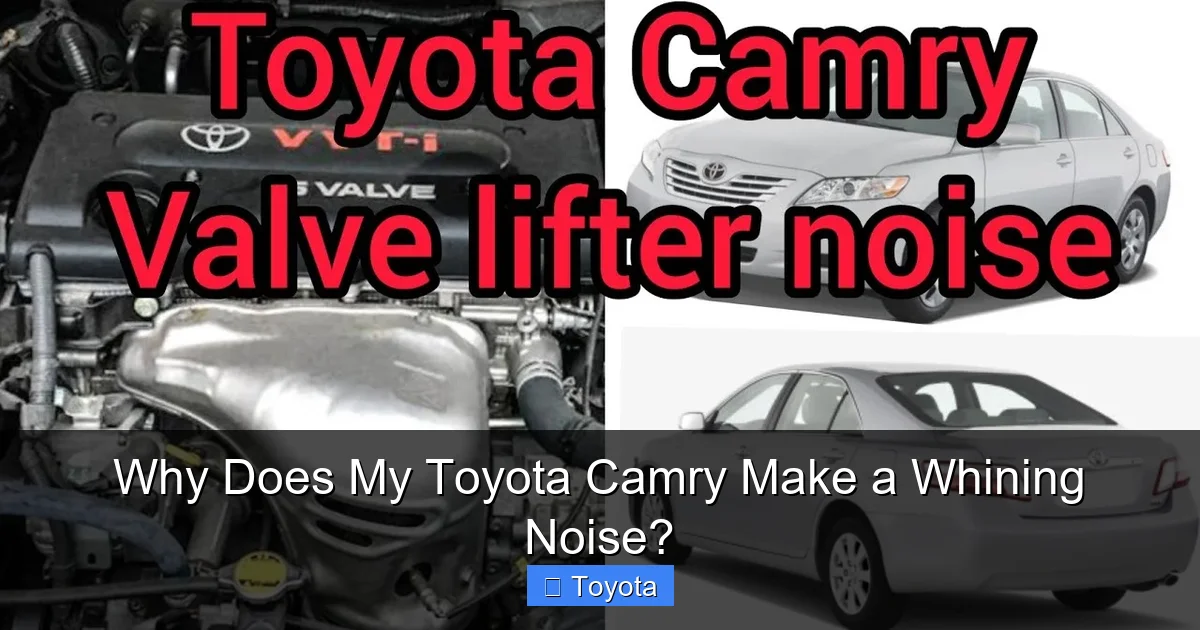
Sometimes the noise isn’t coming from the transmission or the steering, but from the various accessories attached to your engine. Your engine is surrounded by components like the water pump, the AC compressor, and the alternator. Each of these has moving parts that can fail.
Visual guide about Why Does My Toyota Camry Make a Whining Noise?
Image source: i.ytimg.com
The Water Pump
The water pump circulates coolant to keep your engine from overheating. If the bearings in the water pump start to go, you will hear a whining or grinding noise that gets louder as the engine runs. If you notice this along with your temperature gauge rising, stop driving immediately. Overheating can cause catastrophic engine damage.
The AC Compressor
If the whining noise only happens when you turn on your air conditioning, the AC compressor is the likely suspect. Like the power steering pump, the AC compressor uses a clutch and internal components that can wear out. If the compressor is struggling to turn, it will create a loud, mechanical whine that is very obvious to the driver.
A Quick Tip on Maintenance
If you are new to car ownership, you might wonder about the cost of keeping things running. While it might seem like a lot of work, understanding how much a Toyota costs to maintain can help you budget for these inevitable minor repairs. Regular maintenance is always cheaper than a major overhaul.
How to Diagnose the Noise Like a Pro
You don’t have to be a certified mechanic to perform some basic diagnostics. While you should always have a professional confirm the issue, you can do some “detective work” to narrow down the source. This can help you when you eventually call your mechanic.
Visual guide about Why Does My Toyota Camry Make a Whining Noise?
Image source: gomyreview.com
The Hood Test
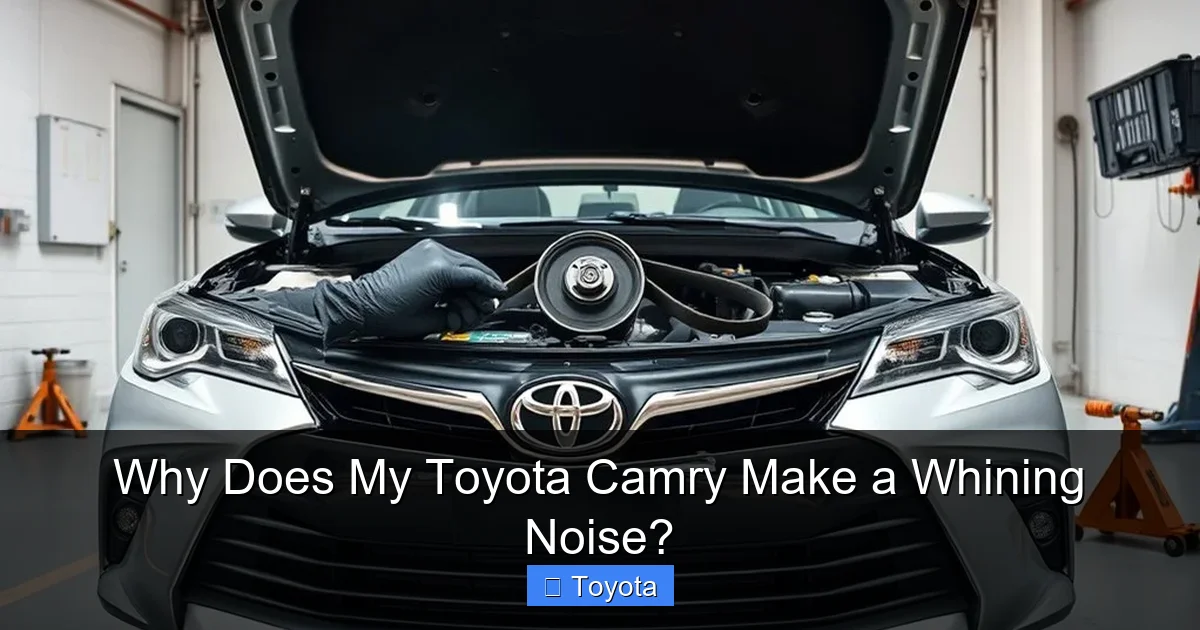
With the car in “Park” and the engine running, carefully pop the hood. Listen closely to different parts of the engine.
- If the sound is coming from the side where the belts are, focus on the alternator or water pump.
- If the sound is coming from the center/rear of the engine, it might be the transmission.
- If the sound is coming from the front near the driver’s side, it could be the power steering pump.
Note: Always be extremely careful around a running engine. Keep your hands, hair, and clothing away from moving parts.
The Steering Test
While parked, turn your steering wheel from side to side. If the whining gets significantly louder when you turn the wheel all the way to one side, you have found your culprit: the power steering system. This is a very common occurrence and usually points to low fluid or a failing pump.
The Speed Test
Pay attention to whether the noise is tied to the engine RPM or the vehicle speed.
- Engine RPM: If the noise gets louder when you press the gas (even if you aren’t moving), it is likely an engine accessory like the alternator or water pump.
- Vehicle Speed: If the noise gets louder as you drive faster (even if the engine RPM stays the same), it is likely related to the transmission or a wheel bearing.
When to See a Mechanic Immediately
While some whines are minor, others are warning signs of an impending breakdown. You should not “wait and see” if you experience any of the following symptoms alongside the whining noise:
- Overheating: If your temperature gauge is in the red zone, your engine is at risk of warping or cracking.
- Loss of Power: If the car feels sluggish or won’t accelerate properly, the transmission or engine may be failing.
- Dashboard Warning Lights: If the “Check Engine” or “Oil Pressure” light comes on, stop driving immediately.
- Vibration: If the whining is accompanied by a heavy vibration through the steering wheel or floor, you may have a serious mechanical misalignment or bearing failure.
If you are worried about the cost of a repair, it is always better to get a quote early. For example, if you are wondering about the cost of keeping your car looking good, you might want to research how much it costs to clay bar a car to understand the different levels of detailing and maintenance costs. Similarly, understanding the general cost of vehicle ownership can help you decide when it is time to repair versus when it is time to trade in.
Preventative Maintenance for Your Toyota Camry
The best way to deal with a whining noise is to prevent it from happening in the first place. Toyota Camrys are known for their reliability, but they still require regular care to reach that 200,000+ mile milestone.
Fluid Changes are Critical
Don’t just change your oil. Ensure you are also changing your transmission fluid, power steering fluid, and coolant according to your owner’s manual. Fluids lose their ability to lubricate and protect over time. Fresh fluid is the cheapest insurance you can buy for your engine and transmission.
Regular Inspections
Every time you get your oil changed, ask your mechanic to do a “multi-point inspection.” This is where they look for leaks, frayed belts, or worn hoses. Detecting a small leak early can prevent you from having to replace an entire pump or the whole transmission later on.
Listen to Your Car
It sounds simple, but it’s vital. Your car “talks” to you through sounds, smells, and vibrations. If you notice a change, don’t ignore it. Even if the sound is faint, it is your car’s way of telling you that a component is starting to age. Addressing these small issues early is the key to long-term reliability.
If you are looking for a new vehicle and want something highly reliable, you might find it helpful to compare your current car’s maintenance needs with newer models. For instance, checking how much a new Toyota Corolla is can give you a sense of what a modern, reliable Toyota investment looks like in today’s market.
Conclusion
A whining noise in your Toyota Camry can be frustrating and concerning, but it is a common issue that most can be traced back to a few specific sources. Whether it is a simple matter of low power steering fluid, a worn-out alternator belt, or a more complex transmission issue, identifying the source is the first step toward a solution.
By paying attention to when the noise occurs—whether at idle, while turning, or while accelerating—you can drastically narrow down the cause. Always remember that while some sounds are minor, others require immediate professional attention to prevent expensive damage. Keep up with your fluid changes, listen to your car’s subtle cues, and your Camry will continue to be the reliable companion you expect it to be for many years to come.
Frequently Asked Questions
Is a whining noise in my Camry a sign of transmission failure?
It can be, especially if the noise changes with the speed of the vehicle. However, it could also be as simple as low transmission fluid or a worn gear bearing.
Why does my Camry whine only when I turn the wheel?
This is most commonly caused by low power steering fluid or air trapped in the power steering system. It could also indicate a failing power steering pump.
How much does it cost to fix a whining noise?
The cost varies wildly depending on the cause. A fluid top-off is very cheap, while replacing a transmission or an engine component can cost hundreds or even thousands of dollars.
Can a bad alternator cause a whining noise?
Yes, a failing alternator with worn internal bearings is a very common source of a high-pitched, constant whining sound that increases with engine RPM.
Should I keep driving if my car is whining?
If the noise is accompanied by overheating, loss of power, or warning lights, you should stop driving immediately. If it is a faint sound without other symptoms, you should schedule an inspection soon.
Does high mileage increase the chance of a whining noise?
Yes, as parts like bearings, belts, and gears age and accumulate wear over time, they are more likely to produce unusual sounds like whining or squealing.