Why Is My Toyota Corolla Cranking but Not Starting
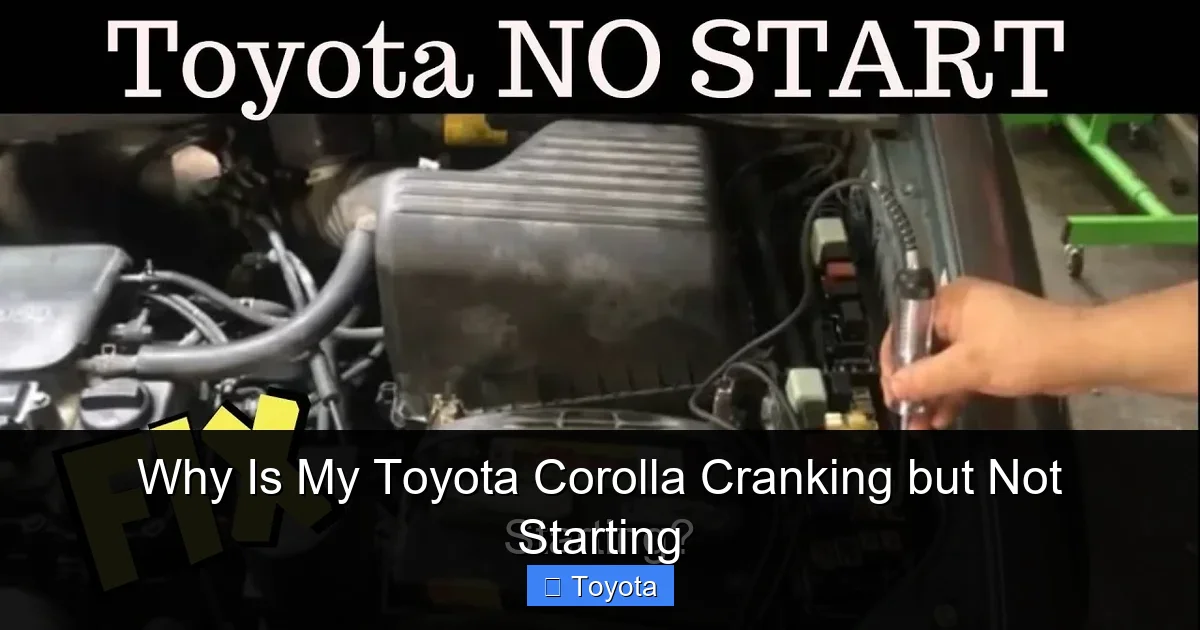
If your Toyota Corolla cranks but won’t start, the problem is usually electrical, fuel‑related, or tied to a sensor. Start with a simple battery check and listen for click sounds, then move to fuel pressure and error codes. Basic fixes like jump‑starting, cleaning terminals, or resetting the security system often solve the issue, but complex problems need a professional touch.
Imagine pulling up to a stoplight, turning the key (or pressing the start button), and hearing the engine crank—a loud, relentless sound that never quite catches. You feel that familiar knot in your stomach as the car refuses to fire. This scenario is all too common for Toyota Corolla owners, and it can leave you wondering, “Why is my Toyota Corolla cranking but not starting?”
The good news is that the cause is often something simple, and many fixes can be done at home with basic tools. In this guide, we’ll walk you through the most common reasons a Corolla cranks without starting, show you how to diagnose each one, and give you step‑by‑step DIY solutions. We’ll also point out when it’s best to hand the keys to a professional. By the end, you’ll have a clear action plan to get your car back on the road and avoid similar headaches in the future.
If you’re also wondering about the cost of a new Toyota Corolla, check out our article on How Much Is A New Toyota Corolla. Understanding the price can help you decide if repairing your current car is more economical than upgrading.
Key Takeaways
- Identify the root cause early. Cranking without starting is often due to battery, starter, fuel, or sensor issues.
- Use simple tools. A multimeter, test light, and a good set of jumper cables can tell you a lot.
- Check for click sounds. A single click usually points to the battery or starter; rapid clicks often mean a dead battery.
- Fuel is key. Low pressure or a failing fuel pump will make the engine crank but not fire.
- Scan for codes. Modern Corolla models store diagnostic trouble codes that can point directly to the problem.
- Know when to call a pro. Complex electronics, wiring harnesses, or a faulty ECU need specialized tools and training.
- Prevent future issues. Regular battery care, fuel system maintenance, and timely software updates keep you from being stranded.
📑 Table of Contents
Understanding Why Your Corolla Cranks but Won’t Start
When you turn the ignition, the starter motor spins the engine’s crankshaft. You hear the crank because the motor is working, but the engine doesn’t fire. This means something is preventing the combustion cycle from starting. The most common culprits are:
- Power supply problems. A dead or weak battery, corroded terminals, or a failing alternator.
- Starter issues. A worn starter motor or broken starter relay.
- Fuel delivery failures. No fuel reaching the injectors due to a pump, filter, or relay problem.
- Ignition system faults. Bad spark plugs, damaged coil packs, or a broken ignition module.
- Sensor or computer glitches. Faulty crankshaft position sensor, camshaft sensor, or ECU communication errors.
- Security or electrical quirks. Immobilizer misreads, faulty wiring, or a disconnected harness.
Each of these areas can be isolated with a few simple tests. Below we’ll break down how to check each one, from the easiest to the more involved.
1. Dead or Weak Battery
The battery is the heart of the starting system. If it doesn’t hold enough voltage, the starter will crank slowly or not at all. Here’s how to test it quickly:
- Visual inspection. Look for corrosion on terminals. Clean any buildup with a wire brush and baking soda solution.
- Voltage check. Use a multimeter. A healthy 12‑volt battery should read 12.6‑12.8 volts at rest. Anything below 12.0 volts suggests a low charge.
- Load test. Turn on the headlights. If they dim or flicker, the battery likely can’t hold a load.
If the battery is weak, you have two options: jump‑start it or replace it. Jump‑starting is fine for emergencies, but a new battery will give you peace of mind. Also, remember that proper brake fluid levels can affect starting; read Can Low Brake Fluid Cause Car Not To Start for more details on how fluid health relates to overall vehicle performance.
2. Faulty Starter Motor or Relay
A single, rapid click when you turn the key often points to a starter issue. A dead battery can also cause a single click, but a rapid series of clicks usually means the starter relay isn’t sending power.
- Listen closely. One click = battery or starter relay. Quick clicks = starter relay. No sound = possible wiring break or security system block.
- Check the starter relay. It’s usually located near the battery or fuse box. Swap it with a known‑good relay (if you have one) to see if the problem moves.
- Inspect the starter itself. Remove the noise and listen for grinding or whining sounds when you crank the engine. These noises often mean the starter needs replacement.
Replacing a starter is a moderate DIY job if you have basic tools and a jack. However, if you’re not comfortable removing the transmission or engine mounts, it’s best to let a mechanic handle it.
3. Fuel System Problems
Even with perfect electricity, the engine won’t start without fuel. The fuel system includes the pump, filter, lines, and injectors. Common failures include:
- Dead fuel pump. You’ll hear a faint humming or nothing at all when cranking. Use a fuel pressure gauge to verify pressure (typical Corolla target is 40‑60 PSI).
- Clogged fuel filter. This restricts flow and can cause intermittent cranking. Replace the filter every 30k miles.
- Faulty fuel relay. This controls power to the pump. Test continuity with a multimeter.
- Bad injectors. You may see misfires or a strong fuel smell. Injectors can be tested with a no‑load test.
If the fuel pump has no pressure, you might need to replace it. However, sometimes a simple relay replacement restores pump operation. Always check the fuel pump fuse first; a blown fuse is a quick fix.
4. Ignition System Issues
Spark plugs and ignition coils are the “spark” that ignites the air‑fuel mixture. Without spark, the engine cranks but won’t fire.
- Inspect spark plugs. Look for fouled electrodes, oil leaks, or worn out threads. Replace them every 30k‑60k miles.
- Test coil packs. Use a spark tester or multimeter to check for high resistance. A coil test can be done with a simple 12V source.
- Check ignition module. The module controls timing. Fault codes often point to this component.
Replacing spark plugs is a cheap, easy job that can restore starting. If you have a coil‑on‑plug design, each coil may need individual testing.
5. Sensor and Computer Glitches
Modern Corollas rely heavily on sensors to tell the ECU when to inject fuel and fire spark. A single bad sensor can mimic a starting problem.
- Crankshaft position sensor. This sensor tells the ECU where the engine is in its cycle. A failure will prevent fuel delivery. Use a scan tool or multimeter to check resistance.
- CAM sensor. Similar to the crankshaft sensor but for camshaft timing. Fault codes will point to it.
- Immobilizer/ECU. The security system can lock the fuel and ignition circuits. Try turning the key off/on a few times or disconnect the battery for 10 minutes to reset.
If you have access to an OBD‑II scanner, pull any stored codes. Code P0335 (crankshaft sensor) or P0340 (camshaft sensor) are common culprits. Sometimes a simple software update from the dealer resolves the issue.
Step‑by‑Step Diagnostic Checklist
Follow this practical checklist the next time you encounter a cranking but not starting situation. It’s designed to be done with everyday tools you likely already have.
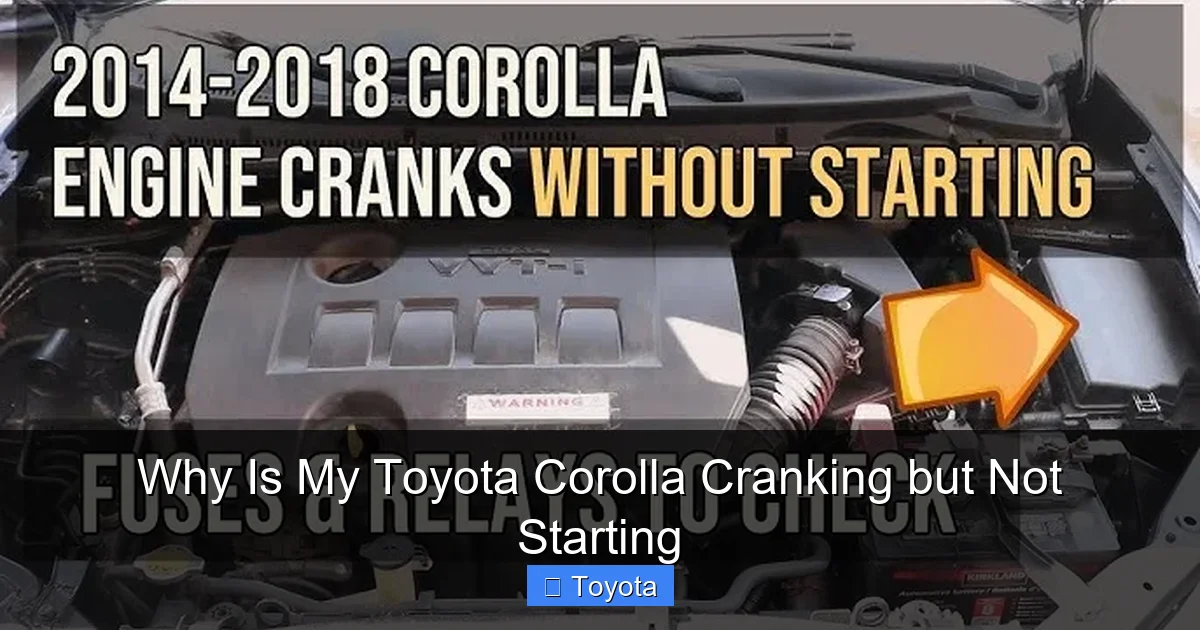
Visual guide about Why Is My Toyota Corolla Cranking but Not Starting
Image source: automotivian.com
Step 1: Basic Visual Inspection
- Check battery terminals for corrosion and tighten connections.
- Look for any obvious fuel leaks, cracked vacuum lines, or disconnected hoses.
- Examine the starter solenoid for corrosion.
Step 2: Listen and Feel
- Turn the key and note the sound pattern (single click, rapid clicks, or no sound).
- Feel for vibration in the steering wheel or seat—sometimes a weak starter produces a subtle shake.
Step 3: Voltage Test
- Set your multimeter to DC volts.
- Measure battery voltage at rest and under load (turn on headlights or interior lights).
- Check starter voltage at the solenoid while cranking.
Step 4: Fuel Pressure Check
- Connect a fuel pressure gauge to the fuel rail (ensure the engine is off).
- Observe the reading. Normal pressure is around 40‑60 PSI. If zero, the pump may be dead.
Step 5: Scan for Codes
- Plug a cheap OBD‑II scanner into the diagnostic port (usually under the driver’s side dash).
- Read any stored codes. Write them down for reference.
Step 6: Test the Starter and Relay
- With the battery fully charged, engage the starter solenoid directly (short the two terminals on the solenoid). If the engine turns, the starter is working.
- Swap the relay with a known‑good one (if available) to isolate the issue.
By moving through these steps, you’ll narrow down the problem quickly and avoid unnecessary part replacements.
DIY Fixes You Can Attempt at Home
Many of the issues above have simple, at‑home solutions. Below are the most common fixes, each paired with a tip to ensure success.
Fix 1: Jump‑Start or Replace the Battery
If your battery is low, a jump‑start can get you moving. Keep jumper cables and a portable jump pack in your glove compartment. After a jump, drive for at least 15 minutes to allow the alternator to recharge the battery.
If the battery is over three years old, corroded, or consistently reads below 12.0 volts, replace it. New batteries for a Corolla typically cost $80‑$150.
Fix 2: Clean Battery Terminals
Corrosion is a silent killer. Disconnect the negative terminal first, then the positive. Sprinkle baking soda on the terminals, scrub with a wire brush, rinse with water, and re‑connect. This quick fix often restores proper voltage.
Fix 3: Reset the Security/Immobilizer System
Sometimes the immobilizer thinks a key fob is missing. Turn the ignition off, remove the key, wait 10 seconds, then re‑insert and start. If that fails, disconnect the battery for 10‑15 minutes, then reconnect. This often clears a false security lock.
Fix 4: Replace a Faulty Starter
If you hear grinding or the engine still won’t turn over after a battery check, the starter may be worn. Removing the starter requires a jack, jack stands, and basic socket sets. Follow a repair manual for your year and model. Installing a new starter usually costs $200‑$400 including labor if you go to a shop.
Fix 5: Clean or Replace Fuel System Components
Fuel injectors can get clogged with deposits. Use a fuel system cleaner added to the tank, then drive for a few hundred miles. For a more thorough clean, consider a professional fuel injection service.
If the fuel pump fails, you’ll need to remove the fuel tank (or access the pump from the tank). This is a more involved job, but many DIYers tackle it with the right tools.
Fix 6: Spark Plug Replacement
Bad spark plugs are a common cause of no‑start. Use a socket wrench to remove each plug, inspect for fouling, then install new plugs with the correct gap (usually 0.7‑0.8 mm). This simple 30‑minute job can bring the car back to life.
For new owners, following the break‑in schedule is crucial; see How To Break In A New Car Toyota. Proper break‑in helps the engine and transmission settle, reducing the chance of early cranking issues.
When to Call a Professional
DIY work is great for basic maintenance, but some problems demand professional expertise.
Complex Electronics
If you’ve scanned for codes and still see something like P0345 (ignition sensor) or P0500 (vehicle speed sensor), these require specialized diagnostic equipment. A mechanic can run active tests and read live data streams.
Need for Specialized Tools
Removing a fuel pump from a sealed fuel tank, or disconnecting the ECU for reprogramming, often needs a lift, torque wrench, and software. Trying these without the right tools can cause damage.
Safety and Warranty Concerns
Modern Corollas have airbags, ABS, and other safety systems. Tinkering with these without proper training can be dangerous. Also, if your car is still under warranty, DIY repairs may void it.
A certified Toyota technician can run manufacturer‑approved diagnostics, replace complex components, and ensure your car meets all safety standards.
Preventive Maintenance Tips to Keep Your Corolla Starting Every Time
Prevention is the best cure. Here are simple habits that will reduce the likelihood of a cranking‑but‑not‑starting event.
- Check the battery twice a year. Inspect terminals and test voltage. Replace before it reaches 50% of its lifespan.
- Keep the fuel system clean. Use fuel additives periodically and replace the fuel filter as recommended (usually every 30k‑40k miles).
- Maintain the ignition components. Replace spark plugs at the interval specified in your service manual (often 60k miles). Inspect coil packs for cracks.
- Monitor sensor health. Most sensors are sealed, but a quick OBD‑II scan each year can catch early failures.
- Secure the security system. Ensure the key fob batteries are good and program any new keys with the dealer.
- Follow the break‑in schedule. For new cars, avoid aggressive acceleration for the first 1,000 miles. This helps the engine and transmission settle.
- Keep a basic tool kit. Jumper cables, multimeter, fuse set, and basic socket set can solve many early issues before they become costly repairs.
Regular maintenance not only prevents starting problems but also improves fuel economy, extends component life, and keeps you safe on the road.
Conclusion
Experiencing a cranking but not starting Toyota Corolla can feel frustrating, but most causes are manageable with a systematic approach. Start with simple checks: battery voltage, terminal cleanliness, and listening for click patterns. Move on to fuel pressure, spark plug condition, and sensor codes. Many owners can resolve these issues with at‑home fixes like jump‑starting, cleaning terminals, or replacing spark plugs.
However, when the problem involves complex electronics, specialized tools, or safety‑critical systems, it’s wise to bring in a professional. A certified technician can diagnose deeper faults, run manufacturer‑approved tests, and ensure your Corolla stays reliable.
By staying on top of preventive maintenance—regular battery checks, fuel system care, and timely component replacements—you’ll greatly reduce the chance of a no‑start event. Keep a basic tool kit handy, know your car’s service intervals, and don’t hesitate to seek expert help when needed.
With the knowledge and steps outlined in this guide, you’ll be equipped to handle a cranking‑but‑not‑starting Corolla confidently. Get out there, enjoy the drive, and remember that a well‑maintained car is the best defense against unexpected stalls.
Frequently Asked Questions
What are the most common reasons a Toyota Corolla cranks but won’t start?
The usual suspects are a dead or weak battery, a faulty starter or starter relay, fuel delivery issues (pump, filter, or injectors), ignition problems (spark plugs, coils), and sensor or ECU glitches. Each area can be tested with basic tools, and many fixes are DIY‑friendly.
How can I tell if the battery is the problem?
Use a multimeter to check the voltage. A healthy 12‑volt battery reads 12.6‑12.8 volts at rest. If the reading is below 12.0 volts, the battery is likely depleted. Also listen for a single click when turning the key—often a sign of insufficient power.
What should I do if I hear rapid clicking?
Rapid clicking usually points to a failing starter relay or a weak battery that can’t deliver enough current. Test the relay with a multimeter for continuity, and verify battery voltage under load. Replacing the relay or battery often solves the issue.
Can I diagnose fuel problems without a gauge?
You can start by listening for a faint humming from the fuel pump area when you turn the key. A missing hum suggests the pump may be dead. Also check the fuel pump fuse and relay. For a definitive answer, a fuel pressure gauge is the most reliable tool.
When is it best to call a mechanic?
Call a professional when you encounter complex codes (e.g., crankshaft sensor), need to remove the fuel tank or ECU, or when safety components like airbags or ABS are involved. Their diagnostic equipment and expertise can quickly pinpoint and fix hard‑to‑track issues.
How often should I replace spark plugs in a Corolla?
Most Toyota Corolla owners replace spark plugs every 60,000 miles. However, if you drive in harsh conditions (stop‑and‑go traffic, extreme temperatures), you may need to replace them sooner. Regular replacement helps maintain reliable starting and fuel efficiency.